




By: Nkosiyabusa Nsibande
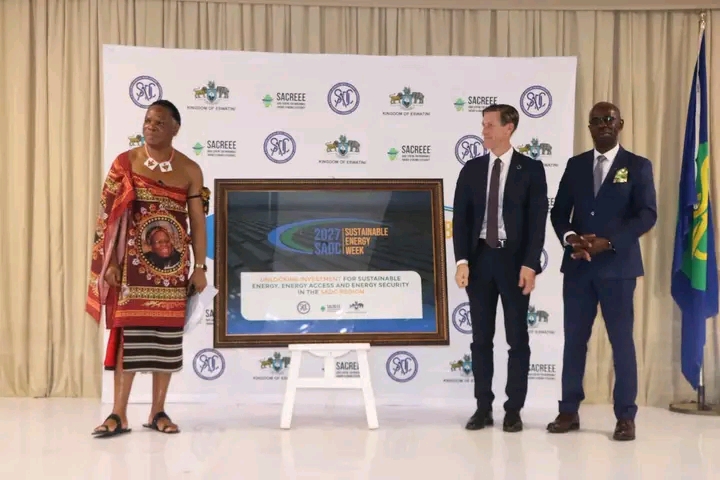
The official launch of the 2027 Southern African Development Community (SADC) Sustainable Energy Week was less about unveiling a regional conference and more about presenting Eswatini’s investment case to financiers, infrastructure developers, and private sector investors. Held at the Happy Valley Hotel, the event signaled the Kingdom’s intention to become a stronger player in Southern Africa’s rapidly expanding clean energy economy, where governments are increasingly competing for capital to finance renewable energy infrastructure and strengthen regional energy security.
With electricity shortages continuing to constrain economic growth across much of Southern Africa, energy has become one of the region’s most attractive investment opportunities. Governments are now seeking to unlock billions in private and development finance to expand generation capacity, modernize electricity networks, and accelerate the transition towards cleaner energy sources. Against this backdrop, Eswatini is positioning itself as a country offering policy certainty, political stability, and a pipeline of bankable renewable energy projects capable of attracting both domestic and international investors.
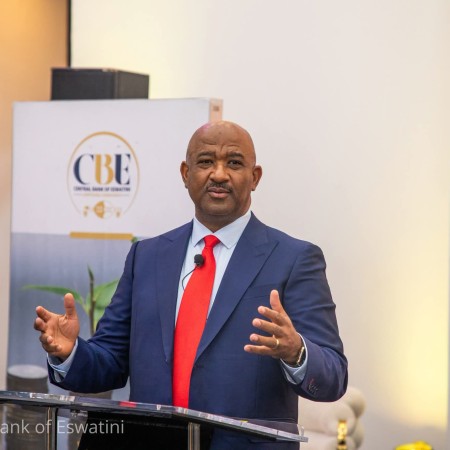
Addressing delegates during the launch, Minister of Natural Resources and Energy Prince Lonkhokhela Dlamini described sustainable energy as the foundation upon which economic development depends, arguing that energy investment should be viewed as a driver of industrial expansion rather than a public service.
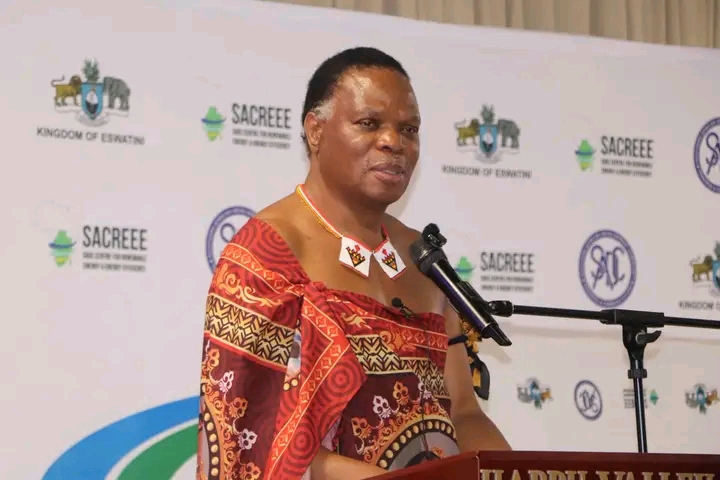
“Access to reliable, affordable, and sustainable energy is not merely a development objective; it is the foundation upon which economic growth, industrial transformation, social progress, and regional prosperity are built,” the Minister said.
The Minister highlighted significant progress made in expanding electricity access, revealing that 88 percent of Eswatini’s households are now connected to the national electricity grid. The government has complemented conventional grid expansion with solar home systems, ready boards for low-income households, and mini-grid projects targeting underserved communities. These investments, he said, are not only improving household welfare but are also expanding economic participation by providing businesses and entrepreneurs with more reliable access to electricity.
Beyond household electrification, the government is integrating renewable energy into productive sectors of the economy. Solar-powered water pumping systems are improving irrigation capacity, strengthening food production, and enhancing climate resilience, while simultaneously reducing long-term operating costs associated with conventional energy sources. Such investments are creating opportunities for commercial agriculture and rural enterprises, sectors that remain critical contributors to Eswatini’s economy.
The centerpiece of the government’s investment strategy is a renewable energy pipeline with an anticipated generation capacity of approximately 188.5 megawatts. The portfolio includes solar photovoltaic plants, hydropower developments, and biomass projects designed to diversify the country’s electricity mix while reducing dependence on imported power.
“The Kingdom of Eswatini offers a transparent regulatory framework, political stability, and an enabling investment climate that supports independent power producers and private sector participation,” Prince Lonkhokhela said.
For investors, the announcement represents more than additional electricity generation. It signals expanding opportunities for Independent Power Producers (IPPs), engineering firms, construction companies, equipment suppliers, commercial banks, and institutional investors looking to participate in Southern Africa’s growing renewable energy market. As electricity demand continues to rise throughout the SADC region, countries capable of delivering predictable regulation and investment certainty are becoming increasingly attractive destinations for infrastructure finance.
The Minister also acknowledged that energy shortages continue to undermine industrial productivity across Southern Africa, limiting manufacturing output, reducing business competitiveness, and slowing job creation. He argued that the upcoming SADC Sustainable Energy Week should move beyond policy discussions towards securing concrete financial commitments capable of transforming the region’s energy landscape.
“Our discussions must translate into concrete action. They must unlock greater investment in renewable energy, strengthen regional electricity interconnections, promote energy efficiency, expand access to clean cooking technologies, mobilize climate finance, encourage technology transfer, empower women and young people, and speed up implementing transformational energy projects across Southern Africa.”
That investment-focused approach received strong backing from the United Nations Development Programme (UNDP), which views clean energy as a catalyst for economic transformation rather than simply an environmental priority.
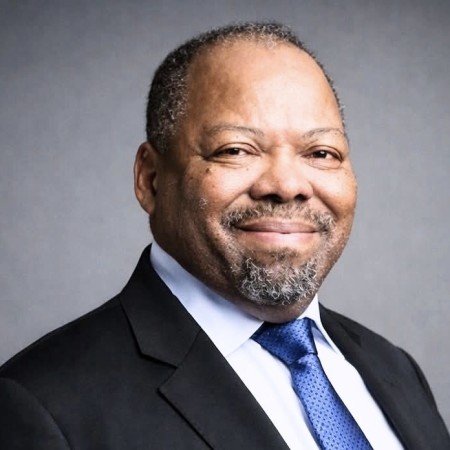
UNDP Resident Representative Henrik Franklin said sustainable energy has become central to building resilient economies capable of supporting industrialization, entrepreneurship, and employment creation.
“The transition to clean and sustainable energy is therefore much more than an environmental agenda. It is central to achieving the Sustainable Development Goals by strengthening economic resilience, supporting industrialization, expanding opportunities for enterprise, and creating decent livelihoods for our people.”
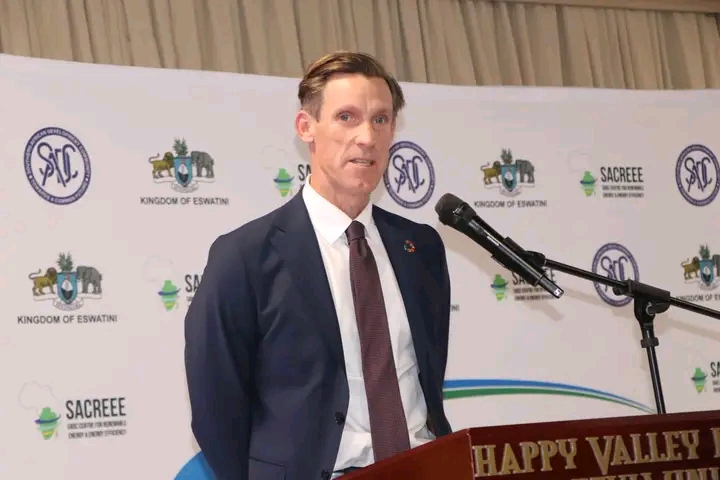
Franklin explained that UNDP’s growing energy portfolio in Eswatini extends beyond renewable energy generation to include sustainable finance, innovation, and support for green industries. A particular focus, he noted, is helping micro, small, and medium-sized enterprises reduce operating costs through clean energy solutions, allowing businesses to improve profitability and reinvest savings into expansion and job creation.
“We are interested in how clean energy can unlock opportunities for micro, small, and medium-sized enterprises, enabling them to reduce operating costs, improve competitiveness, and reinvest those savings into business growth, innovation, and job creation.”
For Eswatini’s private sector, this presents important commercial opportunities. Rising electricity costs have become a significant operational challenge for many businesses, manufacturers and Agro-processing firms. Increased investment in renewable energy has the potential to lower production costs, improve energy security, and enhance competitiveness, making local industries more attractive to investors and export markets.
Another significant outcome of the launch was the formal acceptance of a solar thermal training rig donated by the SADC Centre for Renewable Energy and Energy Efficiency (SACREEE) and the Austrian Government. The facility, which will be housed at the Vocational and Commercial Training Institute Matsapha (VOCTIM), is expected to strengthen technical skills development by training engineers, technicians, and renewable energy specialists required by the growing clean energy industry.
Recognizing that technical capacity remains essential for attracting long-term investment, the Minister appealed to the Austrian Government to support the accreditation of renewable energy training programs, arguing that internationally recognized qualifications would strengthen Eswatini’s human capital while improving regional labor mobility.
The launch also demonstrated growing confidence from development finance institutions. The government acknowledged support and partnership commitments from organizations including UNDP, the World Bank, the African Development Bank, the European Union, the International Atomic Energy Agency, and GIZ. Their continued involvement is expected to improve access to concessional financing, technical expertise, and climate investment mechanisms that are increasingly shaping Africa’s energy transition.
For the financial community, signifying the 2027 SADC Sustainable Energy Week lies not in the conference itself but in the investment opportunities it is expected to unlock. Energy infrastructure has become one of Africa’s fastest-growing asset classes, attracting increasing interest from pension funds, infrastructure investors, commercial lenders, and climate finance institutions seeking stable, long-term returns.
If Eswatini succeeds in converting its renewable energy pipeline into financially viable projects while maintaining a predictable regulatory environment, the Kingdom could strengthen its position as one of Southern Africa’s emerging destinations for clean energy investment. In doing so, it would improve domestic energy security and stimulate industrial growth, expand employment opportunities, and deepen regional economic integration, demonstrating that sustainable energy has become as much a financial opportunity as it is a development priority.