




Written By: Nkosiyabusa Nsibande
Retirement planning has historically remained a neglected subject within many social and financial conversations across Africa. However, Old Mutual Eswatini continues to elevate the discourse through sustained stakeholder engagement focused on long-term financial security and retirement preparedness. During the fourth edition of its Thought Leadership Forum 2026, hosted at Happy Valley Hotel, the company brought together pension stakeholders, employers, financial advisors, fund managers and corporate leaders to address the increasingly urgent realities surrounding retirement planning in modern economies.
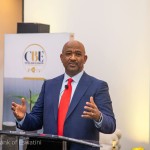
Delivering opening remarks on behalf of the Old Mutual Group in Eswatini, Banomile Hlatjwako emphasised the importance of securing a prosperous future through strategic retirement planning, improved financial literacy and accessible retirement solutions. She noted that strengthening financial awareness remains essential in addressing the financial vulnerabilities and post-retirement challenges confronting many African households today.
As retirement systems across Africa face mounting pressure from economic uncertainty, demographic shifts and evolving workforce dynamics, Old Mutual Eswatini intensified calls for greater financial preparedness, arguing that retirement planning can no longer be treated as a distant personal concern, but rather as a critical pillar of long-term economic resilience.
Held under the theme, “Clock Out in Style: Secure a Prosperous Tomorrow by Making Smart Moves Today,” the forum examined the changing realities of retirement planning and the increasing need for sustainable financial solutions capable of supporting individuals beyond active employment. Discussions throughout the engagement reflected growing concern within the financial services sector that traditional retirement models may no longer sufficiently address the needs of modern workers navigating complex economic conditions.
In her address, Hlatjwako reflected on the evolution of the platform over the past four years, noting that each edition has deliberately focused on different dimensions of retirement readiness in response to shifting economic and social realities. “This year marks our fourth edition of this platform, and as we reflect on the journey, we are reminded how relevant and necessary these conversations have become,” she said, highlighting the growing urgency surrounding retirement preparedness within both corporate and individual financial planning frameworks.
Hlatjwako explained that the initiative was first launched in 2023 with a primary focus on retirement readiness, encouraging both employers and employees to confront the realities associated with preparing adequately for life after active employment. Subsequent editions expanded the discussion to address misconceptions surrounding retirement and challenge outdated perceptions that often discourage individuals from making informed financial decisions.
“In 2023, we began with a focus on retirement readiness, where we encouraged employers and members to confront the realities of preparing adequately for life after work,” she said. “In 2024, we challenged perceptions through demystifying retirement myths and addressing misconceptions that often prevent individuals from making informed financial decisions.”
According to Hlatjwako, the 2025 edition shifted the focus towards rethinking retirement itself, particularly within the context of changing lifestyles, rising life expectancy, and evolving financial obligations that increasingly require more sophisticated and forward-looking retirement strategies.
“Today, ladies and gentlemen, we are building on that momentum with a theme that is both aspirational and practical. We are saying, ‘Clock Out in Style: Secure a Prosperous Tomorrow by Making Smart Moves Today,’” she said.
She stressed that the current theme seeks to move the retirement conversation beyond conventional pension contributions towards broader issues of intentional financial planning, wealth preservation, and sustainable retirement outcomes. In her view, retirement planning should evolve from being treated merely as a compliance requirement into a strategic financial objective embedded throughout an individual’s working life.
“This theme speaks directly to the importance of intentional financial planning, informed financial decisions, long-term planning, and creating retirement solutions that allow members not merely to survive retirement, but to thrive in it,” Hlatjwako said. “Retirement should not only be viewed as an end, as many of us have traditionally perceived it. It should represent freedom, dignity, security, and the ability to enjoy the rewards of years of hard work.”
Hlatjwako further emphasized that achieving meaningful retirement outcomes will require stronger collaboration between employers, pension administrators, financial institutions, and policymakers. She argued that improving financial literacy and broadening access to retirement products will be essential in addressing the vulnerabilities currently facing many workers across the region.
“As industry leaders, we have a collective responsibility to create systems and solutions that enable better retirement outcomes. We must continue improving financial literacy and increasing access to retirement solutions that respond to the realities faced by today’s workforce,” she said.
She added that forums of this nature remain important because they create opportunities for strategic dialogue between institutions and stakeholders when financial insecurity and retirement anxiety are becoming increasingly prevalent across many households. “The conversations we are having today are not only about products or policies; they are about people, livelihoods, and futures,” she said.
Providing a broader regional perspective during the engagement, Grey Tewete, Head of Sales and Distribution at Old Mutual Malawi, challenged delegates to fundamentally reconsider how retirement is understood within African economies. His presentation focused on the structural realities confronting workers across the continent, particularly within environments characterized by economic pressure, rapid population growth, and limited social protection systems.
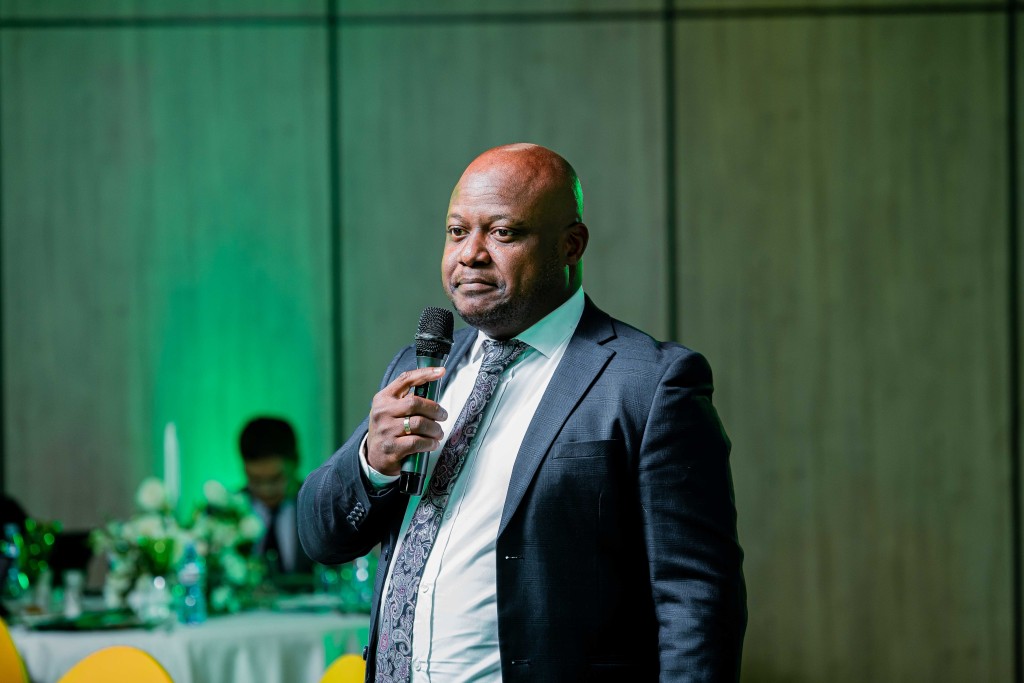
“What is retirement? Is retirement an age? Is retirement a financial position? Is retirement a state of mind? What is it?” Tewete asked delegates, opening a discussion that questioned traditional assumptions surrounding retirement planning and financial independence.
Using a striking analogy, Tewete described salaried employment as a form of “life-support machine,” warning that many workers remain heavily dependent on monthly income without adequately preparing for long-term financial sustainability beyond employment.
“If you are in this room, I always say everyone here is on a life support machine. The question is, what will happen once that life support is removed? How many people in this room, or those we are responsible for in our organizations, will survive without that support?” he said.
Tewete argued that retirement planning in Africa cannot be separated from broader socio-economic realities, particularly as governments across the continent continue to face mounting pressure on public infrastructure and national resources amid rapidly growing populations.
“With African governments, the infrastructure, and resources remain limited, yet the population competing for those resources continues to grow,” he said, warning that individuals may need to assume greater personal responsibility for securing their financial futures. “You are on your own. Once that support is disconnected, you must be able to sustain yourself financially. That can only happen through preparation.”
He also introduced a historical perspective on retirement systems, referencing former German Chancellor Otto von Bismarck, who is credited with introducing the concept of retirement age during the late nineteenth century.
“There was a former German Chancellor named Otto von Bismarck who is credited with introducing the retirement age,” Tewete said. “Life expectancy was significantly lower, yet it set the proposed retirement age at around 70 years.”
Using this example, Tewete questioned whether existing retirement structures remain suitable for modern African economies, as life expectancy improves and individuals remain economically active for longer periods. He cited Malawi as an example where retirement age discussions have already begun influencing policy adjustments within certain sectors. “In Malawi, the Malawi Defence Force adjusted retirement age considerations, while judges also saw retirement age revisions to 65 years, with the maximum retirement age reaching 70,” he said.
Overall, the forum reflected growing recognition within the financial services industry that retirement planning is becoming complex and that conventional approaches may no longer address the realities facing today’s workforce. Discussions throughout the engagement highlighted the need for stronger financial literacy, broader retirement participation, innovative pension solutions, and long-term planning frameworks capable of supporting sustainable retirement outcomes within an developing economic landscape.


Why Eswatini’s Pension Future Can No Longer Wait
Editor’s Note (22-05-2026)