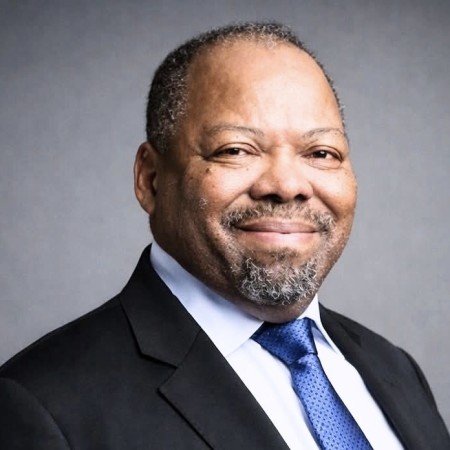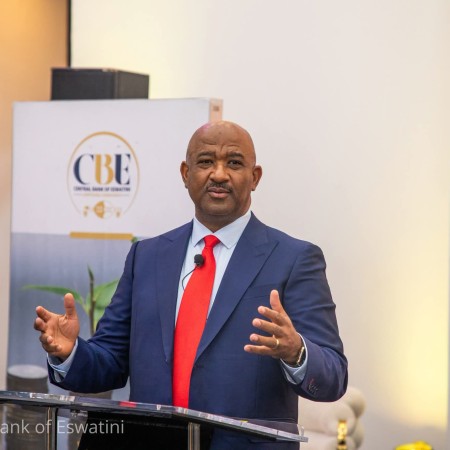






E Nathi Dlamini, Chief Executive Officer (CEO) of Business Eswatini (BE), said many emaSwati initially underestimated the extent to which international conflict would affect domestic economic conditions when the Russia-Ukraine war began. “One thing I remember very well when the Russia-Ukraine war started, we issued a statement saying this will affect us and people did not believe us until they saw the price of flour escalating,” Dlamini said. “They saw the price of bread escalating and indeed the price of fuel at the pump also escalating.”
Dlamini’s assessment reflects the realities of modern supply-chain economics. Eswatini, like many small open economies, depends heavily on imported fuel, agricultural inputs and manufactured goods. In practical terms, this means disruptions in global trade corridors or commodity markets eventually feed into local pricing structures through higher transport costs, elevated import prices and inflationary pressure. “We live in a global village with highly integrated international supply chains,” Dlamini said. “Any disruption to part of that chain invariably affects us down the line.”
The mechanism is relatively straightforward. When geopolitical tensions disrupt energy markets, oil prices rise. Higher fuel prices increase logistics and transportation costs across regional supply chains. Businesses then transfer part of those costs to consumers through higher prices on goods and services. Fertiliser costs rise, increasing agricultural production expenses, which in turn feed into food inflation. For consumers, the result is declining purchasing power, the amount of goods or services households can afford with the same level of income. “When inflation goes up, it affects the purchasing power of the money in our back pockets,” Dlamini said. “So it causes poverty for all of us, including young people.”
For unemployed youth and low-income households, inflation is particularly damaging because earnings often remain stagnant while essential living costs continue rising. Even modest increases in transport fares, bread prices or electricity costs can materially alter household spending patterns where financial margins are already thin.
Why young people cannot ignore global economics?
Sanele Sibiya, economist and lecturer at the University of Eswatini, argues that many young people fail to appreciate how exposed Eswatini is to external economic shocks because of the country’s dependence on international trade and imports. “Eswatini does not exist in a vacuum,” Sibiya said. “We are a largely open economy, so whatever happens across the globe will eventually find its way into Eswatini.”
In macroeconomic terms, Eswatini functions as a consumption-driven economy with limited domestic productive capacity in several strategic sectors. This leaves the country vulnerable to imported inflation, a situation where rising international prices increase the domestic cost of goods and services. “The bread you buy every morning has to be transported by a truck,” Sibiya said. “And the truck relies on fuel. The wheat that you eat, most of it we have to import as a country.”
The implications extend beyond food and transport. Young consumers increasingly participate in digital markets through subscription platforms, imported electronics and online services priced in foreign currencies. Exchange-rate volatility and global inflation, therefore, influence not only physical consumption but also digital spending behaviour. Sibiya noted that economic shocks do not discriminate by age category. Even unemployed graduates living within family households remain exposed because economic pressure is ultimately absorbed at the household level. “The economy doesn’t have age,” he said. “What the economy has is consumers and producers.” His broader argument is that younger generations can no longer afford to view geopolitics as detached from personal finance. Commodity markets, trade disruptions, exchange-rate fluctuations and international monetary policy increasingly shape the realities of everyday consumption and employment prospects.
The cost of borrowing in an inflationary environment
One of the clearest risks identified by Dlamini is the relationship between inflation and the rising cost of credit. During inflationary periods, central banks typically tighten monetary policy by increasing interest rates in an effort to stabilise prices and contain excessive consumer spending. However, higher interest rates also increase borrowing costs for households and businesses. “When inflation goes up, interest rates go up, which means the cost of borrowing also goes up,” Dlamini said.
For young entrepreneurs and unemployed graduates attempting to establish small businesses, this creates additional financial strain at a time when access to capital is already constrained. Financing vehicles, equipment or working capital becomes more expensive precisely when economic conditions are deteriorating. Dlamini warned that periods of uncertainty require stricter financial discipline, particularly regarding debt exposure. “If you must get into debt, make sure that what you are buying is an asset that will bring you benefits,” he said. “It must create money for you.”
The distinction he draws is between productive debt and consumptive debt. Productive debt finances assets capable of generating future cash flow or income streams, such as commercial vehicles, equipment or business infrastructure. Consumptive debt, by contrast, finances discretionary spending that depreciates rapidly and produces no long-term financial return. “Do not get into debt for consumption,” Dlamini said. “Consumption means treating yourselves or spending it on holidays. That will not bring long-lasting benefits.”
Why can panic become a financial liability?
Despite the economic uncertainty, Dlamini cautioned against emotionally driven decision-making during volatile periods. According to him, panic often leads to poor financial judgement, reactive spending and long-term setbacks. “One of the biggest mistakes for young people is to begin to panic,” he said. “Panic creates helplessness and helplessness leads to hopelessness.” Instead, he argues that economic disruption can create opportunities for disciplined investors and entrepreneurs who are able to think strategically, while markets are under pressure.
“When there is panic, there is chaos,” Dlamini said. “However, there are also exquisite opportunities that chaos brings to the keen observer.” Historically, economic downturns and commodity shocks often lead to distressed asset sales as businesses and individuals attempt to reduce exposure or improve liquidity. According to Dlamini, financially disciplined individuals with patience and long-term vision can sometimes acquire strategic assets below market value during such periods. “As the price of petrol keeps going up, some people end up saying, ‘I need to sell this car,’” he explained. “Then you can buy that commercial bakkie that you needed for your business at a lower price.”
The broader principle reflects a recurring pattern in financial markets: periods of instability frequently create value opportunities for those with liquidity, restraint and the ability to take a longer-term view of economic cycles.
The financial habits young people must develop
Both Dlamini and Sibiya argued that the current economic environment demands a significant behavioural shift among younger consumers, particularly around spending patterns, savings culture and debt management. “Don’t spend money that you don’t have,” Dlamini advised. “Delay your gratification.”
According to Dlamini, modern consumer culture encourages immediate consumption and status-driven spending, often financed through unsustainable borrowing. In an economy characterised by high unemployment and periodic external shocks, such behaviour can quickly erode long-term financial security. “All wealth is created through savings,” he said. “Even if your employer increases your salary, take that increase as part of your savings portfolio.”
Sibiya similarly advocated for a more restrained approach to consumption, arguing that economic uncertainty requires households to preserve liquidity and prioritise financial resilience. “Environments like this one call for a bit of frugality,” Sibiya said. “Young people should save first and consume later.”
He added that younger consumers are often heavily exposed to lifestyle spending pressures amplified by social media, fashion trends and entertainment culture. Yet in a high-cost economic environment, maintaining unnecessary expenditure can quickly undermine household stability.“There isn’t a point in always getting a new sneaker that is coming out,” Sibiya said. “You always need to contain your expenditures.” The underlying principle, both men argue, is that financial discipline is no longer merely advisable. It has become a core survival strategy in a volatile global economy.
Youth unemployment and the AI economy
Beyond inflation and geopolitical instability, Sibiya warned that younger generations are simultaneously confronting structural changes in the labour market driven by technological transformation and artificial intelligence. “The education system they are coming out of still isn’t adapted to artificial intelligence,” Sibiya said. He argued that many graduates risk becoming economically displaced if they fail to develop skills aligned with emerging industries and evolving business models. As firms increasingly adopt automation, digital systems, and AI-driven processes, traditional qualifications alone may no longer guarantee labour-market competitiveness.
“They may find themselves as this lost generation if they are not taking up their time and effort to capacitate themselves for what is to come in the future,” he warned. Dlamini similarly encouraged young emaSwati to think beyond conventional employment pathways and instead identify inefficiencies or gaps within the market that can be converted into business opportunities. “I would encourage young people to look into areas that are ICT-related nowadays,” Dlamini said. “There are lots of opportunities that remain untapped.”
He referenced the case of a marketing graduate who analysed consumer purchasing patterns within retail stores and developed strategic recommendations around product placement and shopper behaviour. According to Dlamini, that type of commercial thinking differentiates individuals in an increasingly competitive labour market. “That’s how you create a job for yourself,” he said. “You prove to the potential employer that you think strategically.”
The financial literacy deficit
Both interviews also exposed what they see as a broader structural weakness within the country’s education and social systems, which is limited exposure to practical financial literacy. “Nobody has ever taught me about budgeting,” Dlamini said. “Nobody has ever taught me how to use my money wisely. “He argued that educational systems often prioritise income generation while neglecting wealth preservation, savings discipline and long-term financial management. “They are obsessed with teaching us how to make money,” Dlamini said. “But they don’t teach us how not to lose that money after we make it.”
Sibiya similarly acknowledged that many educational institutions historically emphasised theoretical instruction over practical economic survival skills. In an increasingly volatile global economy, both men believe financial literacy will become progressively more important for younger generations navigating uncertain labour markets and rising living costs.
Unemployed graduates’ concern
The lived experience of an Unemployed graduate, Thembelani Dladla, reflects many of the economic realities described by business leaders and economists. After completing his studies, Dladla said unemployment quickly became more than simply the absence of a salary. It became a daily financial struggle shaped by the rising cost of survival and the inability to afford basic necessities. Without a stable income, even essentials such as rent, toiletries and transport became difficult to sustain.
Dladla explained that one of the harshest realities facing unemployed graduates is that searching for work itself requires financial resources many young people simply do not have. Most employment opportunities are concentrated in urban centres, yet travelling from home to cities where companies and institutions are located comes at a high cost. “You need money to look for money,” he said, describing the cycle that leaves many unemployed youth financially trapped before they are even able to access opportunities within the labour market.
While attempting to sustain himself through small-scale farming, Dladla said he has experienced firsthand how inflation continues to erode the viability of informal businesses and household finances. Rising electricity tariffs, escalating fuel prices and increasing transport costs have significantly reduced profitability within small agricultural ventures. He noted that soaring fuel prices have also pushed bus fares higher, increasing both operational costs and the general cost of living. For many struggling young people, inflation is no longer an abstract economic term discussed in policy circles, but a daily reality affecting food prices, mobility and basic survival.
Despite the economic pressure, Dladla believes financial discipline and reinvestment remain essential for long-term survival. He argued that young people should begin investing immediately, even if the amounts are small, by continuously reinvesting income into ventures or assets capable of growing over time rather than prioritising unnecessary consumption. “Living an expenditure-limited life now will buy you more freedom in the next five to 10 years,” he said, emphasising the importance of sacrifice and delayed gratification in wealth creation.
Dladla also criticised the country’s education system, arguing that many graduates are entering a labour market for which they have not been adequately prepared. In his view, there is a widening disconnect between academic training and the practical demands of the modern economy. He believes young people should increasingly pursue skilled labour opportunities, entrepreneurship and investment-oriented thinking rather than depending solely on formal employment. “The economy now is shaped for investors and real estate owners to survive,” he said, warning that young people who fail to build assets or acquire practical skills risk being left behind in an increasingly competitive and high-cost economic environment.
Call for concern
The assessments from both E Nathi Dlamini and Sanele Sibiya are that global conflict is no longer a distant geopolitical concern with limited local relevance. In a highly interconnected economic system, wars, commodity disruptions and trade instability directly influence inflation, borrowing costs, employment prospects and household financial security in Eswatini.
Yet both men maintain that younger generations are not entirely without agency. Financial discipline, strategic thinking, adaptability and investment in relevant skills remain critical tools for navigating an increasingly uncertain economic landscape. In a world shaped by inflationary pressure, technological disruption and global volatility, financial literacy may ultimately prove to be one of the most valuable forms of economic protection available to young people.

Other Articles

Money and morality
Eswatini’s economic and political outlook