



By: Nkosiyabusa Nsibande
The Eswatini Agriculture Development Fund (EADF) is beginning to demonstrate tangible returns on agricultural financing, with funded enterprises expanding production, generating income and making progress on loan repayments, strengthening the case for development finance as a tool for building commercially sustainable agribusinesses.
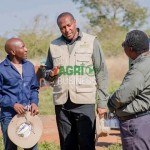
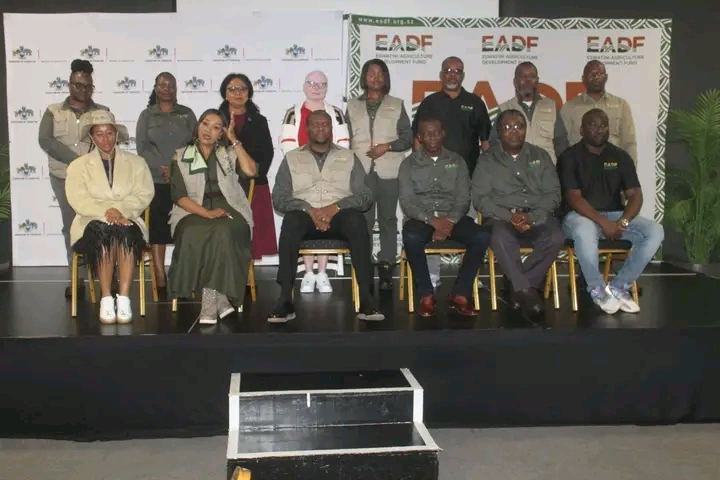
This emerged during Prime Minister Russell Mmiso Dlamini’s tour of EADF-funded investment sites, where government officials were presented with evidence of how targeted agricultural financing is being translated into increased production capacity and revenue generation across different farming enterprises.
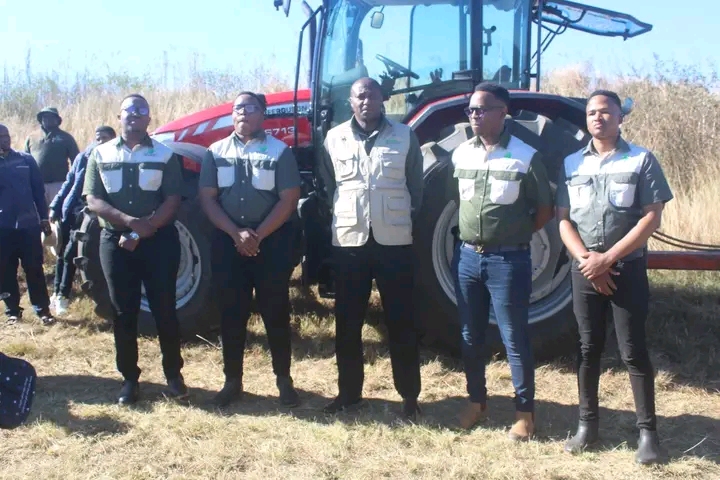
The tour, which commenced at Happy Valley Hotel before proceeding to project sites in Sicunusa and Hlane, offered a practical assessment of how public-backed agricultural financing is performing on the ground. Among the enterprises visited were the Infinito grain production venture at Sicunusa, Zwelithini Nkentshane’s layer production enterprise and Imfihlo Yebesutfu’s broiler operation, both located at Hlane.
The visits formed part of a broader effort to evaluate the impact of the EADF, which has so far capacitated 79 agribusinesses with investments exceeding E42.7 million. Beyond increasing agricultural output, the fund is expected to advance the country’s food security agenda while supporting the development of commercially viable farming enterprises capable of creating employment and contributing to economic growth.
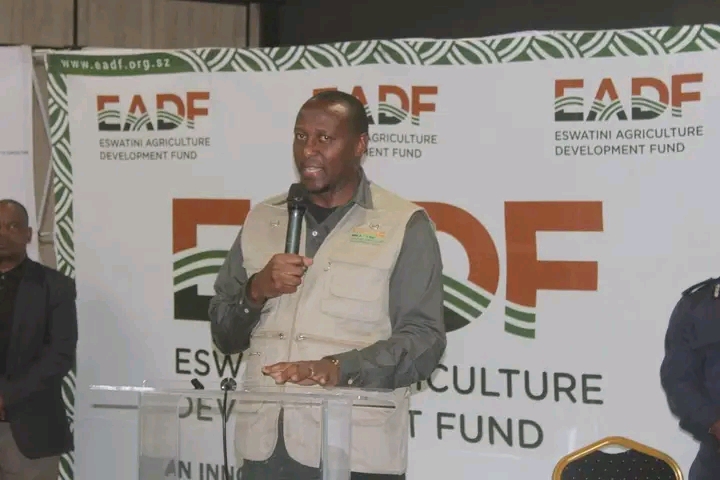
Acting Minister of Agriculture Bongani Nzima, who accompanied the Prime Minister during the tour, expressed appreciation for the Prime Minister’s engagement with the programme and its beneficiaries. The visit provided an opportunity for government to assess both the challenges and successes emerging from funded projects. Addressing stakeholders after the site visits, Prime Minister Dlamini said the progress recorded by beneficiaries demonstrated the value of providing citizens with access to productive capital.
“The citizens must be enabled to attain their dreams and the EADF is indeed carrying out that task. We trust that in the process the recipients will further be able to repay their loans as their dreams and goals reach fruition. All this is in line with the Nkwe! mandate that the entire Government is serving under,” said the Prime Minister.
His remarks underscore a growing emphasis on ensuring that development finance delivers measurable economic outcomes. Unlike grant-based interventions, the EADF model is structured around recoverable financing, making loan repayment a critical component of the fund’s long-term sustainability and its ability to support additional beneficiaries. One of the clearest examples of the fund’s impact was presented by Hlane-based layer farmer Zwelithini Felix Nkentshane, whose enterprise has undergone significant expansion since receiving EADF support. Following the Prime Minister’s visit to his farm, Nkentshane presented him with a goat as a gesture of appreciation for the assistance that enabled the business to scale up operations.
Nkentshane received E361,293 through the fund, financing that allowed him to increase his flock from 400 layers to 1,600. The expansion has transformed the enterprise from a small-scale operation into a growing commercial poultry business with significantly higher production capacity. The financial results have been equally notable. According to Nkentshane, the business now generates approximately E60,000 in monthly gross income, providing a stronger revenue base from which to sustain operations, reinvest in production and service debt obligations. He has already repaid E34,359 of the loan, offering evidence that the enterprise is generating sufficient cash flow to meet repayment commitments while continuing to grow.
The performance of enterprises such as Nkentshane’s highlights the potential multiplier effect of agricultural finance when funding is directed towards productive investments with clear commercial objectives. Increased production not only strengthens household incomes but can also contribute to broader economic activity through employment creation, demand for agricultural inputs and improved domestic food supply. Nkentshane encouraged other farmers to take advantage of available financing opportunities and use them to build sustainable businesses rather than viewing agriculture solely as a subsistence activity.
His experience reflects a wider shift in thinking around agriculture’s role in the economy. As government seeks to improve food security and reduce import dependence, the success of funded enterprises will increasingly be measured not only by production volumes but also by profitability, business sustainability and repayment performance.
With more than E42.7 million already invested across 79 agribusinesses, the EADF’s long-term success will ultimately depend on whether funded projects can consistently convert capital into productive assets, generate sufficient returns and create a revolving financing ecosystem capable of supporting future generations of agricultural entrepreneurs. The early results presented during the Prime Minister’s tour suggest that, for some beneficiaries at least, development finance is beginning to deliver exactly that outcome.

Other Articles