




By: Nkosiyabusa Nsibande
Access to finance remains one of the most difficult obstacles facing emerging farmers in Eswatini, but the experience of Njojane layers farmer Zwelithini Felix Nkentshane demonstrates how targeted agricultural funding can help transform small-scale operations into growing agribusinesses.
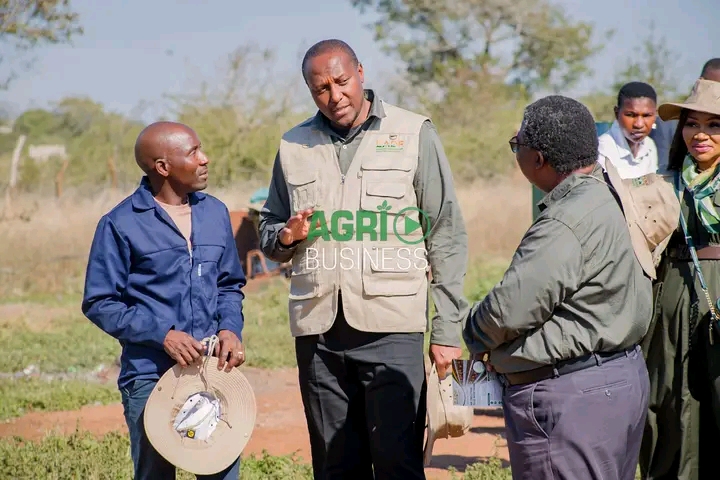
Nkentshane, who recently hosted Prime Minister Russell Mmiso Dlamini at his farm, has expanded his poultry enterprise from 400 layers to 1,600 following financial support from the Eswatini Agriculture Development Fund (EADF). The farmer received E361,293 through the fund, capital that enabled him to increase production capacity and strengthen the commercial viability of his operation.
The expansion has translated into significant revenue growth. Nkentshane’s poultry enterprise now generates approximately E60,000 in gross monthly income, illustrating the income-generating potential of properly financed agricultural businesses. While many smallholder farmers struggle to move beyond subsistence production due to limited access to capital, the Njojane farmer’s experience highlights how investment in productive assets can create a pathway towards sustainable agribusiness growth.
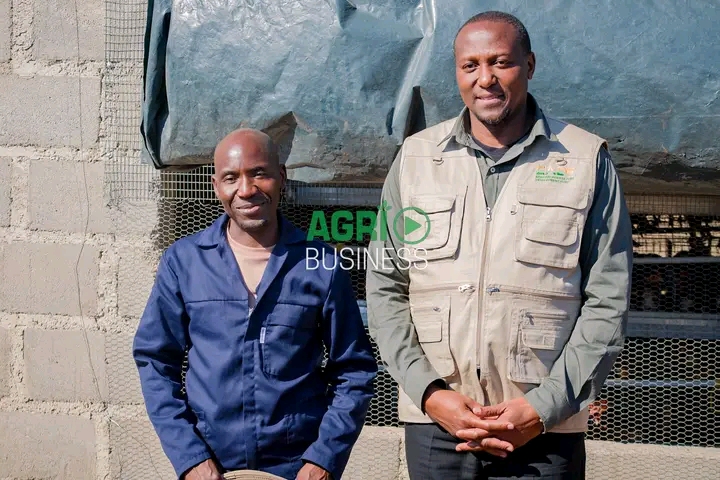
Speaking during the Prime Minister’s visit, Nkentshane expressed gratitude to the government and the EADF for the financial support that enabled expanding his business. As a gesture of appreciation, he presented, Dlamini with a goat at the conclusion of the visit. Beyond increasing production, the farmer’s progress also reflects an important aspect of development finance: loan repayment discipline. Nkentshane revealed that he has already begun repaying the funding received through the program and has paid back E34,359 to date. The repayments provide an indication that the business is generating sufficient cash flow to meet its financial obligations while continuing operations.
Agricultural economists have long argued that access to affordable finance is critical for improving productivity and food security in Eswatini. Poultry farming in particular has increasingly been identified as a sector capable of generating regular income because of consistent demand for eggs across households, retailers, and food service businesses.
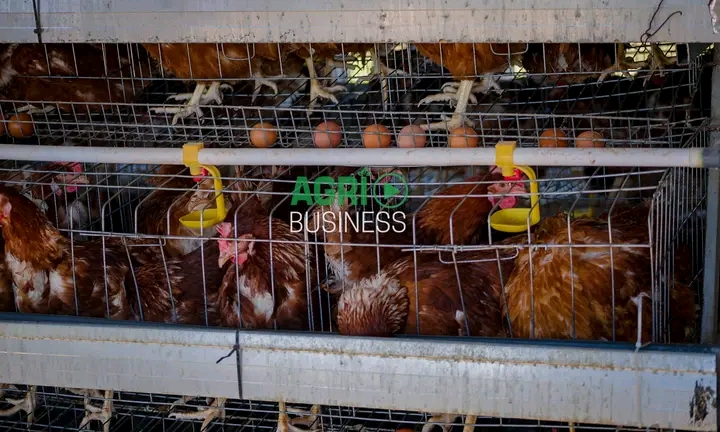
For development finance institutions, the success of funded projects is often measured not only by production increases but also by their ability to generate income, create employment, and remain financially sustainable. Nkentshane’s expansion from 400 to 1,600 layers represents a four-fold increase in production capacity, demonstrating the impact that targeted capital injections can have when combined with entrepreneurial commitment and market access.
The farmer used the occasion to encourage other farmers to take advantage of available funding opportunities. He urged producers to seek financial support, expand their operations, and build stronger agribusinesses capable of creating employment and contributing to economic growth. His story comes as the government continues to promote agricultural commercialization as part of broader efforts to strengthen food production, improve rural incomes, and reduce dependence on imports. The performance of enterprises such as Nkentshane’s is increasingly being viewed as evidence that well-structured agricultural finance programs can play a meaningful role in developing competitive and sustainable farming businesses.
With monthly revenues now reaching about E60,000 and production capacity significantly expanded, the Njojane farmer’s experience offers a practical example of how access to capital can help bridge the gap between small-scale farming and commercially oriented agribusiness.