





By: Nkosiyabusa Nsibande
At a time when youth unemployment, limited access to finance and rising business failure rates continue to weigh heavily on developing economies, the Small Enterprises Development Company (SEDCO) is steadily positioning itself as one of Eswatini’s most important economic transformation institutions. Through its incubation centres, financial literacy programmes, business development initiatives and the long-running Entrepreneur of the Year Awards (EYA), SEDCO is quietly building a generation of entrepreneurs capable of transforming small informal ventures into nationally recognised brands.
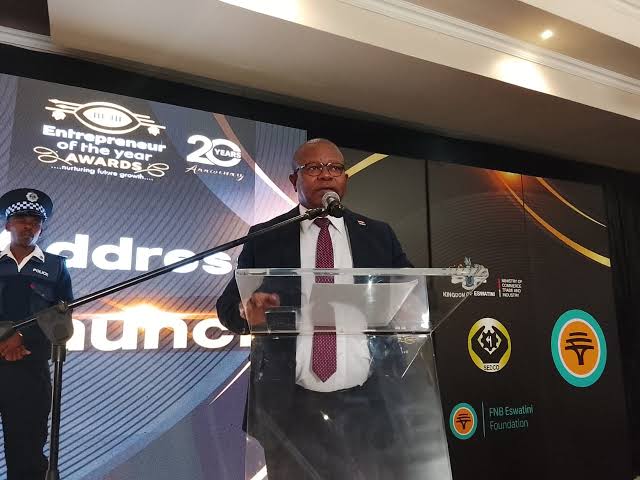
As the Entrepreneur of the Year Awards celebrates its 20th anniversary through nationwide roadshow campaigns, the programme has evolved far beyond simply rewarding successful business owners. Today, it has become a national empowerment platform aimed at equipping aspiring entrepreneurs with the knowledge, networks and financial understanding required to survive in an increasingly competitive economy. The ongoing roadshows, including the upcoming activation at Siphofaneni Bus Rank, reflect a deliberate strategy to bring entrepreneurship support directly into communities where many young people still struggle to access information on funding, business registration and enterprise development.

Speaking in an interview with FinGuard Magazine, SEDCO Senior Manager for Strategy and Organisational Performance Linda Makhanya said entrepreneurship development in Eswatini can no longer focus only on financing businesses, but must also address the growing financial literacy gap among young entrepreneurs.
“At a greater national level, we need to be intentional when it comes to financial literacy. It should start maybe at primary and secondary school level, where young people begin learning how to deal with income in the first place, especially as future directors and owners of businesses,” said Makhanya.
His remarks come at a time when many youth-owned enterprises continue to collapse within their first few years of operation, often due to poor financial management, weak record keeping and limited understanding of business operations. According to Makhanya, SEDCO has observed that many young entrepreneurs enter the business environment with strong ideas but without the necessary skills to sustain long-term growth.
“We have observed that within youthful entrepreneurs, there are a lot of business failures. That is why, together with our partners, we focus heavily on entrepreneurial and financial literacy to help young people understand how to manage funds and close the financial literacy gap,” he said.
One of SEDCO’s strongest interventions has been helping informal businesses transition into formally registered companies. Across Eswatini, many small enterprises continue operating outside the formal economy, limiting their ability to access funding from banks and development finance institutions. Through SEDCO’s business registration support services, entrepreneurs are assisted in formalising their operations, developing business plans and understanding the compliance requirements needed to qualify for financing opportunities.
This process has become particularly critical for youth-led businesses. Many entrepreneurs possess innovative ideas but lack technical knowledge on how financial institutions assess risk, evaluate business sustainability and approve funding applications. According to Makhanya, SEDCO helps entrepreneurs prepare structured business proposals and operational plans that improve their chances of securing financial support.
“It becomes easier to access funding if you have gone through training with SEDCO because financial institutions gain confidence when they see that an entrepreneur has already received business development support and mentorship,” Makhanya explained.
Beyond formalisation, SEDCO’s business development programmes are helping entrepreneurs scale their operations from survivalist enterprises into growth-oriented companies. Through mentorship and operational guidance, entrepreneurs are exposed to critical business management skills such as bookkeeping, staff management, marketing and customer relations. These areas, often overlooked by small businesses during their early stages, are increasingly becoming the difference between business survival and business failure.
One of the institution’s most impactful strategies has been the establishment of nine business estates across the country. These incubation centres provide affordable operating spaces for start-up businesses while simultaneously exposing entrepreneurs to mentorship, advisory services and enterprise development support. Entrepreneurs operating within these centres are trained on record keeping, operational management and business sustainability while paying affordable rental rates that reduce financial pressure during the early stages of growth.
The incubation model is proving particularly important in reducing the high failure rate among youth-owned businesses. Through continuous mentorship and training, SEDCO is attempting to address one of the biggest challenges affecting SMEs, the misuse of business funds and poor financial planning.
“Together with our partners, we teach young entrepreneurs how to manage money within their businesses so they can avoid the mistakes that often lead to business collapse,” Makhanya said.
Beyond training and incubation, SEDCO is also helping SMEs access markets and exposure opportunities that many small businesses would otherwise never reach independently. Through participation in exhibitions such as the Eswatini International Trade Fair and other regional platforms, entrepreneurs are introduced to potential clients, investors and stakeholders from across the continent. This exposure creates opportunities for partnerships, expansion and long-term business growth.
Over the past two decades, the Entrepreneur of the Year Awards has also produced businesses that have become recognised players within Eswatini’s economy. Companies such as E.M Loggers, Brickon Real Image, Tintsaba Craft and ABSA Investments emerged during the earlier years of the competition, while businesses such as Thembelihle Butchery, Manzana Engineering, EnviroWise and Tee and Jay Woodworks later demonstrated the programme’s ability to support enterprises across diverse sectors.
More recently, companies including Lilawu Construction, Waterman Swaziland, Acero Steel Frames, Datamatics Eswatini and DJD Investments trading as DJD Pork have continued to showcase how local enterprises can evolve into nationally competitive brands when provided with the right support systems.
The Entrepreneur of the Year Awards itself has also evolved significantly over the years. While previous winners were mainly awarded vehicles, the programme now includes cash prizes, business exposure opportunities and strategic networking platforms designed to support long-term enterprise growth. More importantly, the competition has become a national motivation campaign aimed at inspiring young people to view entrepreneurship as a realistic and sustainable economic pathway.
The awards operate through regional competitions before advancing to national level, creating opportunities for entrepreneurs from across the country to participate regardless of geographic location. Through the roadshow campaigns, entrepreneurs are introduced to funding institutions, enterprise support agencies and educational opportunities that many would otherwise never encounter.
SEDCO’s partnerships with institutions such as FINCORP, FNB Eswatini Foundation, Taiwan ICDF and The Source are increasingly becoming critical in bridging the gap between entrepreneurs and financial access. During the roadshows, these institutions provide information on funding products, loan requirements and business support services available to SMEs.

According to Makhanya, the partnerships are designed to ensure that young entrepreneurs do not only receive funding opportunities, but also gain the education needed to manage businesses sustainably.
“We work closely with institutions that provide entrepreneurship education and training because access to money alone is not enough. Entrepreneurs need knowledge and mentorship so they can manage businesses properly and reduce the risk of failure,” he said.
Beyond national borders, some of SEDCO-supported entrepreneurs have gone on to represent Eswatini on international platforms, including Taiwan, where local entrepreneurs showcased their businesses globally. In another significant milestone, winners from the 2025 awards recently received continental recognition in Zimbabwe, further strengthening Eswatini’s growing reputation within Africa’s entrepreneurship ecosystem.
For FinGuard Magazine, the significance of the Entrepreneur of the Year Awards roadshows lies not only in celebrating successful entrepreneurs, but also in democratising entrepreneurship knowledge. In many communities, access to funding information, business registration support and financial literacy remains limited. By taking these conversations directly to the public, SEDCO and its partners are building a more financially informed and economically empowered generation of entrepreneurs.
At a broader economic level, SEDCO’s work reflects how SME development can become a powerful national growth strategy. Small businesses remain one of the country’s largest potential sources of employment creation, innovation and economic diversification. However, for SMEs to contribute meaningfully to GDP growth and national productivity, entrepreneurs require more than motivation. They need structured support systems, financial education, market access and long-term mentorship.
SEDCO’s evolving model suggests that entrepreneurship development is no longer simply about encouraging people to start businesses. It is increasingly about building resilient enterprises capable of surviving, scaling and competing beyond Eswatini’s borders. Through its roadshows, incubation programmes and strategic partnerships, SEDCO is positioning entrepreneurship not only as a survival mechanism, but as a long-term driver of economic transformation in Eswatini.

Other Articles