



By: Nkosiyabusa Nsibande
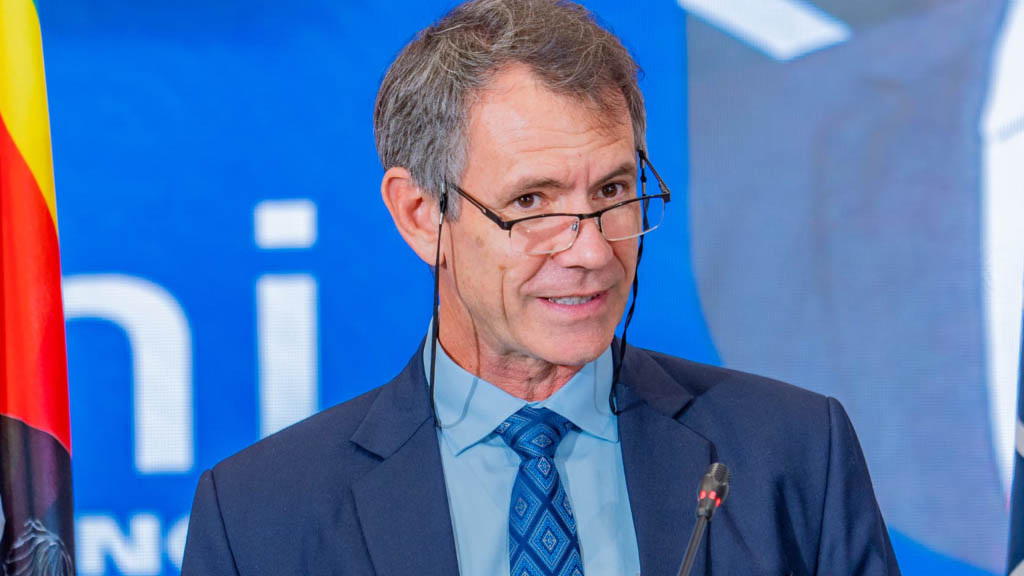
Finance Minister Neal Rijkenberg has challenged 70 newly certified project‑management professionals across Eswatini’s public enterprises to turn improved access to development financing into commercially viable projects, jobs, and productive capacity, as the government seeks to expand investment without excessively pressuring sovereign debt.
The Government of Eswatini is looking to its public enterprises to become a more important conduit for investment, production, and employment as it weighs the opportunities created by improved access to financing against the fiscal risks of accumulating more sovereign debt.
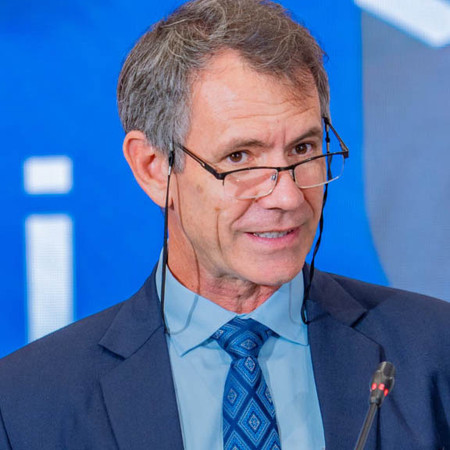
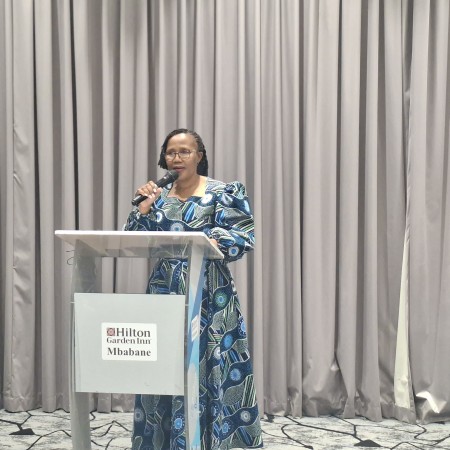
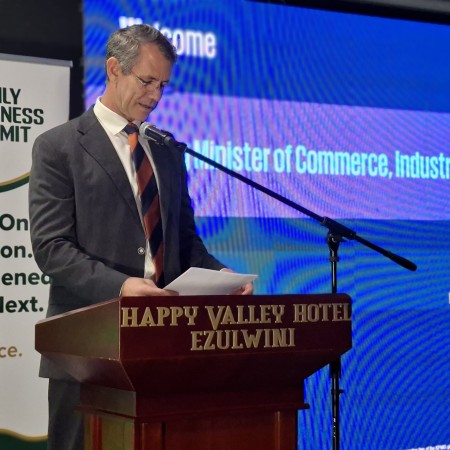
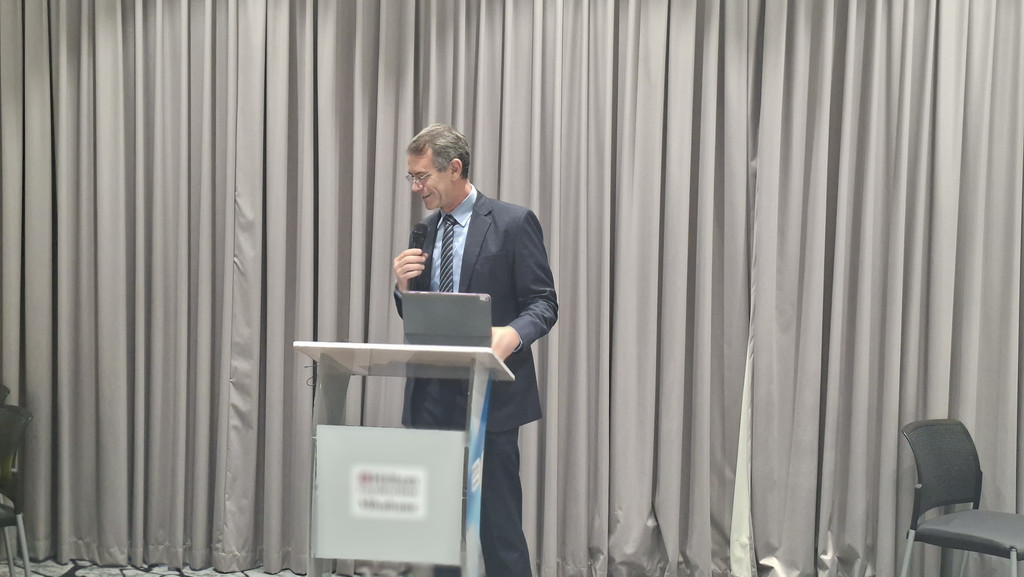
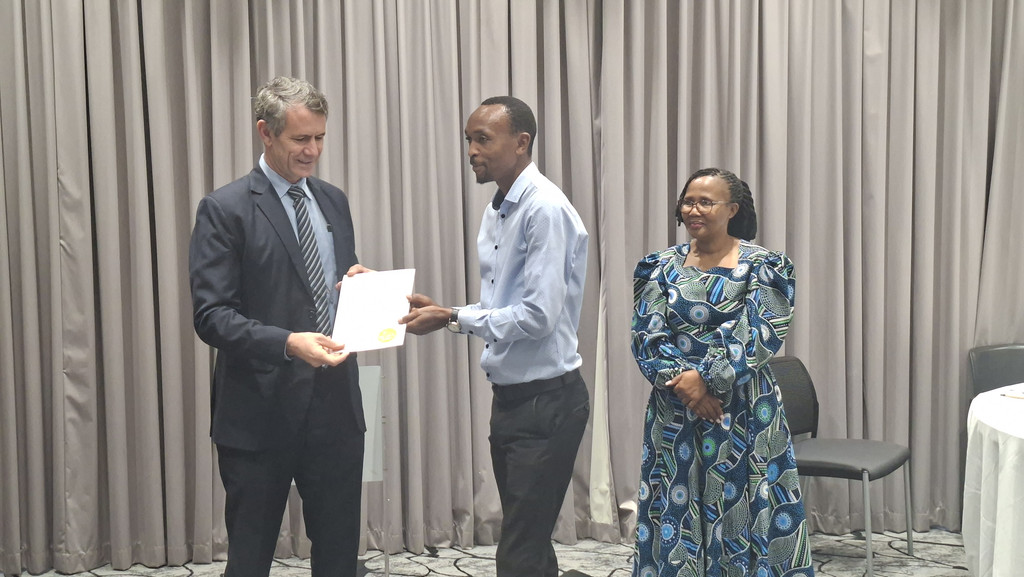
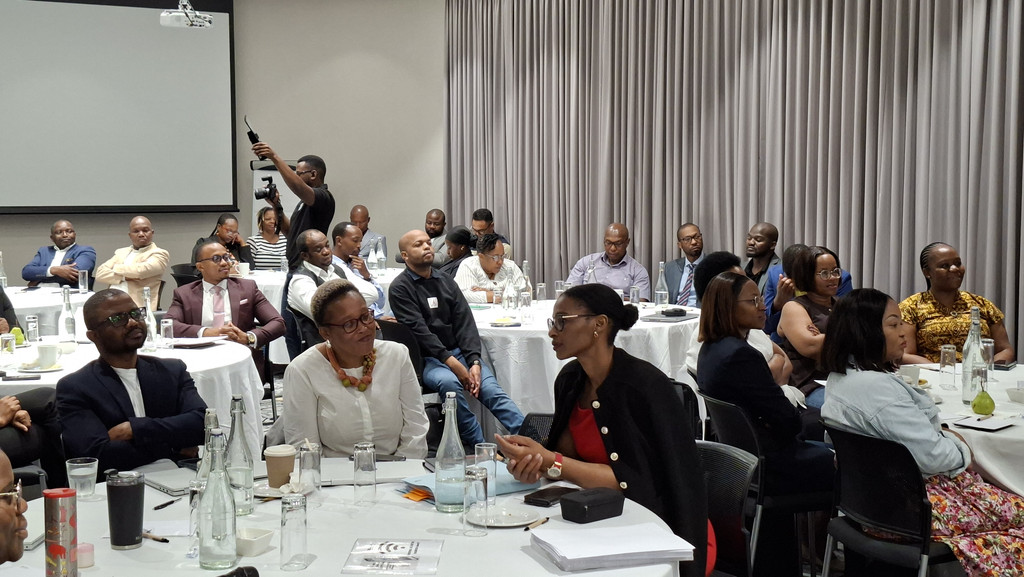
The shift in emphasis was outlined by Finance Minister Neal Rijkenberg at the Public Enterprise Unit (PEU) certification ceremony held at the Hilton Garden Inn on Friday, where 70 officials from different parastatals received Advanced Project Management certification. Rather than treating the training as an end in itself, Rijkenberg framed the new skills as part of a broader economic strategy in which public enterprises must become better at identifying, financing, and executing projects capable of generating measurable economic returns.
“Let us try to maintain the government’s debt‑to‑GDP ratio, but try to push more and more of these opportunities, given the fact that the debt is more available and the fact that projects are more available to do. Let us try to push that more to parastatals,” Rijkenberg told the graduates.
The minister’s argument comes against a fiscal backdrop in which Eswatini is seeking to maintain access to financing while containing the growth of public debt. For the government, the attraction of channelling more investment activity through commercially oriented public enterprises is, therefore, not simply institutional. It is an attempt to distinguish between financing that ultimately adds to the sovereign’s liabilities and financing that is deployed into productive assets capable of expanding output, creating employment, and generating future economic returns.
That distinction is central to the economic proposition Rijkenberg placed before the newly certified project managers. If the government and its development partners can access additional funding, the question becomes whether that capital can be converted into projects that expand the country’s productive base rather than merely increasing the stock of public liabilities.
The minister pointed to agriculture and agro‑processing as examples of where this approach could be applied. He challenged the National Agricultural Marketing Board (NAMBoard) to consider whether it could establish processing capacity for products such as sweet potato flour and gluten‑free flour, potentially allowing Eswatini to move further up the agricultural value chain and develop exportable products.
He similarly raised the prospect of the Dairy Board establishing a cheese‑processing plant capable of supplying export markets. While the examples were presented as possibilities rather than announced government projects, they illustrate the type of commercially grounded thinking Rijkenberg wants to see from public enterprises.
“What can NAMBoard do to have more Agro‑processing taking place within Eswatini?” Rijkenberg asked. “Can NAMBoard produce, somehow put up a plant to produce sweet potato flour, gluten‑free flour, so that we can export flour as a country?”He added: “What can Dairy Board put up, a cheese‑processing plant to make cheese and export? Every parastatal, there’s something that you can do probably to assist the growth of our country and to create the much‑needed jobs.”
The examples move the debate around parastatal performance away from administrative efficiency alone and towards capital allocation, value addition, and economic returns. A public enterprise that merely administers a mandate is fundamentally different from one that develops commercially viable infrastructure, processes local inputs, creates new markets, and generates employment while remaining within a clearly defined public‑interest role. The approach, however, carries an important caveat. Rijkenberg stressed parastatals should not simply expand into activities that could be more efficiently undertaken by private companies.
“Obviously trying not to crowd out the private sector, trying to compete with the private sector,” he said while challenging public enterprises to identify areas where they could help unlock productive activity.
That distinction matters for the financing model being contemplated. Public capital deployed into productive infrastructure might support private‑sector activity by addressing supply‑chain constraints, creating processing capacity, or opening export markets. But state‑owned entities entering competitive markets without a clear economic rationale can instead absorb capital, distort competition, and increase the fiscal exposure of the state.
Rijkenberg’s challenge consequently places project managers at the center of a much larger public finance equation. Government is not merely investing in professional certificates; it is expecting a return on that investment through better project design, stronger execution, and a pipeline of economically credible initiatives. “The true value of government investment in certified training must become evident,” he said.

For the 70 graduates, the minister therefore issued a practical instruction rather than a ceremonial congratulation: take the project‑management skills back into their institutions, identify commercially viable opportunities, and present them to senior management. “Approach your CEO or whoever’s above you directly and say, you know what? Here’s an idea; here’s a plan. I’ve got these skills; I can help to project‑manage this process,” Rijkenberg said.
The employment dimension was equally explicit. Rijkenberg described job creation as one of Eswatini’s central economic challenges and argued that public enterprises have a role in expanding productive employment through investment. His examples of Agro‑processing and dairy manufacturing point towards an economic model in which parastatal investment could support domestic value addition rather than leaving the country dependent on exporting raw or minimally processed products.
This makes the proposed parastatal strategy ultimately a question of capital productivity. If a public enterprise can secure financing for a viable processing plant, infrastructure project, or export‑oriented operation, the economic return should extend beyond the asset itself through procurement, employment, local supply chains, tax revenues, and foreign‑exchange earnings.

But the reverse is also true: borrowing for projects that fail to generate sufficient economic or financial returns can leave a government carrying the liabilities while the expected development benefits fail to materialize. The ability to access financing, therefore, does not, by itself, create economic value; the quality of the projects financed and the discipline with which they are executed determine whether additional capital becomes an asset or a future fiscal burden.
That is why the minister’s message to the graduates went beyond professional development. He was asking them to become project originators and internal investment advocates capable of translating institutional mandates into bankable propositions. For Eswatini’s public enterprises, the next test will therefore be how effectively the investment in project‑management skills translates into a pipeline of credible projects capable of attracting capital, expanding productive capacity, and creating employment without transferring disproportionate risk back to the sovereign.
The certification ceremony may have marked the completion of a training programme. Rijkenberg’s intervention made clear that, from the government’s perspective, it is also the starting point for a more demanding phase: turning public‑sector expertise into productive capital, productive capital into businesses, and businesses into jobs.


Loan Guarantee Fund Shifts Focus to State-Owned Enterprises Capacity