





By: Nkosiyabusa Nsibande
Eswatini’s drive towards a more diversified and inclusive economy is increasingly being measured by the strength of its small businesses rather than its large corporations. That reality was evident during the official launch of the Hhohho Regional Entrepreneur of the Year Awards, where the government positioned micro, small, and medium enterprises (MSMEs) as one of the country’s most significant economic assets. At the same time, the private sector reaffirmed its confidence through continued financial support.
The Hhohho regional competition forms part of the 20th anniversary of the Entrepreneur of the Year Awards, held under the theme “20 Years of Nurturing Future Growth.” Beyond recognizing outstanding businesses, the program has evolved into an indicator of investment readiness, enterprise formalization, and regional competitiveness, with policymakers viewing it as a platform for identifying enterprises capable of contributing meaningfully to national economic growth.
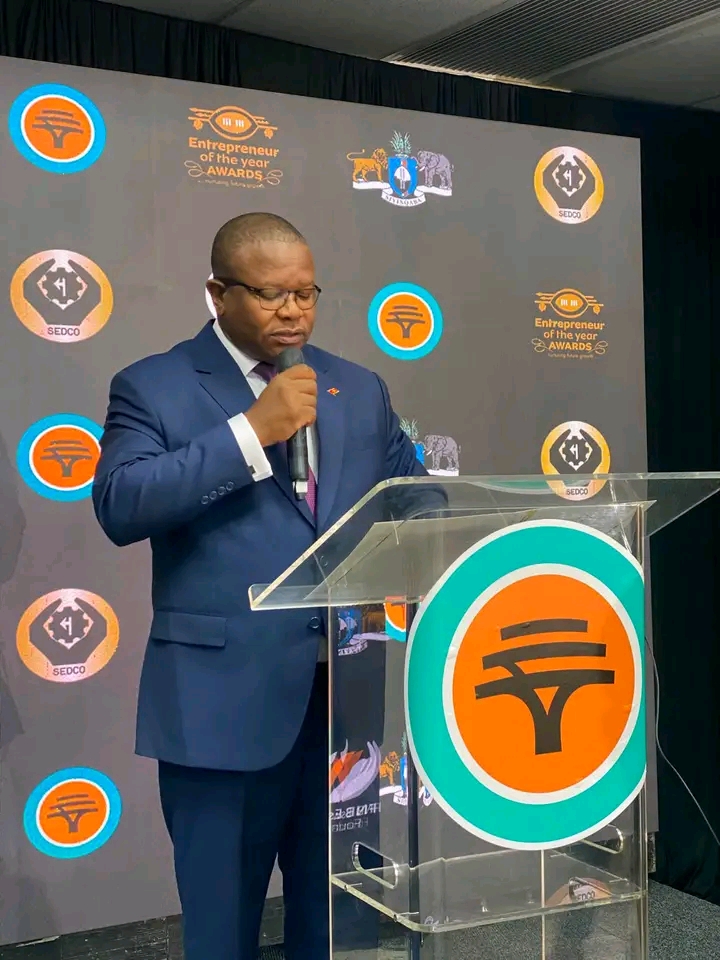
Delivering the keynote address, Minister of Commerce, Industry and Trade Manqoba Khumalo said government no longer views MSMEs as peripheral participants in the economy but as its productive foundation. “Micro, Small, and Medium Enterprises are the foundation of our economy, not a peripheral part of it,” he said, adding that through the Citizen Economic Empowerment Act and the National MSME Policy 2024–2029, the Ministry has worked to secure preferential procurement, improve access to finance, and create a more enabling environment for local businesses.
Those policy interventions carry significant financial implications. Preferential procurement increases the proportion of public expenditure channeled towards domestic enterprises, while improved access to finance addresses one of the largest structural barriers facing Eswatini’s MSME sector. Together with programs designed to improve market access and competitiveness, these reforms are intended to increase business survival rates, stimulate employment, expand domestic production, and ultimately strengthen the country’s tax base.
The Hhohho region’s participation also reflects growing entrepreneurial confidence. Of the 362 applications received nationally this year, 81 originated from Hhohho, representing almost 22 percent of all entries. Equally significant was the gender balance, with 43 women-owned businesses and 38 men-owned enterprises entering the competition, making Hhohho the most evenly represented region in Eswatini.
Rather than being concentrated within one sector, the applications covered business services, agriculture, retail, manufacturing, technology, tourism, handicrafts, and environmentally sustainable enterprises. Such diversification is important from an economic perspective because it reduces dependence on a single industry while strengthening the resilience of regional business activity against external market shocks.
Khumalo observed that Hhohho occupies a unique position within Eswatini’s economy because it hosts the country’s principal financial institutions while serving as its busiest international trade corridor. “This region carries weight in our national economy. Through the Ngwenya and Oshoek border posts, Hhohho sits at the gateway through which most of our trade with South Africa and the region passes, and a business built here is exposed to many opportunities,” he said. That strategic location provides enterprises with easier access to regional markets, making the region an attractive base for businesses seeking to expand beyond Eswatini’s borders.
The government believes improved market access must be accompanied by stronger product competitiveness. Khumalo highlighted initiatives such as the Ingelo Certification Scheme, which seek to help locally manufactured products meet recognized quality standards and access new domestic and export markets. As regional trade under the African Continental Free Trade Area expands, certification is increasingly becoming a commercial requirement rather than a competitive advantage, particularly for manufacturers seeking to participate in cross-border value chains.
The awards themselves have evolved into more than a recognition program. According to the Minister, they have become a launchpad for businesses seeking regional and international exposure. “The Entrepreneur of the Year Awards is indeed a gateway to local, regional, and global recognition,” Khumalo said, noting that last year’s overall winner, Duncan Dlamini of DJD Investments, together with three other Eswatini entrepreneurs, received recognition at the Iconic Africa Summit in Zimbabwe. Such exposure strengthens the commercial credibility of local enterprises and enhances opportunities for investment, partnerships, and export growth.
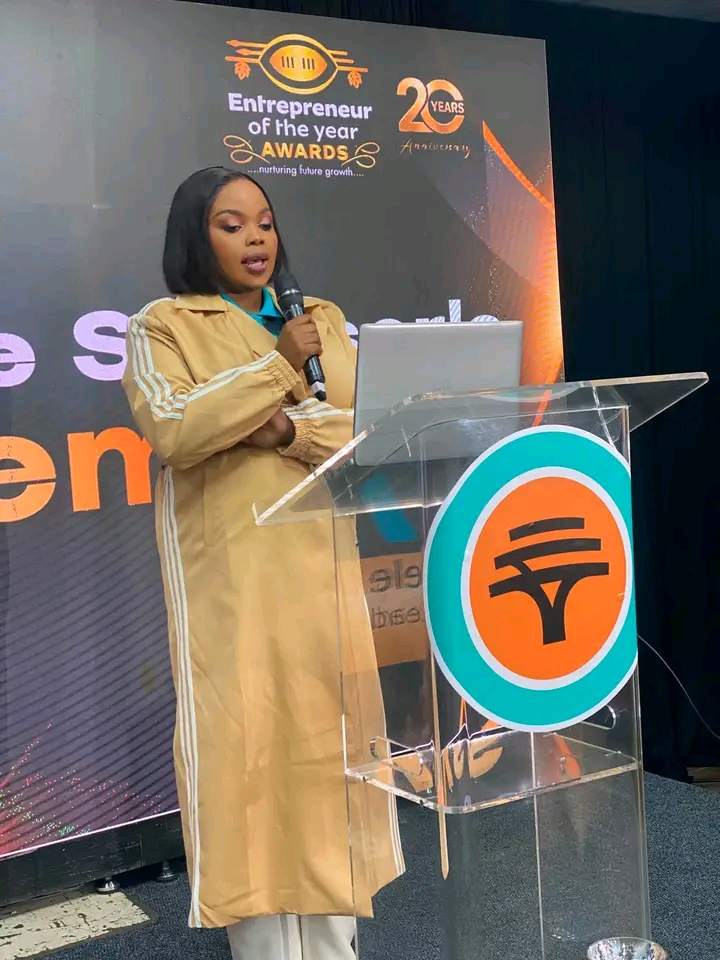
Corporate investment continues to play an equally important role in sustaining Eswatini’s entrepreneurship ecosystem. FNB Eswatini and the FNB Foundation have committed more than E2 million as the program’s title sponsor and 20th Anniversary Legacy Partner. The Eswatini National Provident Fund, Taiwan ICDF, FINCORP, and Infinity Links have maintained their support. Acknowledging these partnerships, Khumalo said, “None of this would be possible without our partners. We thank FNB Eswatini and the FNB Foundation, our title sponsor and 20th Anniversary Legacy Partner, whose investment of over E2 million has made this program a success.”
Beyond sponsorship, such partnerships strengthen enterprise development by helping businesses formalize their operations, improve governance and financial record-keeping, and become investment-ready. These are the attributes commercial lenders and investors increasingly require before extending finance, making programs of this nature an important bridge between entrepreneurship and capital markets.

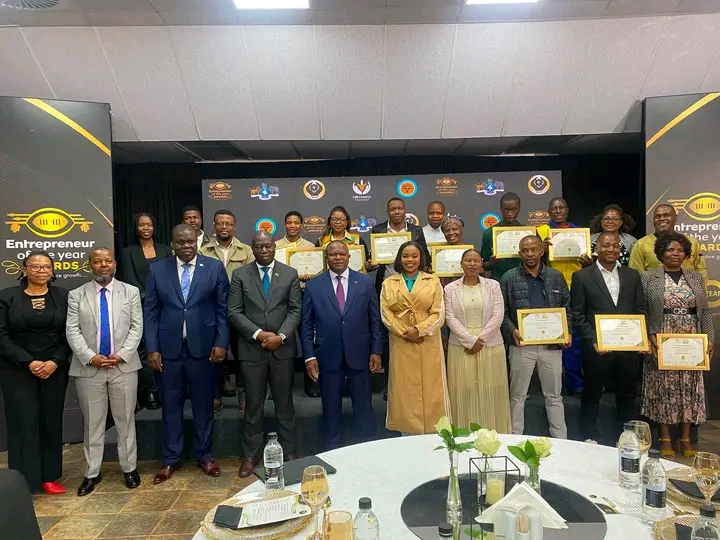
The caliber of this year’s regional winners also reflects the changing structure of Eswatini’s MSME economy. Technology enterprises featured strongly through Aquaritech IT Solutions, Luxe Quests, and Instant Electrical, demonstrating growing opportunities within digital services, cybersecurity, smart infrastructure, and technology-enabled tourism. Manufacturing was represented by Melane Leather Eswatini, whose handcrafted leather products have secured corporate, government, and tourism markets while promoting locally manufactured products for international visitors.
Agribusiness remained equally significant through Malu’s Poultry, whose commercial broiler operation supplies over 20 vendors serving restaurants and food retailers, illustrating the growing commercialization of local food value chains. Other winning enterprises showcased innovation in environmental sustainability, traditional crafts, youth entrepreneurship, and inclusive business ownership, collectively demonstrating that Eswatini’s enterprise economy is expanding across a broad range of productive sectors.
The overall regional winner, Melane Leather Eswatini, perhaps best captures the direction the government hopes the MSME sector will take. By manufacturing premium leather products for corporate and retail clients while serving the tourism market through its presence at the Swazi Candles Craft Center, the business demonstrates how local manufacturing can generate higher-value products, substitute imports, and strengthen Eswatini’s reputation for quality craftsmanship.
As Eswatini continues pursuing industrialization and economic diversification, programs that identify, support, and showcase high-performing entrepreneurs are becoming increasingly valuable indicators of future economic performance. The Hhohho awards demonstrated that the country’s MSME sector is steadily evolving beyond necessity-driven businesses into more formal, investment-ready enterprises capable of creating employment, competing regionally, and contributing meaningfully to national output. For financial institutions, policymakers, and investors alike, the message from Hhohho was unmistakable: Eswatini’s next phase of economic growth will be driven as much by ambitious local entrepreneurs as by established corporations.


Other Articles

13 Things You Must Know About Scammers