






By: Nkosiyabusa Nsibande
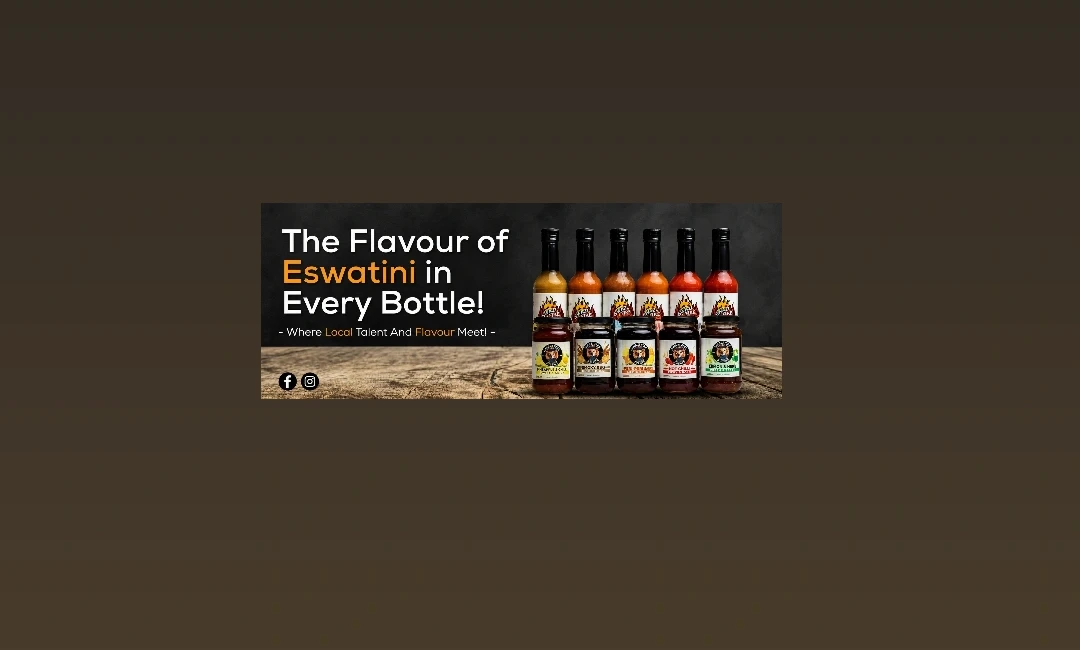
Eswatini’s processed food industry is showing growing potential as an export-oriented business sector, with exports of miscellaneous edible preparations reaching E472 million in 2025. According to the Eswatini Investment Promotion Authority (EIPA), the category recorded an average annual growth rate of 46% between 2021 and 2025, compared with 9% average annual growth in world imports over the same period. The gap between the domestic export growth rate and global import growth makes the category one of the more notable emerging areas in Eswatini’s export market.
The category covers products such as sauces, condiments, and tomato sauces, placing it directly within an area where relatively small producers can participate in manufacturing and processing. EIPA identifies the sector as an opportunity for SMEs to supply fresh chilies and other inputs to local processors, while also pointing to opportunities for producing more concentrated products, such as tomato paste. This creates a potentially wider economic chain in which farmers, processors, packaging companies, distributors, and exporters can derive commercial activity from the same product.

From a financial perspective, the significance of this opportunity is the possibility of moving from the sale of agricultural commodities towards processed products with additional stages of value creation. Processing can create revenue opportunities that are not available when agricultural produce is sold in its least processed form. However, the financial returns depend heavily on production efficiency, input costs, packaging, energy, distribution, and the ability to maintain consistent quality for domestic and export customers.
The market structure already provides a base from which businesses can expand. EIPA lists Mauritius, Malawi, and South Africa among Eswatini’s current markets for miscellaneous edible preparations, while Germany, France, and Belgium are identified as growing global importing markets. Morocco, Côte d’Ivoire, and Zimbabwe are listed among growing African importers. For businesses considering expansion, these markets provide potential destinations, but each would still require a detailed assessment of demand, competition, regulatory standards, distribution arrangements, and the costs associated with reaching the customer.
The processed-food opportunity is relevant to SMEs because the entry point does not require ownership of an entire agricultural supply chain. A small manufacturer, for example, can build a business around sourcing agricultural inputs from local producers and converting them into packaged products. This model creates a direct commercial relationship between agriculture and manufacturing while also creating demand for packaging materials, transport, storage, labeling, and other supporting services.

The same value-chain logic can be seen across several other emerging export categories identified by EIPA. Prepared animal feed reached E463 million in 2025 and recorded average annual growth of 26% between 2024 and 2025, while beverages reached E317 million after growing by 7% over the same period. Preparations of vegetables, fruit, and nuts reached E684 million, although their average annual export growth between 2021 and 2025 was more modest at 2%. These figures suggest that the opportunity is not confined to one product but extends across a broader group of food-related activities.
For farmers and SMEs, the commercial lesson is that export growth can be approached through supply-chain participation rather than only through large-scale manufacturing. An agricultural producer supplying a processor, a company manufacturing packaging, or an SME producing a branded food product can all capture value from the same export ecosystem. The challenge is ensuring that each participant operates at a scale and cost structure that allows the final product to remain competitive in the destination market.

EIPA’s data also illustrates why market intelligence needs to be combined with financial planning. The authority notes that its figures are based on historical trade data sourced from the ITC Trade Map and cautions that the data may be updated. It further advises businesses to consider production feasibility, market demand, competitive intensity, regulatory requirements, consumer preferences, distribution channels, and barriers to entry before committing capital.
For Eswatini’s economy, the larger opportunity is, therefore, not to increase the value of processed-food exports but to deepen the domestic supply chain behind them. If more agricultural inputs can be sourced locally, processed locally, packaged locally and ultimately sold into regional and international markets, export growth can generate activity across several sectors instead of concentrating revenue at the final exporter. The E472 million recorded in 2025 provides evidence of an existing market; the next financial question is how much additional value Eswatini’s farmers, SMEs, and manufacturers can capture from that market.

Other Articles

E416m Paper Exports Grow 57%