





By: Nkosiyabusa Nsibande
Eswatini’s E55.8 billion pension asset pool is increasingly being positioned as one of the country’s most important sources of long-term capital, with Finance Minister Neal Rijkenberg challenging government, pension funds, development finance institutions and the private sector to turn domestic savings into productive national assets without weakening investment discipline.
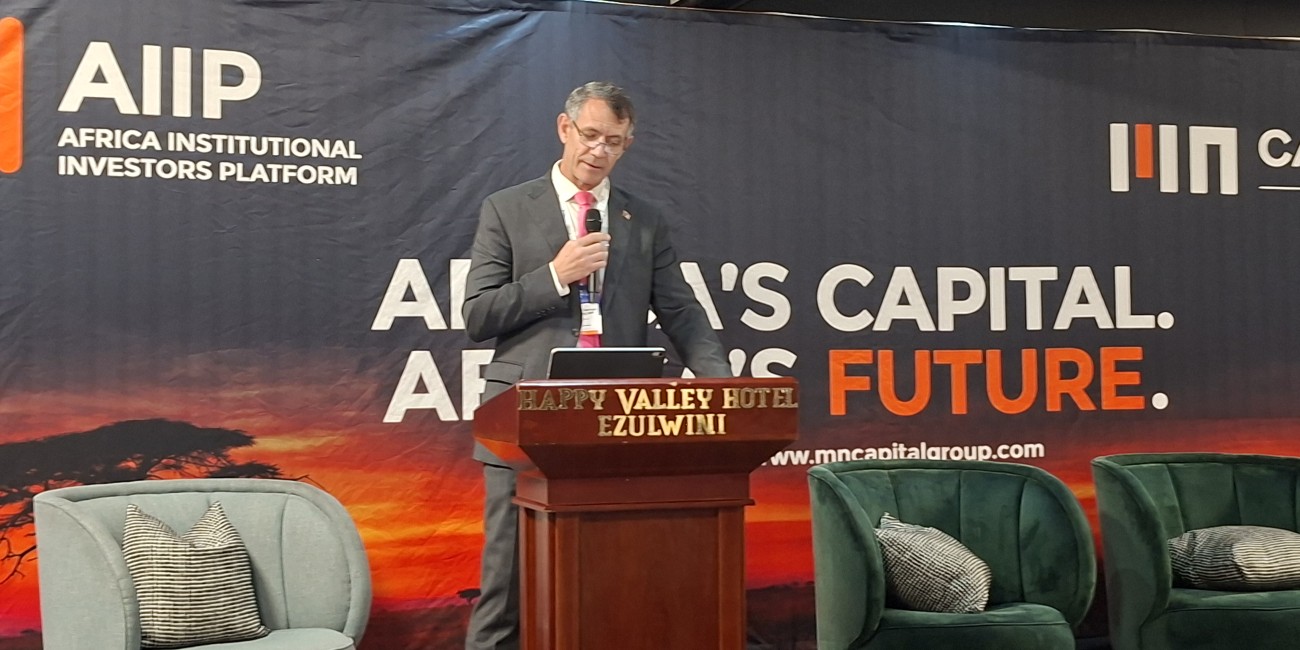
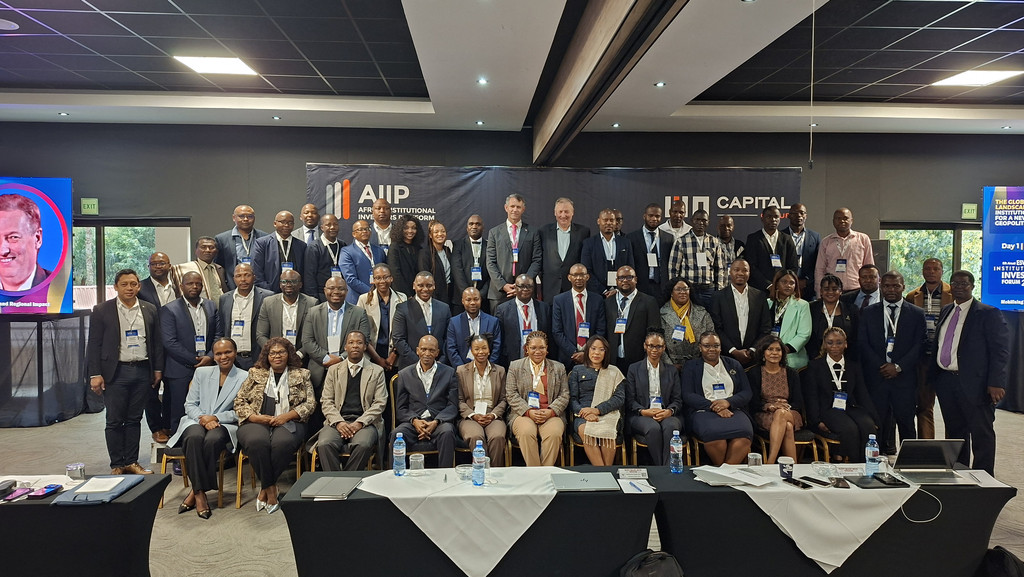
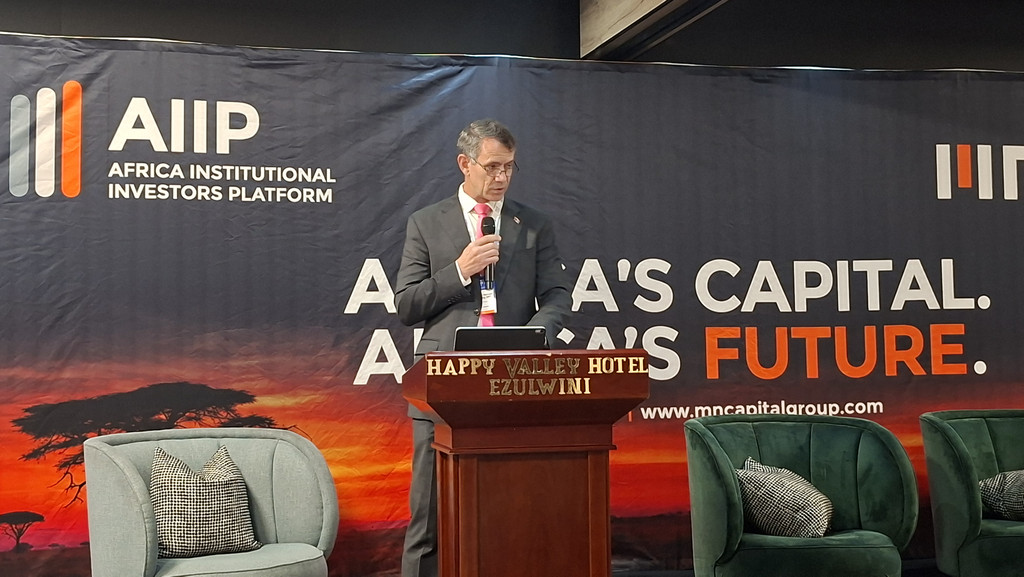
Addressing the official opening of the 5th Annual Eswatini Institutional Investors Forum 2026, held under the theme “Mobilising Institutional Capital for Sustainable Growth and Regional Impact,” Rijkenberg placed institutional investment at the centre of a broader debate about how Eswatini can finance infrastructure, expand productive capacity and generate sustainable economic growth while fiscal space remains constrained.
The scale of the available savings is significant. Rijkenberg said pension fund assets had risen to approximately E55.8 billion, equivalent to about 57% of GDP. By comparison, the 2026/27 national budget provides for total expenditure of E36.92 billion, meaning the pension asset pool is roughly 51% larger than the government’s annual expenditure programme. The comparison illustrates the depth of capital accumulated within the domestic financial system, but the Minister was clear that these funds cannot be treated as an alternative government account.
“Pension money is not public money,” Rijkenberg said, stressing that the funds belong to workers, retirees and their families. Trustees therefore have a fiduciary responsibility to protect members’ savings, generate appropriate returns and ensure that assets remain aligned with future liabilities. Any strategy to increase domestic investment must consequently operate within those obligations rather than seek to dilute them in the name of economic development.
This distinction is central to the investment proposition being advanced by government. The objective, according to Rijkenberg, should not be to persuade pension funds to accept weaker investment standards simply because a project is locally based. Instead, government and project sponsors must improve the quality of opportunities entering the market so that domestic infrastructure and productive-sector investments can compete for institutional capital on commercial terms.
The approach comes as government faces a widening financing challenge. The 2026/27 budget projects a E5.02 billion fiscal deficit, equivalent to approximately 4.9% of GDP, while capital expenditure has been allocated E7.78 billion. Rijkenberg acknowledged the need for continued fiscal consolidation as debt pressures increase, arguing that development cannot sustainably depend on government borrowing alone.
The Minister’s position effectively shifts the discussion from the availability of capital to the availability of investable assets. Eswatini may have substantial pools of long-term savings, but those savings will not automatically flow into roads, energy, water, digital infrastructure, agriculture, manufacturing or other productive sectors. Institutional investors require projects with credible sponsors, transparent financial models, adequate disclosure, appropriate governance, clearly allocated risks and returns that compensate for the risks being assumed.
That makes government’s role particularly important. Rijkenberg said government must create the conditions under which private and institutional capital can participate with confidence. These include policy certainty, transparent procurement, credible project preparation, fair regulation and timely decision-making. Without those conditions, even projects with strong developmental potential can struggle to reach financial close.
The Minister also cautioned against a public-private partnership model in which government retains control over major decisions while transferring most of the commercial and operational risks to private investors. Such an approach, he argued, would undermine rather than strengthen private-sector participation.
For institutional investors, risk allocation is not merely a contractual issue; it is a fundamental component of investment decision-making. Investors must be able to determine which risks they can control, which risks require mitigation and which should remain with government because they arise from policy, regulatory or sovereign decisions. A properly structured public-private partnership should therefore allocate each risk to the party best positioned to manage it.
Rijkenberg’s argument also places greater responsibility on development finance institutions. Rather than using concessional finance simply to make unattractive projects appear viable, DFIs should deploy guarantees, first-loss capital, project-preparation funding, lender finance and credit enhancements to address clearly identified risks and attract additional private capital.
This could become particularly important for infrastructure projects, where the initial cost of preparing a transaction can be substantial and where institutional investors may be reluctant to commit capital before technical, legal, environmental and financial risks have been adequately assessed. Better project preparation can reduce uncertainty and shorten the distance between a government project announcement and an investment-ready transaction.
The Minister called for a more structured investment pipeline, proposing that stakeholders develop and maintain a prioritised list of projects showing their status, funding requirements, preparation gaps and accountable sponsors. He also called for structured dialogue between government, DFIs, regulators and prospective investors before projects reach the market, allowing financing concerns to be addressed earlier in the development cycle.
Another priority is greater co-investment and knowledge-sharing among Eswatini’s institutional investors and their regional counterparts. Pooled investment vehicles and collaborative structures could potentially allow funds to participate in transactions that may be too large, complex or resource-intensive for individual institutions to undertake alone, while also creating opportunities for regional diversification.
Importantly, Rijkenberg proposed that the institutional investment community should identify at least one flagship transaction capable of progressing from discussions to an investable term sheet before the next forum. That proposal introduces a measurable test for the annual gathering: whether discussions ultimately translate into transactions, rather than remaining at the level of conferences, policy statements and memoranda.
The proposed accountability framework extends beyond capital committed. Rijkenberg said progress should also be assessed by capital actually deployed, projects reaching financial close, jobs created, enterprises supported and the protection of member outcomes. This is a more meaningful measure of developmental investment because capital announcements do not necessarily translate into economic activity.

The broader economic argument is that domestic investment can create a feedback loop between pension savings and economic productivity. Well-structured investment in infrastructure and productive enterprises can support business activity, employment and exports, expanding the economic base from which future pension contributions are generated. At the same time, successful investments can provide institutional investors with long-term assets capable of matching their liabilities.
That relationship, however, depends on investment quality. Domestic investment cannot become a justification for accepting weak governance, inadequate disclosure, excessive fees or returns that do not properly compensate investors for risk. For pension trustees, the developmental benefits of an investment are relevant, but they cannot replace the fundamental requirement to act in members’ best financial interests.
For Eswatini, the opportunity therefore lies in connecting two sides of the financial system that have often operated separately: substantial pools of long-term savings and a pipeline of long-term development needs. The country has accumulated institutional capital, while government and the private sector have significant infrastructure and productive investment requirements. The missing link is a sufficiently strong investment architecture capable of connecting the two.
Rijkenberg’s challenge is ultimately not for pension funds to finance government, but for government to make development worthy of institutional capital. That requires credible projects, stronger governance, predictable regulation, commercially realistic returns and a clear allocation of risk.
If that architecture can be built, Eswatini’s pension savings could play a much larger role in financing the country’s next phase of economic growth. The measure of success, however, will not be the amount of money directed into domestic projects. It will be whether that capital produces durable assets, competitive businesses, stronger employment, improved infrastructure and sustainable returns for the members whose savings make the investment pool possible.

Other Articles

Investors Cannot Eliminate Risk, They Can Only Manage It