






By: Nkosiyabusa Nsibande
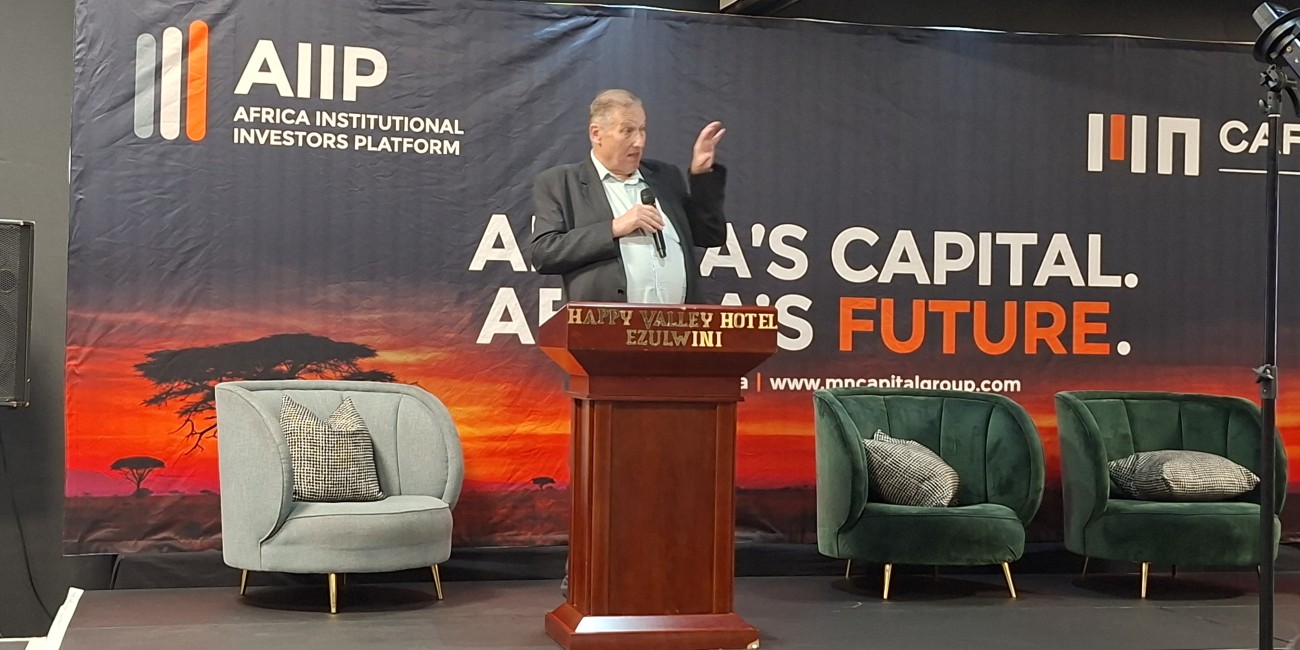
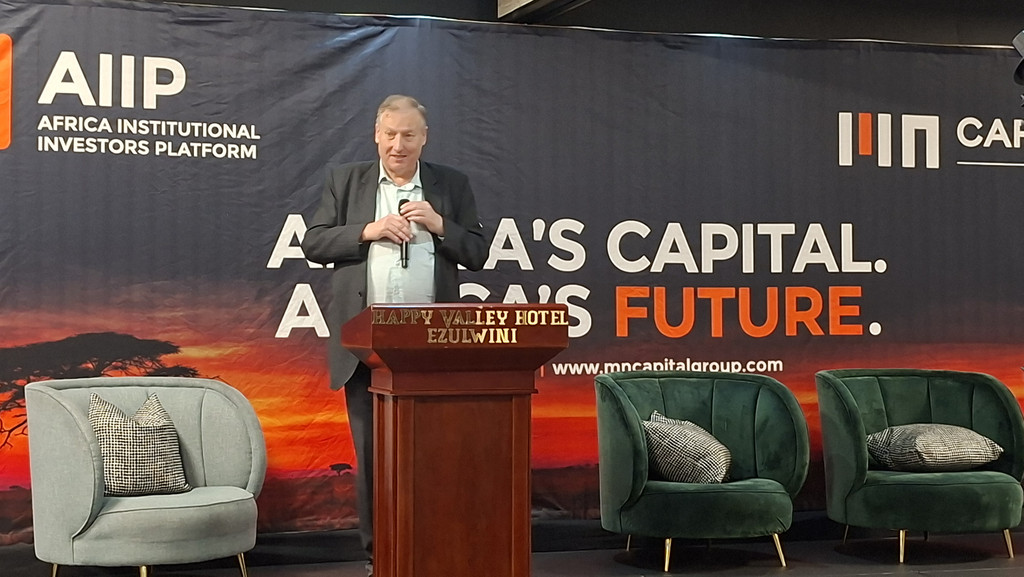
There is no such thing as a genuinely low-risk investment portfolio, according to Chris Hart, Executive Chairman of Impact Group of Companies, who challenged institutional investors and financial planners to rethink how investment risk is measured and managed.
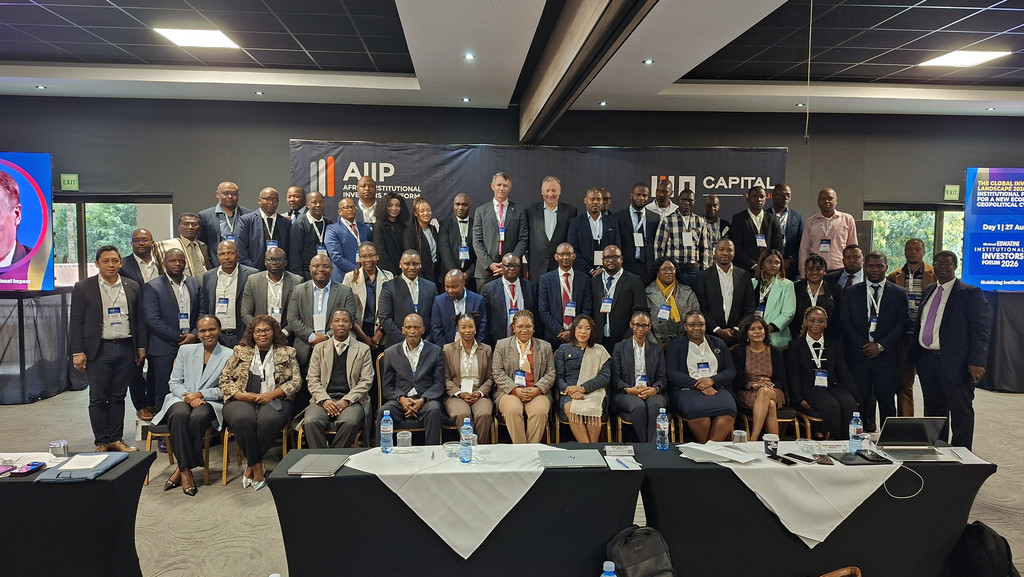
Speaking during the 5th Annual Eswatini Institutional Investors Forum 2026, held under the theme “Mobilising Institutional Capital for Sustainable Growth and Regional Impact,” Hart argued that the conventional approach of judging risk largely through investment volatility does not provide a complete picture of the threats facing investor capital.
His central argument was that portfolio construction is ultimately an exercise in risk management rather than risk elimination. Investors may reduce exposure to one category of risk, but in doing so they can increase their exposure to another. A portfolio designed to minimise market volatility, for example, may become more vulnerable to inflation if its assets fail to generate returns that preserve purchasing power over the long term.
Conversely, protecting capital against inflation may require exposure to assets whose values fluctuate more significantly. The apparent reduction in one form of risk therefore does not necessarily mean that the portfolio has become safer. It may simply mean that the risk has changed.
Hart’s argument has important implications for institutional investors, particularly pension funds and other long-term pools of capital. These investors are required to protect members’ savings while generating returns capable of meeting future liabilities. The challenge is therefore not simply to find assets with the lowest volatility, but to understand how market, inflation, policy, regulatory, liquidity and other risks interact over the investment horizon.
Volatility is not the whole risk equation
Hart questioned the financial industry’s longstanding tendency to treat volatility as the primary indicator of investment risk. While fluctuations in asset prices are visible and measurable, they do not necessarily represent the greatest threat to long-term wealth.
An asset can appear stable while steadily losing purchasing power. Likewise, an investment with significant short-term price movements can potentially provide stronger long-term protection against inflation and contribute more meaningfully to portfolio growth.
This distinction is particularly relevant to pension funds, where investment decisions are measured over decades rather than months. For a long-term investor, the risk of failing to meet future obligations may ultimately be more important than temporary movements in market prices.
The focus, therefore, should move towards understanding the full risk matrix surrounding capital. This includes the risks created by economic conditions, fiscal policy, regulation, taxation and the broader investment environment.
Government debt creates another layer of risk
Hart also highlighted the financial pressures facing governments and the potential implications for institutional investors. As government debt and fiscal pressures increase, pension funds and other large pools of domestic capital can become increasingly important sources of financing. Institutional investors can play a constructive role in funding public infrastructure and development, but Hart’s warning was that the growing demand for private capital must be considered alongside the rights and interests of the investors whose money is being deployed.
For pension funds, this creates an important governance question. Capital may be required to support national development, but the investment decision must still be assessed against the fund’s fiduciary responsibilities, risk appetite and expected returns.
The mobilisation of institutional capital should therefore not be interpreted as a mechanism through which investors are expected to absorb risks that would ordinarily sit elsewhere in the economy. Investment structures must provide sufficient transparency around risk allocation, returns, governance and the protection of investors’ interests.
Regulation can also become an investment risk
Hart extended his argument beyond markets and government borrowing to the regulatory environment surrounding investment capital. He raised concerns about policies and structures that could gradually weaken investors’ control over their own capital. His point was that investment risk is not limited to whether an asset price rises or falls. It can also emerge from changes in the rules governing how capital is owned, invested, accessed and transferred.
For institutional investors, regulatory certainty is consequently an important component of portfolio risk management. Long-term capital requires an environment in which investment rules are predictable and where investors can assess the consequences of policy changes before committing funds.

This becomes particularly significant when pension funds are encouraged to invest domestically. Institutional capital can support infrastructure, businesses and other productive assets, but investors require structures that balance national development priorities with commercial discipline.
Capital must ultimately support economic activity
Hart linked the discussion about investment portfolios to one of the country’s broader economic challenges: unemployment. His argument was that capital has a greater economic impact when it reaches productive areas of the economy where businesses can expand, investment can take place and employment can be created. For institutional investors, this raises the importance of examining not only the financial return of an investment but also the economic activity that the capital enables.
This does not mean abandoning investment discipline in pursuit of social objectives. Rather, it points to the potential for properly structured investments to generate both financial returns for investors and productive economic outcomes.
For Eswatini, where pension funds represent a substantial pool of long-term savings, the debate over domestic investment is therefore closely connected to the country’s broader development financing needs. The challenge is to create investable opportunities that can attract institutional capital without compromising the financial interests of fund members.
Tax policy and retained profits
Hart also brought taxation into the broader discussion around capital formation, referring to the issue of an undistributed profits tax. The issue is significant because taxation of retained business profits can influence how companies allocate capital between dividends, reinvestment and other uses. Where businesses retain earnings to finance expansion, investment and productive capacity, the tax treatment of those profits can influence the amount of capital available for future growth.
The debate therefore extends beyond the immediate tax revenue generated by government. It also involves the longer-term effects of taxation on business investment, capital accumulation, employment and economic growth.
For policymakers, the challenge is to strike a balance between raising public revenue and maintaining conditions that encourage businesses to reinvest in the economy.

Rethinking the meaning of a “safe” portfolio
Hart’s presentation ultimately placed institutional investment within a much wider economic framework. A portfolio cannot be considered safe simply because its assets experience limited short-term price movements. The real assessment requires investors to understand what risks are being accepted in exchange for that apparent stability.
Inflation can erode purchasing power. Government borrowing can alter the financing environment. Regulatory changes can affect investor rights. Tax policy can influence capital formation, while weak economic activity can reduce the opportunities available for productive investment. For institutional investors, the implication is clear, risk management must extend beyond volatility.
As Eswatini seeks to mobilise institutional capital for sustainable growth and regional impact, the quality of investment opportunities, the allocation of risks and the protection of investors’ capital will become increasingly important. The objective should not be to create portfolios that claim to have no risk, but to build portfolios in which risks are understood, priced, diversified and managed over the full investment horizon.
In that sense, the question facing institutional investors is no longer simply where to invest. It is which risks they are prepared to accept, which risks they can control, and whether the returns justify taking them.