






By: Nkosiyabusa Nsibande
The Lower Maguduza Hydro Power Project has emerged as a case study in how Eswatini can use domestic institutional capital to finance strategic infrastructure, with the project’s financial close underpinned by a combination of policy support, experienced private-sector sponsors, government guarantees, and local-currency funding.
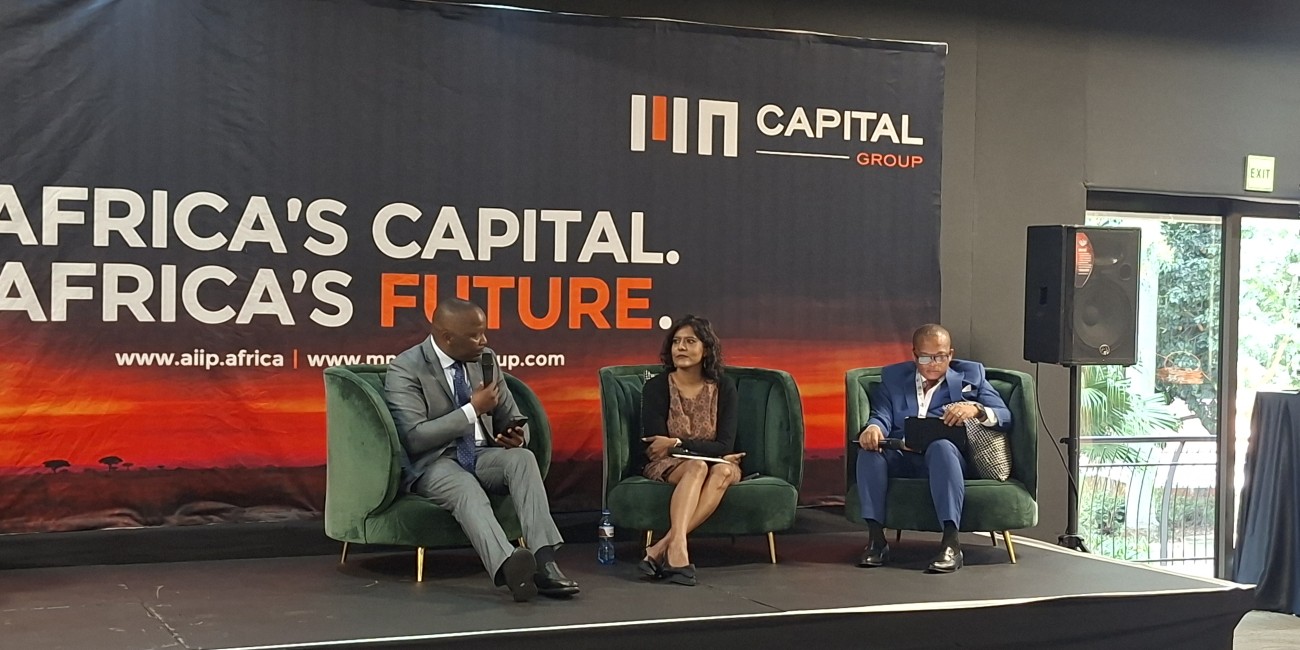
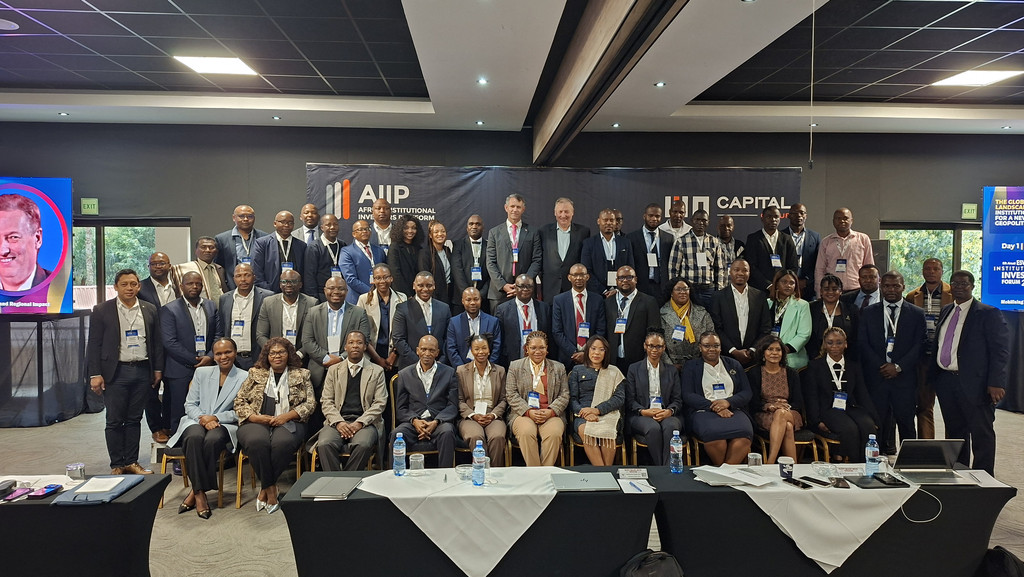
The project was discussed during the infrastructure and development finance panel at the 5th Annual Eswatini Institutional Investors Forum 2026, held under the theme “Financing Eswatini’s infrastructure future from pipeline to financial close: Lessons from Lower Maguduza and Eswatini’s next generation of investable infrastructure.” The session examined the practical financing requirements for moving infrastructure projects from concepts and development pipelines into bankable transactions capable of attracting institutional and commercial capital.
Keshri Bapoo, Senior Vice President for Investment Banking: Energy and Infrastructure Finance at Standard Bank in South Africa, said one of the most important factors behind Lower Maguduza’s progress was the existence of a clear government policy direction towards increasing domestic energy generation. She said the policy environment gave investors and lenders greater visibility over the country’s long-term energy requirements and created a basis for private capital to participate in generation projects.

Bapoo said the government’s procurement initiatives, including the program targeting 75 megawatts of solar photovoltaic generation as well as biomass and other generation technologies, demonstrated a broader commitment to expanding local electricity supply. Although the hydro project sat outside that particular procurement program, she said it benefited from the same strategic direction. “It was the clear direction that Eswatini needed to build its own generation,” Bapoo said.
For investors, however, policy ambition alone does not make infrastructure investable. The Lower Maguduza transaction also benefited from sponsors with the technical, financial, and development capacity required to take a complex power project through the various stages of development. Bapoo highlighted Anthem Developments, formerly African Clean Energy Developments, as a key sponsor, noting its experience as an African energy project developer and its financial backing.
The project also demonstrated the value of bringing domestic institutional investors into infrastructure transactions at both equity and debt levels. The Public Service Pension Fund participated in the project through equity and debt, creating a blended financing structure that brought together long-term institutional money and commercial funding.
This structure is particularly significant for Eswatini because pension funds and other institutional investors control pools of capital whose investment horizons can match the long operating lives of infrastructure assets. The challenge is therefore not simply the availability of savings, but creating investment structures through which those savings can be deployed into projects with predictable cash flows and manageable risks.
Bapoo said the regulatory environment was equally important in making the project bankable, particularly because lenders require protection against risks that individual project sponsors cannot reasonably control. “You can’t bank projects of this size and of this nature unless you’re able to show that your power purchase agreement or your off-take has got the right kind of protections around termination, and payment risk and you’ve got government stepping in to provide support,” she said.
The power purchase agreement between the Eswatini Electricity Company and the project provided an important foundation for the financing structure. According to Bapoo, the agreement runs for 50 years and is supported by a government guarantee, giving lenders greater confidence that the project’s future revenues would be sufficiently protected to service its financing obligations.
For infrastructure investors, such contractual certainty is fundamental. A project may have strong technical fundamentals and a valuable underlying asset, but without a reliable off-taker and a clear mechanism for receiving payment, its future revenues remain too uncertain to support significant long-term borrowing.
The Lower Maguduza example also placed risk allocation at the center of the financing process. Bapoo explained that technical and construction risks should be assigned to parties with the expertise and balance sheet capacity to manage them, rather than allowing those risks to sit with investors or lenders who have limited ability to influence construction outcomes.
During the operational phase, the project similarly requires an experienced operator capable of managing performance over the long-term life of the asset. Government, meanwhile, has a different risk responsibility, particularly around approvals, land, environmental permits, and regulatory decisions. “You’ve got to be able to engage with them around any regulatory risk,” Bapoo said.

The distinction is important because bankability is ultimately about determining who carries each risk and whether that party has the capacity to absorb it. Poorly allocated risks increase financing costs, weaken investor appetite, and can prevent projects from reaching financial close. Conversely, when risks are allocated to the parties best positioned to manage them, the overall financing proposition becomes more attractive.
Another factor Bapoo identified was the quality of project preparation. The project had reached a stage where its commercial, technical, and regulatory fundamentals could be assessed by financiers, allowing the transaction to be presented as a bankable investment rather than an infrastructure concept still requiring substantial development work.
This issue remains critical for Eswatini’s wider infrastructure pipeline. A significant number of infrastructure projects can exist at the concept or feasibility stage without progressing to financial close because of incomplete feasibility studies, unclear revenue models, weak risk allocation, unresolved regulatory issues, or inadequate preparation. Institutional investors may have capital available, but they cannot deploy it simply because a project has been identified as a national priority.
Lower Maguduza, therefore, offers a broader lesson for the country’s infrastructure financing strategy: project preparation is itself an investment requirement. Government and development finance institutions have an important role to play in ensuring that priority projects reach the market with credible feasibility studies, clear contractual arrangements, appropriate risk allocation, and identifiable revenue streams.
The other major lesson from the transaction was the ability to finance the project in the local currency. Bapoo said many African infrastructure projects are financed in US dollars despite generating revenues in local currencies, creating a foreign-exchange mismatch that can materially increase the financial risk of a project.
Lower Maguduza avoided that mismatch by using Emalangeni financing. “We were able to do this project using emalangeni,” Bapoo said, describing the structure as particularly important because it enabled domestic savings from the Public Service Pension Fund and local deposits to be mobilized towards infrastructure financing.
The use of local currency has implications beyond the individual project. Where infrastructure revenues are generated domestically, borrowing in the same currency can provide a natural hedge against exchange-rate movements. It can also create a more direct connection between domestic savings and domestic productive assets, allowing pension funds, banks, and other local investors to participate in financing projects whose economic benefits accrue within Eswatini.
For institutional investors, this creates an opportunity to move beyond traditional allocations and consider infrastructure as a long-duration asset class, provided projects offer sufficient contractual protection and risk-adjusted returns. For the government, the challenge is to build a pipeline of projects capable of meeting those investment requirements rather than relying on public resources alone.
Zwelibanzi Sapula, Executive Director of the SADC Development Finance Resource Centre (SADC-DFRC), was also part of the panel examining how infrastructure projects can become investable assets. His participation reflected the broader development-finance question facing Eswatini and the region: how development finance institutions, governments, commercial banks, and institutional investors can work together to reduce risks that prevent otherwise economically viable projects from reaching financial close.
The Lower Maguduza experience suggests that successful infrastructure financing is rarely the result of one source of capital. It requires a financing ecosystem in which government provides policy and regulatory certainty; sponsors bring technical and financial capacity; commercial banks structure and underwrite transactions; development financiers help address project risks; and institutional investors provide long-term capital.
For Eswatini, the opportunity is to replicate those conditions across the next generation of infrastructure projects. The country has domestic savings that can potentially support productive investment, but unlocking that capital will depend on the quality of the projects presented to investors and the mechanisms used to protect their capital.
The central lesson from Lower Maguduza is therefore not simply that a hydro project reached financial close. It is that bankable infrastructure must be deliberately structured. As Bapoo noted, collaboration was critical because the project was sufficiently well prepared when it reached financiers to present “a definite bankable case.”
For Eswatini’s infrastructure ambitions, that distinction could determine whether projects remain on government pipelines or become financed assets capable of generating electricity, supporting economic activity, and creating long-term investment returns for the domestic institutions whose capital ultimately finances them.