






By: Nkosiyabusa Nsibande
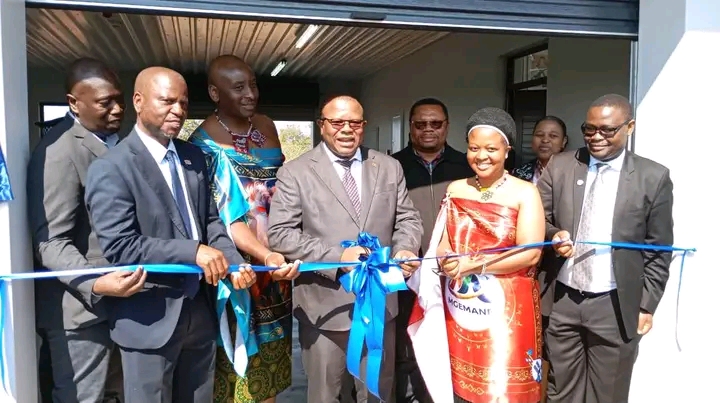
The commissioning of the first Ingelo Certification Scheme Production Cottage at Mkhiweni Inkhundla signals a shift in how Eswatini is supporting the commercialisation of small businesses. Rather than limiting assistance to training and financial support, the Government is now investing in productive infrastructure that enables entrepreneurs to manufacture goods that meet recognised quality and safety standards. For a country seeking to expand industrial activity and strengthen local value addition, production facilities of this nature could become an important catalyst for inclusive economic growth.
The first beneficiary, Mgemane Chilies, owned by Ms. Nozipho Dlamini, becomes the inaugural enterprise to operate from the facility following its official launch by the Honourable Minister of Commerce, Industry and Trade, Manqoba Khumalo. While the milestone is significant for the business itself, the broader economic value lies in demonstrating how shared industrial infrastructure can reduce the cost of entering formal manufacturing and help small enterprises scale beyond informal trading.
For many MSMEs, access to compliant production space remains one of the largest financial obstacles to expansion. Constructing a facility that satisfies health, safety and quality certification requirements requires substantial capital, an investment that is often beyond the reach of emerging entrepreneurs. As a result, many businesses remain confined to small-scale production despite growing consumer demand for locally manufactured products.

The Ingelo Production Cottage model addresses this challenge by providing modern production facilities where businesses can manufacture products that comply with recognised standards. This enables entrepreneurs to focus their financial resources on expanding production, improving product development, building distribution networks and strengthening working capital instead of directing scarce funds towards expensive infrastructure. The reduction in upfront capital requirements improves business sustainability while increasing the likelihood that enterprises can compete within formal retail channels.
Speaking during the handover ceremony, Minister Khumalo said the initiative reflects Government’s commitment to empowering MSMEs through infrastructure that supports the production of safe, high-quality and standards-compliant goods. Such facilities strengthen the commercial readiness of small businesses, positioning them to participate more effectively in competitive domestic and regional markets where quality assurance increasingly determines purchasing decisions.
From an investment perspective, quality certification is no longer simply a regulatory requirement. It has become a commercial asset that influences customer confidence, supplier relationships and procurement opportunities. Businesses capable of demonstrating compliance with recognised standards are generally better positioned to secure contracts with retailers, hospitality operators, institutional buyers and export markets. The production cottages therefore represent an investment in market access rather than merely an investment in buildings.

Equally significant is the decision to operate the facilities on a rotational basis. Instead of benefiting a single enterprise permanently, the shared model allows multiple entrepreneurs within the community to access compliant manufacturing space over time. This approach increases the economic return on public investment by expanding the number of businesses that can improve production quality, formalise operations and generate sustainable income. It also encourages knowledge sharing among entrepreneurs while strengthening the broader ecosystem of local manufacturing.
The initiative is being implemented through ESWASA in partnership with SEDCO, the United Nations Development Programme (UNDP) and other stakeholders. The collaboration illustrates how public institutions and development partners can combine financial and technical resources to address structural constraints facing small businesses. Such partnerships become increasingly important as Eswatini seeks to accelerate industrialisation, diversify its productive sectors and reduce dependence on imported manufactured goods.
For Eswatini’s economy, the long-term significance of the Ingelo Certification Scheme extends beyond the success of any individual enterprise. Every MSME that transitions from informal production into certified manufacturing contributes to expanding the country’s productive capacity, strengthening local supply chains and creating employment opportunities. As more businesses gain access to compliant production infrastructure, the cumulative effect could be a stronger manufacturing base capable of generating higher incomes, increasing domestic value addition and supporting sustainable economic growth.
The success of Mgemane Chilies therefore represents more than an entrepreneurial achievement. It provides an early indication of how targeted investments in production infrastructure can unlock the commercial potential of Eswatini’s MSMEs and transform quality certification into a practical pathway towards business growth, industrial competitiveness and long-term economic resilience.