






By: Nkosiyabusa Nsibande
Eswatini has taken another practical step towards strengthening its productive economy through the expansion of the Ingelo Certification Scheme, an initiative that seeks to transform promising micro, small and medium enterprises into commercially competitive businesses capable of creating employment and generating long-term economic value.
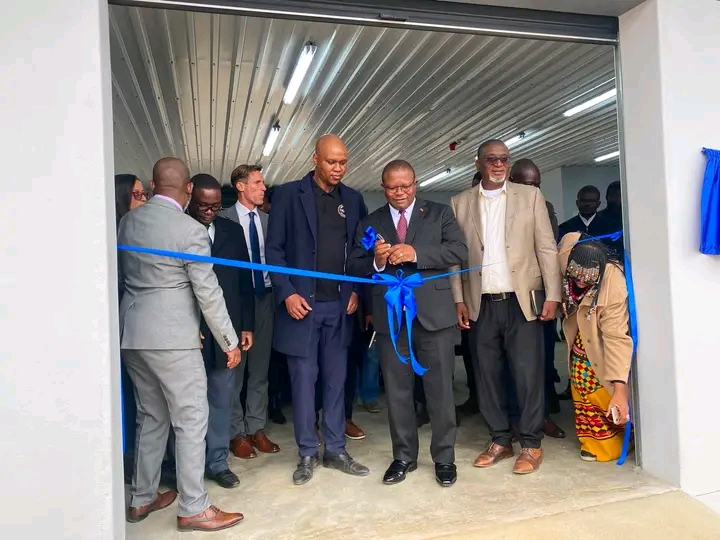
The official launch and handover of the Ingelo Certification Scheme Production Cottages at Mpolonjeni Inkhundla by the Honourable Minister of Commerce, Industry and Trade, Manqoba Khumalo, signals a shift from traditional enterprise support towards investment in productive capacity. Rather than limiting assistance to business training or financial grants, the programme provides entrepreneurs with access to compliant production facilities, quality management systems and technical guidance required to manufacture products that satisfy national standards.
For many emerging businesses in Eswatini, production capacity has remained one of the most significant obstacles to growth. Entrepreneurs often develop products with commercial potential but struggle to secure premises that meet regulatory requirements or implement the food safety and quality systems demanded by supermarkets, institutional buyers and other formal markets. Without these capabilities, expansion opportunities remain limited despite strong consumer demand.

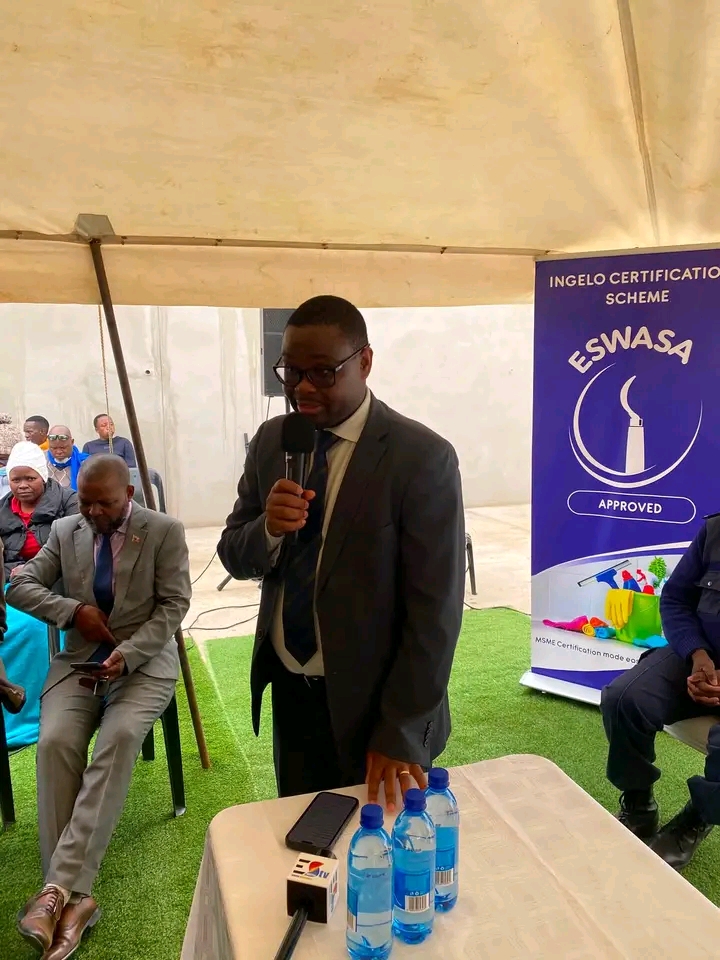
The production cottages are designed to bridge that gap. Implemented through the Ingelo Certification Scheme and administered by the Eswatini Standards Authority (ESWASA) in partnership with SEDCO and other stakeholders, the facilities create an environment where MSMEs can manufacture products that comply with recognised quality standards while improving operational efficiency. This combination of infrastructure and certification has the potential to increase business sustainability by reducing compliance costs that individual entrepreneurs would otherwise struggle to finance independently.
The first beneficiary at the Mpolonjeni Production Cottage, Patience Delight, owned by Mr. Lungelo Dlamini, now has access to production infrastructure that supports the commercial manufacturing of oat biscuits under conditions aligned with national quality requirements. Such investments significantly improve the prospects of small food processors seeking to supply larger retailers, hospitality businesses and institutional procurement programmes, where compliance with food safety standards is increasingly becoming a prerequisite rather than a competitive advantage.
Equally significant was the awarding of the second Ingelo Certification to Lujilo Honey, owned by Mr. Vusi Nkambule. Certification represents more than regulatory compliance. It provides independent assurance that production systems consistently meet recognised standards, strengthening consumer confidence while improving the company’s credibility with distributors, wholesalers and commercial buyers. In increasingly competitive markets, certification has become an important commercial asset that enhances brand value and reduces barriers to market entry.
From a financial perspective, quality infrastructure plays an important role in improving enterprise performance. Businesses operating within recognised standards generally experience fewer product rejections, lower operational losses and stronger customer retention. Compliance also creates opportunities to diversify revenue streams by entering higher-value retail channels and participating in procurement opportunities that require certified suppliers. These advantages translate into improved cash flow stability and stronger prospects for long-term investment.
The Ingelo Certification Scheme also supports Government’s broader industrialisation agenda by strengthening domestic manufacturing capabilities. Expanding the number of locally compliant producers reduces dependence on imported consumer goods while encouraging value addition within Eswatini. As more MSMEs formalise their operations and scale production, the economy benefits through increased employment, higher business activity and broader participation in industrial value chains.
The partnership between ESWASA, SEDCO and other implementing institutions demonstrates the importance of coordinated enterprise development. While access to finance remains essential, experience across developing economies has shown that capital alone rarely guarantees business success. Sustainable enterprise growth depends equally on production capacity, technical knowledge, quality assurance and access to markets. The production cottage model integrates these elements into a single support framework, improving the likelihood that beneficiary businesses will survive beyond the start-up phase.
As Eswatini continues pursuing private sector-led economic growth, initiatives that improve productivity and competitiveness among MSMEs will become increasingly important. Small businesses already account for a significant share of employment and entrepreneurial activity, but their contribution to industrial output can only expand if they are equipped to compete within regulated and quality-driven markets. The Ingelo Certification Scheme Production Cottages represent an investment in that transition, providing entrepreneurs with the infrastructure and standards needed to build resilient businesses capable of contributing meaningfully to the country’s industrial and economic development.

Other Articles