





By: Nkosiyabusa Nsibande
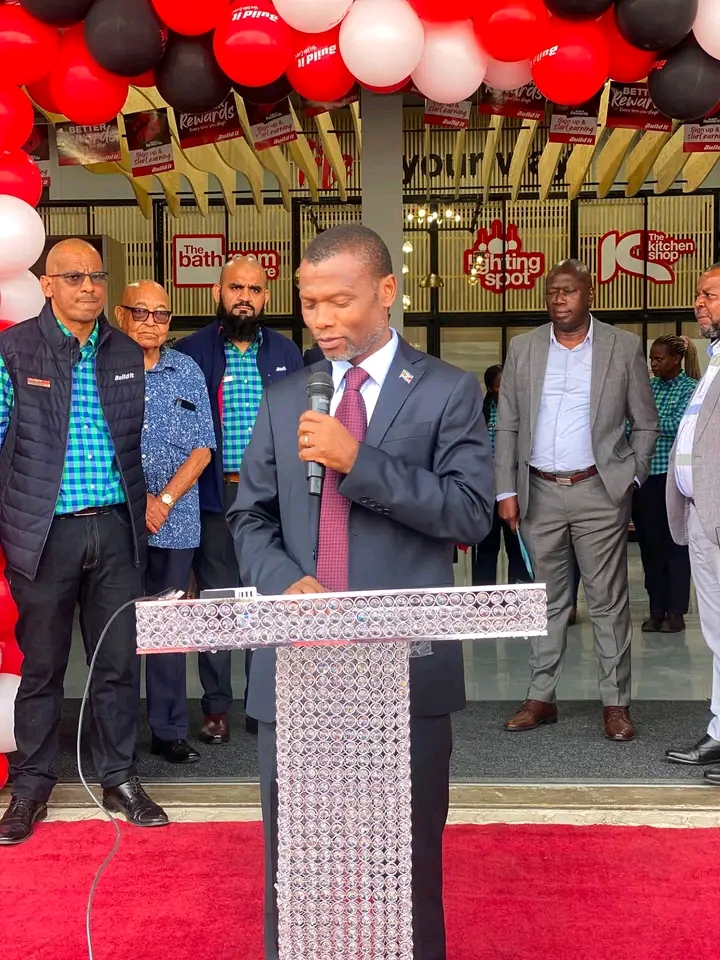
Private sector investment continues to emerge as one of the strongest indicators of confidence in Eswatini’s economic prospects, with the official opening of the E40 million Build It Plus by the Minister of Commerce, Industry and Trade Manqoba Khumalo and Minister Of Housing and Urban Development Apollo Maphalala. The Junction development in Manzini adding fresh momentum to the country’s investment narrative. Beyond the physical infrastructure, the project represents a significant injection of capital into the domestic economy at a time when the government is intensifying efforts to position Eswatini as a competitive destination for both local and international investors.
Officially opening the facility, the Honorable Minister of Commerce, Industry, and Trade, Manqoba Khumalo, described the investment as a clear endorsement of Eswatini’s business environment. His remarks reflected the government’s broader economic strategy of attracting productive private capital capable of generating employment, strengthening domestic industries, and supporting inclusive economic expansion. Rather than viewing individual investments as isolated commercial projects, government increasingly regards them as catalysts capable of stimulating wider economic activity across multiple sectors.
The E40 million investment has immediately translated into employment for 60 emaSwati, highlighting the direct contribution that private capital can make to reducing unemployment while simultaneously expanding household incomes. Employment generated through such investments extends beyond salaries alone. Increased disposable income supports consumer spending, strengthens local demand for goods and services, and creates additional economic activity for businesses operating throughout surrounding communities. These multiplier effects often exceed the immediate financial value of the original investment, making large-scale commercial developments important drivers of broader economic growth.
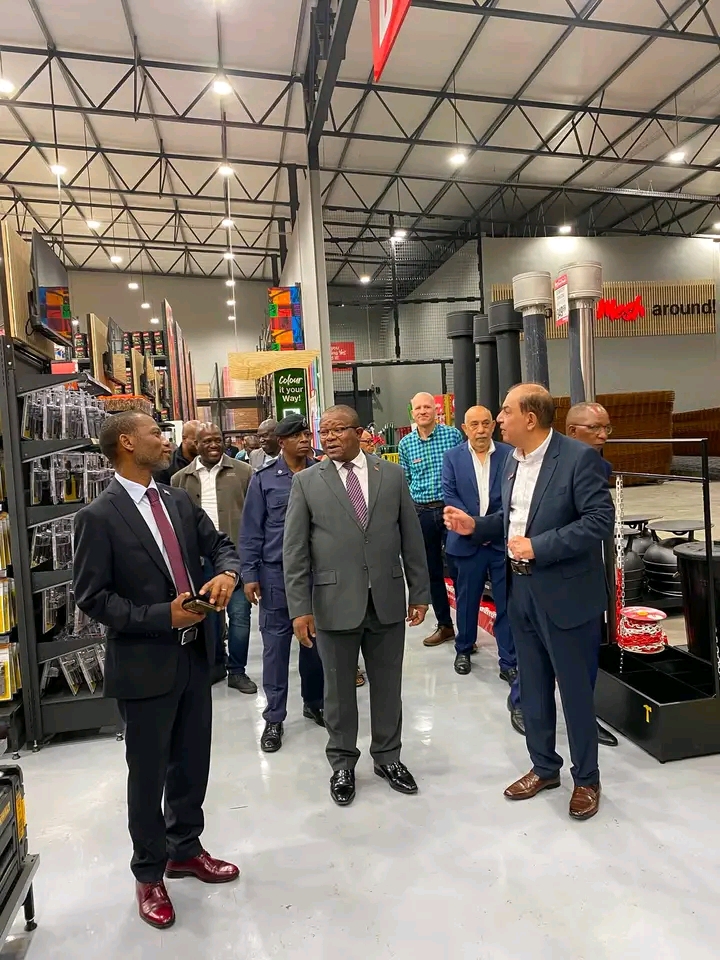
Equally significant is the project’s contribution to strengthening local supply chains. Modern retail developments require continuous procurement of construction materials, transport services, logistics, maintenance, security, cleaning services, and various operational inputs. This creates opportunities for numerous local small and medium enterprises to participate in commercial value chains that extend well beyond the initial construction phase. As supplier networks expand, domestic businesses benefit from more stable demand, encouraging further investment, improved operational capacity, and business formalization.
The development also reinforces the strategic importance of the construction and hardware retail sector within Eswatini’s economy. Hardware retailers occupy a critical position in economic development because they support residential housing, commercial property development, infrastructure expansion, and industrial projects. Increased investment in this segment often reflects broader confidence in future construction activity, which in turn supports employment across manufacturing, transport, engineering, and professional services. As the government continues implementing infrastructure programs while encouraging private property development, demand for building materials is expected to remain an important component of domestic economic activity.
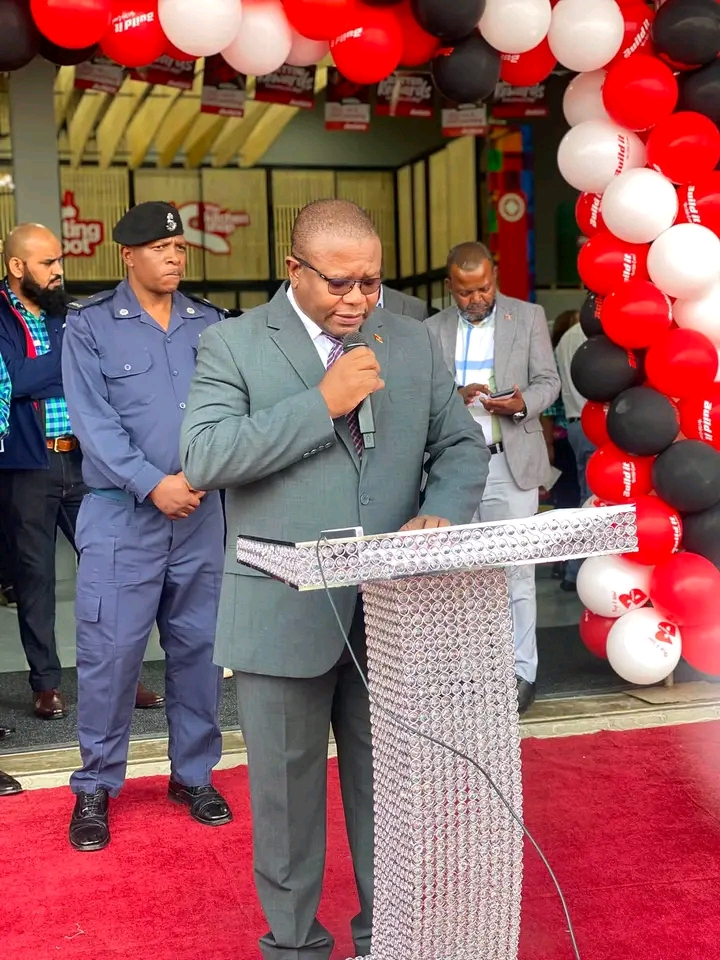
Minister Khumalo used the occasion to reaffirm the government’s commitment to implementing policies designed to improve the investment climate. Continued reforms aimed at enhancing the ease of doing business, promoting industrialization, and encouraging entrepreneurship are intended to reduce barriers that often discourage private investment. For investors, policy certainty remains one of the most valuable economic assets, as predictable regulatory environments reduce investment risk and improve long-term business planning. The government’s continued emphasis on investment-friendly policies sends an important signal to both domestic entrepreneurs and foreign investors evaluating opportunities within the Kingdom.
The Minister further encouraged investors to take advantage of emerging opportunities across the economy, emphasizing the government’s willingness to work collaboratively with the private sector to unlock investment, innovation, manufacturing, and trade. Such public-private cooperation has become increasingly important as countries compete regionally for investment capital. Investors are no longer evaluating markets solely in size but also in policy consistency, regulatory efficiency, infrastructure quality, and government responsiveness. Eswatini’s investment strategy increasingly reflects this reality by placing greater emphasis on creating an enabling business environment capable of attracting long-term productive investment rather than short-term speculative capital.
The recognition accorded to the Essa family also carries broader significance for Eswatini’s investment landscape. Having established their business operations in the Kingdom in 1979, their continued expansion demonstrates how long-term investors can contribute not only to economic growth but also to community development. Their ongoing investments in education, youth development, and other social initiatives illustrate the growing role of responsible corporate citizenship in supporting sustainable development alongside commercial success. Businesses that invest consistently over several decades provide valuable evidence that stable operating environments can encourage reinvestment and business expansion.
For Eswatini’s economy, projects such as Build It Plus – The Junction offer more than additional retail capacity. They represent tangible evidence private investors continue committing substantial capital despite challenging global economic conditions. Every successful investment strengthens confidence among financial institutions, suppliers, entrepreneurs, and future investors considering opportunities within the domestic market. As the government continues pursuing industrialization and private sector-led growth, investments of this nature will remain critical in expanding productive capacity, creating employment, and reinforcing Eswatini’s ambition to build a more competitive and resilient economy.