






By: Nkosiyabusa Nsibande
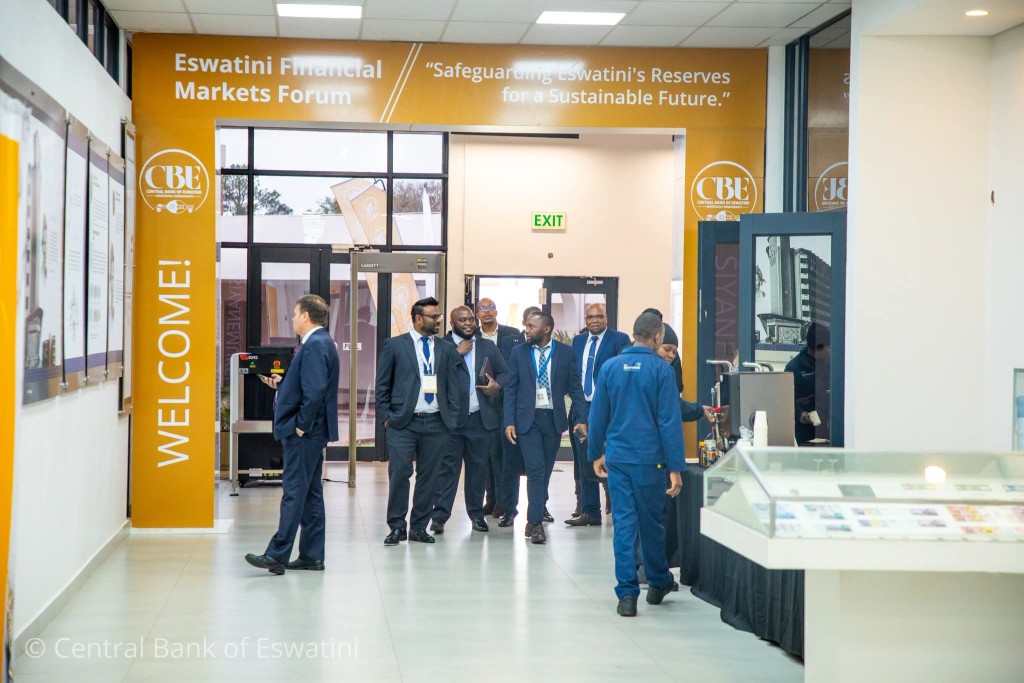
The Central Bank of Eswatini has brought the country’s reserve position and the future structure of its financial system into sharp focus as financial-sector stakeholders meet in Ezulwini for the Eswatini Financial Markets Forum, held under the theme “Safeguarding Eswatini’s Reserves for a Sustainable Future.”
The forum brings together stakeholders from the banking, investment, financial markets and government sectors at a time when Eswatini is seeking to strengthen its financial buffers while ensuring that the financial system contributes more directly to economic activity.
At the centre of the discussions is the role of reserves in protecting a small, open economy that is exposed to movements in regional and international markets. For Eswatini, foreign reserves remain particularly important because of the country’s participation in the Common Monetary Area and its dependence on cross-border trade and external financial flows.
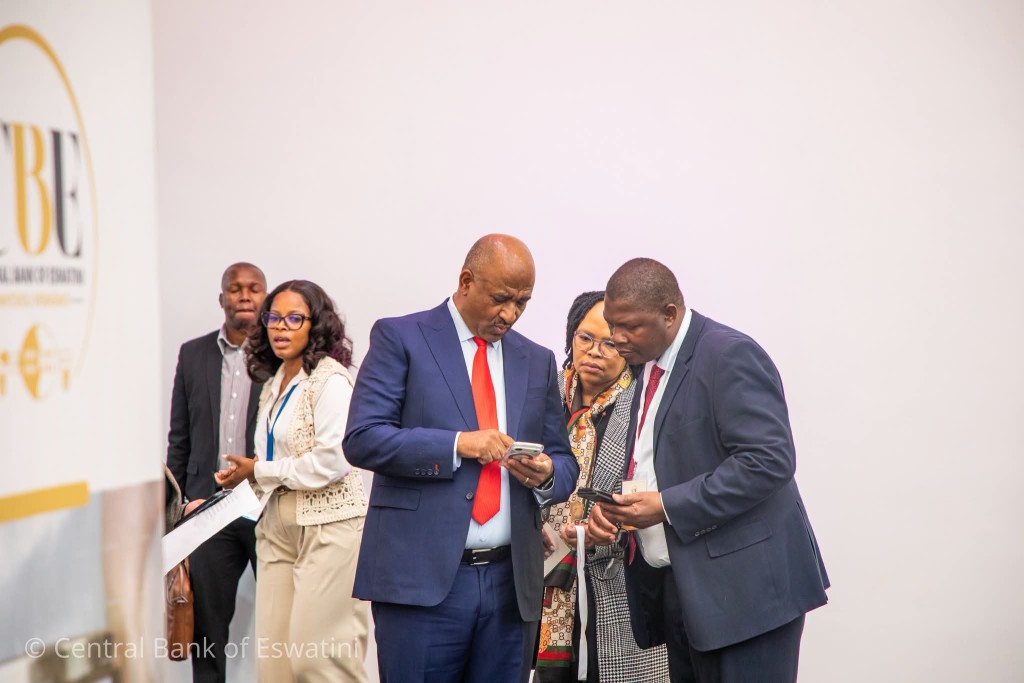
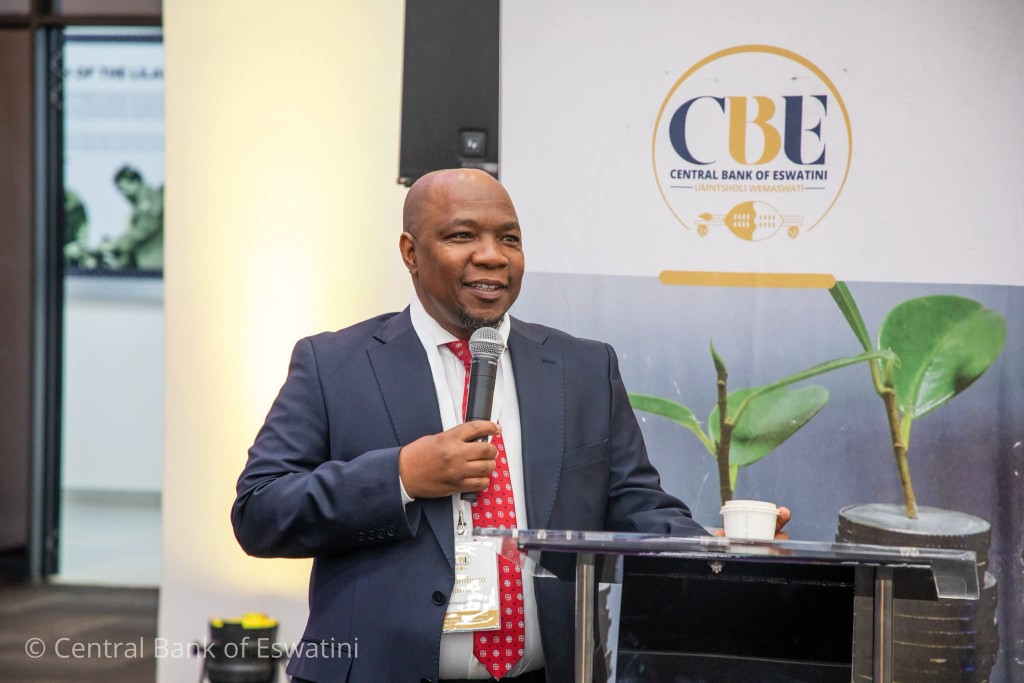
Central Bank Governor Dr Phil Mnisi said the discussion should not be limited to the size of the country’s reserves or the technical management of foreign assets. He said the broader question is whether the financial system is capable of supporting the productive economy. “We are speaking about a financial system that supports production, trade, innovation, employment, and opportunities.”
Dr Mnisi said this requires policymakers and financial-sector participants to look beyond present-day stability and consider the financial institutions, markets and instruments that Eswatini will require to compete in a changing global economy.
“What kind of financial system does Eswatini need in order to compete and prosper?” Asked Minisi. The question comes against a changing reserve position. The Central Bank reported that gross official reserves averaged E11.5 billion in 2025, compared with E9.9 billion in 2024, and reached a peak of E15.5 billion in November 2025. By 29 May 2026, however, reserves had declined to E8.8 billion, equivalent to about two months of import cover.
The decline highlights the importance of reserve accumulation and prudent management for Eswatini. The country’s reserves provide a buffer against external shocks, support the currency arrangement under the CMA and help meet the government’s foreign-exchange requirements.
The Central Bank has indicated that reserve management is guided by the principles of capital preservation and liquidity while seeking market-related returns. The outlook for reserves is also linked closely to SACU receipts, external borrowing and other foreign-exchange inflows. The Bank has projected an improvement in the reserve position in the short to medium term, supported in part by an expected 12.5% increase in SACU receipts during the 2026/27 financial year, although geopolitical tensions and disruptions to global and regional trade remain downside risks.
Gold enters the reserve strategy
The forum’s focus on safeguarding reserves also comes as the Central Bank changes the composition of part of its reserve portfolio.
The Bank acquired 2,500 ounces of gold in July 2025, currently valued at approximately E195 million, as part of efforts to diversify the country’s reserve assets and hedge against global risks. Dr Mnisi has said the Bank is exploring ways of increasing its gold holdings through purchases from local production.
The strategy introduces a potentially important link between Eswatini’s natural resources and its financial resilience. The Governor has clarified that the Central Bank does not intend to become a mining operator. Instead, the proposed approach involves working with local producers and participating further along the value chain, including beneficiation, purification and refining, so that qualifying precious metals can ultimately contribute to the country’s reserve assets.

The significance of the strategy lies in its potential to retain more value from locally produced resources within the domestic economy while strengthening the country’s reserve position.
For the financial sector, this also raises questions about the infrastructure required to support a larger precious-metals market, including assaying, refining, custody, trading, regulation and transparent pricing.
Financial stability must translate into economic activity
While safeguarding reserves is an immediate concern, the Governor’s remarks broadened the discussion to the effectiveness of the financial system itself.
A financially stable banking sector does not automatically mean that businesses have adequate access to capital. The more important question is whether financial institutions are able to channel savings towards investment in sectors capable of expanding production and generating employment.
This is particularly relevant for small and medium-sized enterprises, which often require financing for working capital, machinery, technology, expansion and market development but may struggle to satisfy conventional lending requirements.
The Central Bank’s work on the Movable Collateral Registry is one example of efforts to address this structural constraint. By allowing movable assets to support secured lending, the system is intended to widen the range of assets that businesses can use when seeking finance. The broader objective is to reduce the gap between assets held by businesses and their ability to convert those assets into productive capital.
This is where the Governor’s question about the financial system Eswatini needs becomes important for the wider economy. The country does not only require financial institutions that are safe; it requires institutions capable of efficiently allocating capital to productive activities.
A deeper financial market
The discussion also places greater attention on the development of financial markets beyond traditional commercial banking.
Banks remain central to financial intermediation, but a modern financial system requires multiple channels through which capital can be raised and invested. Capital markets can provide long-term funding to companies and government, investment funds can mobilise institutional savings, while development-finance institutions can support projects and businesses whose risk profiles may not fit conventional commercial lending.
A deeper market would also give domestic investors more opportunities to allocate capital within Eswatini rather than relying predominantly on bank deposits or investments outside the country. This becomes increasingly important as pension funds, insurers and other institutional investors accumulate long-term savings. The challenge is to create sufficient credible investment opportunities that allow these pools of capital to contribute to domestic economic development without compromising investment returns or risk standards.
The financial-market agenda therefore extends beyond increasing the number of financial institutions. It involves building markets in which capital can be priced, allocated and transferred efficiently.
Stability remains the foundation
Dr Mnisi stressed that the Central Bank’s core mandate remains price and financial stability, but argued that this mandate must be understood within the broader objective of economic development.
“As the central bank of Eswatini, our role is clear: we exist to foster price and financial stability in a manner that is conducive to economic development in Eswatini.”
For businesses, price stability reduces uncertainty around operating costs, borrowing and investment decisions. For households, it protects purchasing power. For financial institutions, financial stability provides the conditions necessary for continued lending and investment. But stability alone does not guarantee growth.

The financial system must connect monetary and financial stability with the needs of the productive economy. Agriculture requires investment capital; manufacturers require long-term financing; exporters require trade finance; technology businesses require funding models suited to less traditional forms of collateral; and emerging enterprises require access to financial services at a cost they can sustain.
The development of digital payments and financial technology also forms part of this transformation by reducing transaction costs and expanding access to formal financial services.
Reserves, fiscal policy and private-sector financing
The reserve discussion is also closely connected to Eswatini’s fiscal position. Government’s borrowing requirements affect domestic liquidity and the allocation of capital within the financial system. When banks hold significant amounts of government securities, they provide an important source of government financing, but this can create a policy challenge if private businesses face greater difficulty accessing credit.

A more developed capital market could help address this pressure by broadening the investor base for government and corporate securities. It could also provide businesses with alternatives to bank lending, allowing viable companies to raise longer-term capital directly from investors.
For this to work, however, Eswatini requires strong market infrastructure, credible issuers, reliable disclosure standards, effective regulation and sufficient investor participation.
Building resilience beyond today’s reserves
The discussions at the Central Bank ultimately point to a broader question about the country’s economic resilience. Eswatini cannot control international interest rates, commodity prices, geopolitical conflicts or regional trade conditions. It can, however, strengthen the buffers and institutions through which those shocks are absorbed.
The Central Bank’s reserve strategy, including diversification into gold, is one component of that response. Deeper capital markets, improved access to finance, stronger financial institutions and greater integration between savings and productive investment form another.
Dr Mnisi said the Central Bank’s mandate requires this longer-term perspective. “That mandate is not narrow; it requires us to think not only about stability today, but also about the architecture of the financial system we are building for tomorrow.”
That architecture will determine how effectively Eswatini mobilises domestic savings, attracts investment, finances businesses and manages external shocks.
The immediate priority is to safeguard the country’s financial buffers. The longer-term challenge is to ensure that those buffers sit within a financial system capable of turning stability into investment, investment into production, and production into sustainable economic growth.