







By: Nkosiyabusa Nsibande
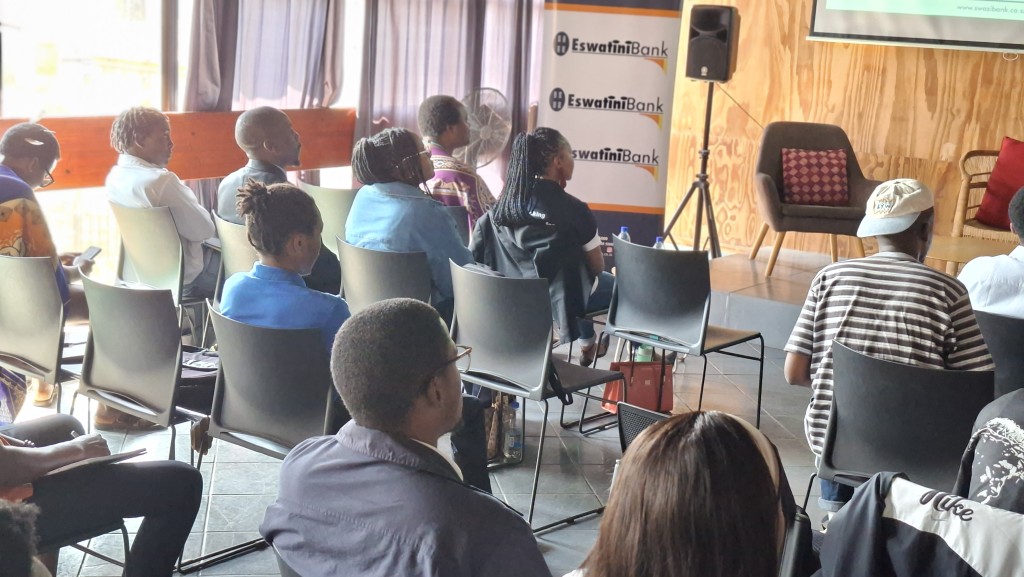
Access to finance remains one of the major constraints facing young entrepreneurs, but stakeholders at the Capital Leap Expo 2026 have cautioned that the challenge is not simply a shortage of funding. For many emerging businesses, the more fundamental issue is whether the entrepreneur has the financial records, compliance requirements, business systems, and understanding necessary to demonstrate that the enterprise can responsibly absorb and repay capital.
A representative from the Ministry of Commerce, Industry, and Trade said the main purpose of the expo was to help young people understand the factors that can prevent their businesses from accessing finance. While acknowledging that funding opportunities for young people exist, she stressed entrepreneurs need to understand the basics of financial readiness before approaching funding institutions.
The representative said young entrepreneurs must also understand the compliance obligations that come with operating a formal business, including registration, the applicable legal framework, and taxation. These requirements are not merely administrative matters but form part of the information that financial institutions and other funding providers may use when assessing the credibility and sustainability of a business.
The emphasis on compliance reflects a broader issue in the MSME financing market. An entrepreneur may have a commercially attractive idea but still struggle to access capital if the business lacks the documentation and financial discipline required to support a funding application. Formal registration, proper financial records, and tax compliance can therefore form part of the foundation on which a business builds its financing profile.
The ministry representative also encouraged young people and business organizations to organize more platforms similar to the Capital Leap Expo, saying such engagements can help close the information gap between entrepreneurs, government institutions, and financial service providers. She said collaboration among stakeholders would make it easier for the ministry to assist young entrepreneurs with both accessing finance and learning how to manage and operate their businesses effectively.
She further pointed to the importance of national policy in strengthening financial literacy and personal financial management among young people. The objective, she explained, is not only to help entrepreneurs obtain loans but also to equip them with the knowledge required to manage those loans and meet repayment obligations. Through initiatives such as the expo, stakeholders can collectively disseminate information on business finance and financial management, particularly through greater cooperation with the financial sector. For the Youth Chamber of Commerce and Industries Eswatini, the challenge extends beyond access to capital to the way business information is organized and delivered to young entrepreneurs.

Sakhile Nsibandze, president of the Youth Chamber of Commerce and Industries Eswatini, said the organization is working to support businesses, map the country’s business ecosystem, and organize young people so they can better understand available opportunities and how government can create collective opportunities for youth-owned enterprises.
Nsibandze said the expo demonstrated that there remains “a lot of misunderstanding about businesses as young people”, while stakeholders themselves are not always providing information in a manner that clearly explains what an entrepreneur needs to do next.
According to Nsibandze, one of the central problems is the gap between wanting to receive funding and actually building a business that can responsibly receive and manage it. He said young people need practical guidance that takes them from “a point of home to understand what the next move would be”, rather than forcing entrepreneurs to navigate different institutions and offices before establishing what is required to enter a particular sector.
This fragmentation of information can increase the cost and complexity of formalizing and financing a business. An entrepreneur may need to understand registration, licensing, tax, sector requirements, financial management, and funding options, yet the information may sit with different institutions. Bringing these requirements together can reduce uncertainty and allow entrepreneurs to make better financial decisions before committing capital.

The Youth Chamber is, therefore, working on mechanisms intended to give young entrepreneurs a more integrated view of the business process. Nsibandze said the chamber is developing a business-class application through which entrepreneurs can access information on sectors, compliance requirements, and the steps involved in establishing a business.
Another component is a point-of-sale system that allows participating businesses to capture transaction information and assess their financial performance. Nsibandze said the system can help entrepreneurs determine whether they are breaking even and whether their products or services are commercially viable.
The financial significance of such systems is that they can create a basic evidence trail for a business. Instead of relying solely on verbal explanations about how well an enterprise is performing, an entrepreneur can use transaction records to demonstrate sales activity, monitor performance, and determine whether the business is generating sufficient income to support further investment or debt repayment.
Nsibandze said the system can help entrepreneurs build “some kind of foundational base to say that I’m actually ready to be financed”. This shifts the discussion from simply asking where funding is available to determining whether the business has reached a level of financial maturity where external capital can be deployed productively.
The chamber is also promoting the YES Digital Circle, a savings, and credit cooperative designed to provide young entrepreneurs with an alternative mechanism for accessing finance. Nsibandze explained that the initiative includes a revolving fund and is intended to help young people organize themselves financially while reducing some barriers associated with conventional bank financing.

For entrepreneurs who lack conventional collateral or extensive banking histories, such structures can provide an alternative pathway to building financial discipline. Regular savings, participation in a credit structure, and a demonstrated ability to meet financial obligations can help entrepreneurs develop a track record before attempting to access larger amounts of commercial finance.
Nsibandze said the cooperative can help young businesses address some requirements that can make bank financing difficult to obtain, including collateral. Through the digital circle, young people can use the mechanisms of the Youth Chamber and its business systems to participate in established sectors and value chains, rather than attempting to build businesses without market or financial structures around them.
The approach places financial readiness at the center of youth enterprise development. Funding remains important, particularly for businesses that require working capital, equipment, or expansion finance, but capital alone cannot compensate for weak financial controls, limited market knowledge, or poor business administration.
For young entrepreneurs, the message emerging from Capital Leap Expo 2026 is therefore broader than simply finding money. The first step is understanding what type of business is being built, what compliance obligations apply, how revenue and costs are tracked, whether the enterprise is commercially viable, and how borrowed money will generate sufficient returns to support repayment.
Greater involvement by government, financial institutions, business chambers, and other stakeholders could help address these gaps by creating a more coordinated financial education and enterprise support system. If young entrepreneurs can access practical information before seeking finance, they are more likely to approach lenders with businesses that are formally structured, financially documented, and capable of demonstrating how capital will be used.
Ultimately, improving youth access to finance requires both supply- and demand-side readiness. Financial institutions can provide capital, while government and business-support organizations can help entrepreneurs understand the requirements for accessing and managing it. For the young entrepreneur, however, the responsibility remains to build a business that can account for its money, comply with the law, demonstrate commercial viability, and repay the capital it receives.
The Capital Leap Expo, therefore, highlighted a critical distinction for Eswatini’s youth enterprise sector: being eligible to receive funding is not the same as being ready to manage finances. Building that readiness may be one of the most important steps towards converting available funding opportunities into sustainable businesses rather than short-lived enterprises burdened by financial obligations they are not prepared to meet.