




By: Nkosiyabusa Nsibande
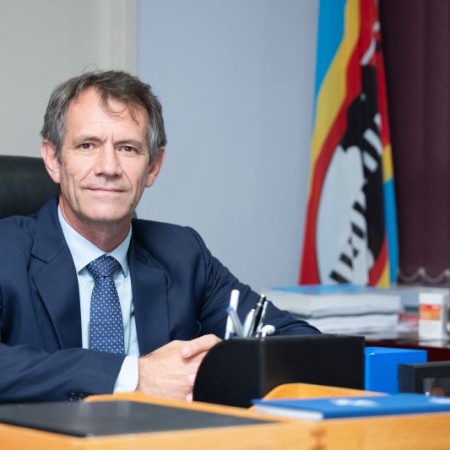
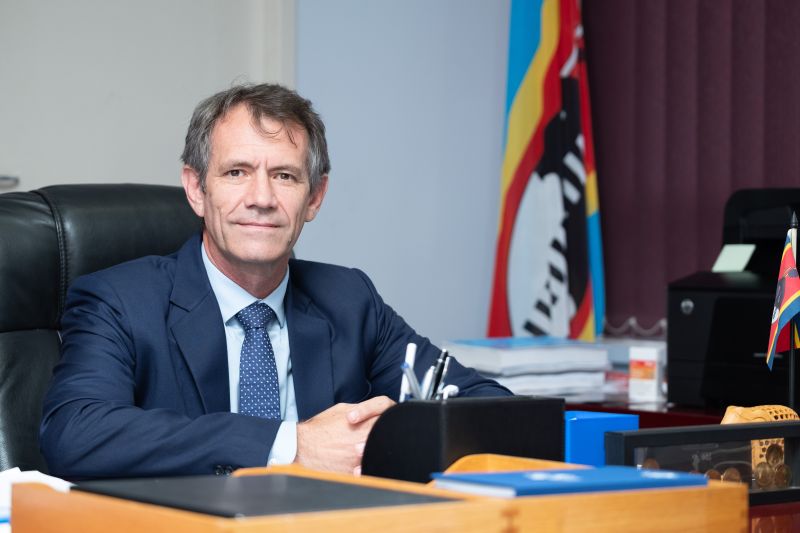
The government is testing a new approach to domestic borrowing as it seeks to secure longer-term funding without placing the full interest-rate and inflation risk on the state. Finance Minister Neal Rijkenberg said the Ministry of Finance went to the market during the week with a new 15-year treasury bond, while the government is also considering eventually introducing a 20-year instrument as part of efforts to diversify its borrowing program.
Explaining the distinction between the instruments, Rijkenberg said treasury bills are short-term government borrowing instruments with maturities of up to one year, while treasury bonds provide funding over longer periods. The government currently has three-, five-, seven-, and nine-year bond programs, but the minister said extending maturities could provide the government with a more suitable source of long-term financing.
The longer maturity, however, traditionally comes with a higher borrowing cost because investors require compensation for uncertainty around inflation and interest rates over an extended period. Rijkenberg said that when the government fixes the interest rate for a long period, investors “build in risk because they don’t know what the interest rates are or what inflation is going to do in nine years’ time”, resulting in the government paying more for the funding.

The new structure is therefore intended to change how that risk is priced. Rather than fixing the entire interest rate for 15 years, the proposed instrument will use an inflation-linked base rate combined with a fixed additional margin. Rijkenberg explained that “we decided to do some longer-term” borrowing but “instead of making it a fixed rate, make it what you call a floating base rate”, with the inflation-linked component and a fixed top-up determining the return to investors.
For the government, the structure could reduce the need to compensate investors upfront for uncertainty over inflation and interest rates several years into the future. Rijkenberg said the approach is intended to ensure that “the funders don’t need to price in risk into the tool”, although the eventual cost will depend on how the market responds to the new instrument.
The Ministry is also targeting institutional investors that require assets with long maturities to match their own long-term liabilities. Rijkenberg pointed specifically to pension funds, noting that a young employee entering the workforce may have decades before retirement benefits need to be paid. In such circumstances, longer-term government securities can provide institutions with assets that better correspond with the duration of their obligations.
The inflation-linked structure is relevant to such investors because the return is designed to maintain a relationship with inflation while also providing an additional fixed margin. Rijkenberg said the instrument “ticks all the boxes” for investors seeking long-term assets and that government will assess the market’s response as it tests the new borrowing structure.

The initiative comes against the backdrop of continued pressure on the government’s cash flow. Rijkenberg acknowledged that “it’s still under a bit of strain”, although he said the Ministry is working through a number of funding discussions that could provide relief in the coming months. The minister said these discussions are progressing but warned that securing external budget support is not an immediate process because it requires a lengthy funding and approval process.
Rijkenberg also sought to clarify the meaning of budget support, which he said is sometimes misunderstood as government borrowing simply to meet recurrent expenditure. According to the minister, budget support can also arise when government undertakes expenditure that was not originally financed within the approved budget, but is considered necessary during the financial year.
He cited the previous year’s salary review and completion of the International Convention Centre as examples of decisions that placed additional pressure on the government’s cash position. While the government had a budget, these expenditures were not fully provided for in the original financing arrangements. “Most of them did the right thing to do,” Rijkenberg said, but added that “money wasn’t in the budget,” meaning the government had to find additional funding after the decisions had been taken.

The International Convention Centre expenditure, in particular, illustrates why budget support should not automatically be associated with recurrent government spending. Rijkenberg described its completion as “very much a capital expenditure”, arguing that the investment would allow the country to host conferences sooner rather than waiting for the facility to be completed at a later stage.
The distinction between recurrent and capital expenditure is important because capital spending creates or improves assets expected to provide economic value over a longer period, while recurrent expenditure covers the ongoing costs of operating a government. Rijkenberg stressed that the pressure on the government’s cash flow is therefore not necessarily being driven only by day-to-day operating expenses but also by capital investments undertaken during the budget cycle.
For the current financial year, the government still needs to raise approximately E1.5 billion despite having tabled what Rijkenberg described as a fully financed budget. The issue is that a budget being fully financed on paper does not necessarily mean that all the required funding has already been raised and is sitting in the government’s accounts.
A significant portion of the funding requirement is linked to capital projects, including road construction. Rijkenberg said the government is currently financing a number of projects, particularly rural roads, including what he described as “double-seal rural roads”. These projects require the government to mobilize funding while implementation is already taking place.
The Minister argued that such borrowing should be viewed within the broader economic contribution of capital expenditure. The government is raising funding to support infrastructure projects that can improve connectivity, support economic activity, and contribute to longer-term growth. “We’re now raising the funding as a government, calling it budget support but really funding a lot of these capital projects going on around the country,” he said.
The proposed 15-year bond therefore forms part of a broader financing strategy rather than being a standalone response to cash-flow constraints. By extending the maturity profile of domestic debt, linking the base return to inflation and maintaining a fixed margin, the government is testing whether it can attract long-term institutional capital while managing the cost and risks associated with borrowing over extended periods.
The outcome of the market test will determine how far the Ministry takes the strategy. Rijkenberg said the government is hoping to raise some funding through the new instruments and could eventually consider a 20-year treasury bond. At the same time, the Ministry continues to pursue other funding arrangements, with the minister indicating that additional money is expected to begin flowing into government in the coming months.
For the domestic financial market, the development is significant because it introduces a different risk-return structure into government securities and could give pension funds and other long-term investors another instrument for managing their portfolios. For the government, the immediate objective is more practical: securing funding, extending the maturity of its debt, and reducing pressure on cash flow while continuing to finance approved capital projects.