





By: Nkosiyabusa Nsibande
The government is positioning industrial finance as a strategic tool for economic transformation, with plans to inject E1.35 million into Eswatini’s textile and clothing sector during the 2026/27 financial year as part of a broader effort to strengthen manufacturing competitiveness. The planned investment, which follows the recent allocation of E350,000 worth of production equipment and E200,000 in interest-free loans to local enterprises, signals a deliberate shift towards financing productive assets that expand industrial capacity, improve business efficiency, and stimulate long-term economic growth.
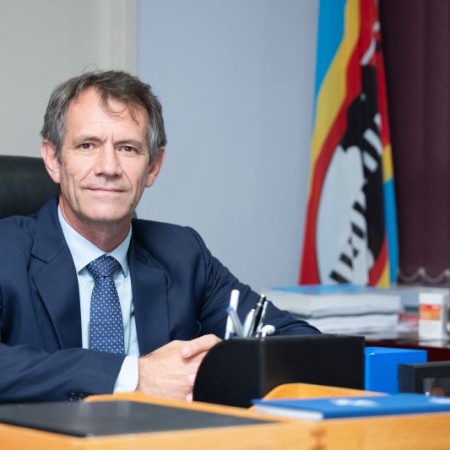
The investment pipeline was highlighted during the handover of production equipment under the Production Incentive Scheme (PIS) 2.0, where Principal Secretary Ambassador Melusi Masuku, representing Minister of Commerce, Industry, and Trade Manqoba Khumalo, said the program demonstrates the government’s commitment to strengthening one of Eswatini’s most significant manufacturing industries. Addressing stakeholders at the Hilton Garden Inn, Ambassador Masuku said, “This important event demonstrates the Government of the Kingdom of Eswatini’s unwavering commitment to supporting the growth, competitiveness, and sustainability of the textile and clothing sector in pursuit of inclusive and sustainable industrial development.” His remarks underscored the government’s intention to use targeted industrial financing as a catalyst for enterprise development rather than relying solely on traditional business support measures.

The Production Incentive Scheme, implemented jointly by the Ministry of Commerce, Industry and Trade and the Eswatini National Industrial Development Corporation (ENIDC), is designed to address one of the most persistent challenges facing local manufacturers, limited access to productive capital. By combining equipment grants with interest-free financing, the program enables enterprises to invest in machinery that improves production efficiency, enhances product quality, and increases manufacturing output. Such investments strengthen the productive capacity of businesses while improving their ability to compete in both domestic and export markets, positioning the textile industry as an increasingly important contributor to industrial growth.
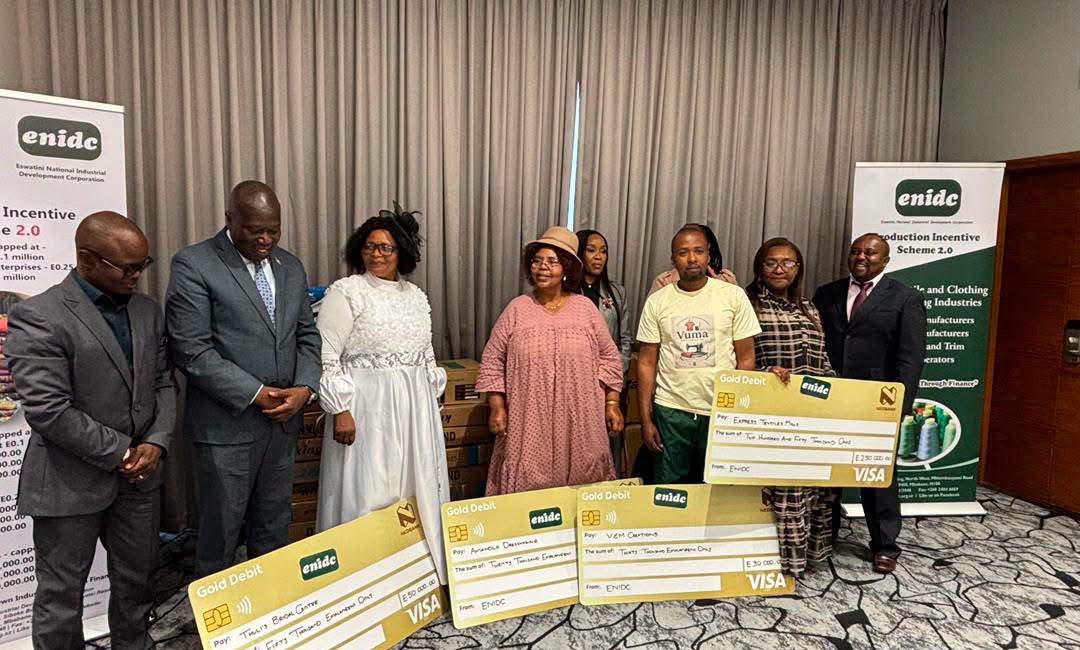
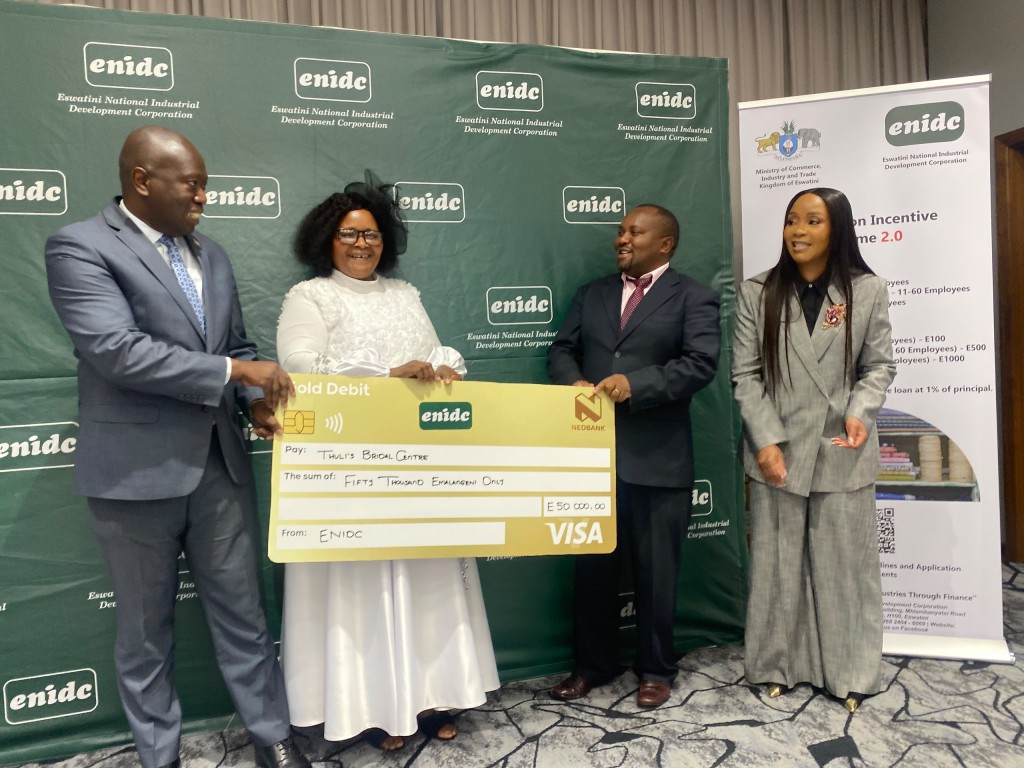
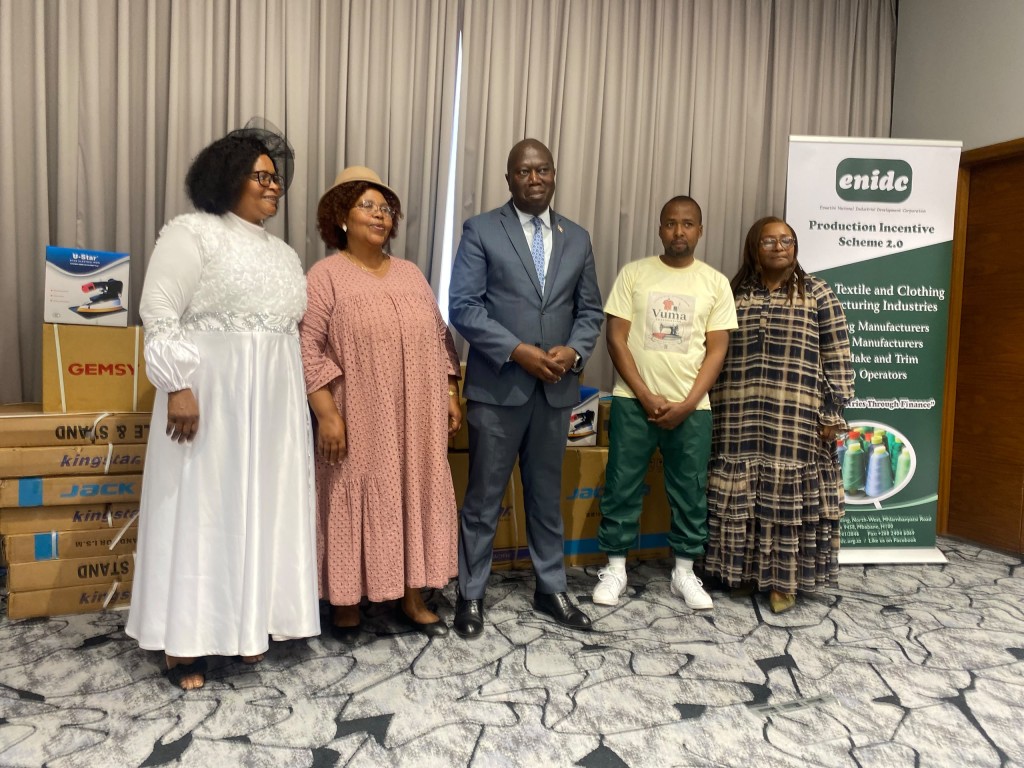
Under the Grant Component of the scheme, the government has awarded E350,000 worth of production equipment to four micro, small, and medium enterprises. Express Textile Mills received machinery valued at E250,000, Thuli’s Bridal Centre benefited from equipment worth E50,000, while V&M Creations and Amandla Dressmaking received equipment valued at E30,000 and E20,000, respectively. Ambassador Masuku said the investment is expected to deliver measurable improvements in enterprise productivity, explaining that “this investment will enable these enterprises to improve production efficiency, enhance product quality, increase output, and strengthen their competitiveness in both domestic and export markets.” The intervention illustrates how public investment in productive assets can generate commercial benefits that extend beyond the immediate recipients.
The program’s financing model extends beyond grant support. Over the past twelve months, ENIDC has also disbursed E200,000 in interest-free loans to MSMEs operating within the sector, easing financial constraints that often prevent smaller manufacturers from expanding production. Affordable financing remains one of the most significant barriers to industrial growth across developing economies, making concessional lending an important policy instrument for enabling enterprise expansion without imposing the high borrowing costs associated with commercial credit. Together, the grant and loan components provide manufacturers with access to both fixed capital and working capital, creating a more comprehensive framework for industrial development.
Looking ahead, the government expects the scheme to disburse approximately E1.35 million during the current financial year through grants supporting both established manufacturers and emerging MSMEs. The projected investment represents a significant expansion of the program and reflects confidence in the textile and clothing industry’s potential to contribute to economic diversification, value addition, and export growth. From a fiscal perspective, the allocation also demonstrates the government’s preference for directing public resources towards productive sectors capable of generating long-term economic returns through higher output, stronger business performance, and increased industrial activity.

The anticipated returns are expected to extend beyond financial performance. The government projects that the interventions will retain 31 existing jobs while creating five additional employment opportunities, highlighting the close relationship between industrial investment and labor market outcomes. Ambassador Masuku stressed that the program’s value should not be measured solely by the equipment distributed or financing provided, stating that “these outcomes demonstrate that supporting MSMEs is not merely an investment in businesses; it is an investment in livelihoods, families, and the broader economy.” The remarks reinforce the view that enterprise development has wider economic spillovers through higher household incomes, stronger supply chains, and increased economic resilience.
The initiative also supports the implementation of the Eswatini Industrial Development Policy, which prioritizes manufacturing expansion, value addition, and stronger domestic production capacity as drivers of inclusive economic growth. By targeting enterprises operating within the textile and clothing value chain, the government is seeking to strengthen an industry that remains one of the country’s largest manufacturing employers while encouraging businesses to modernize production and improve competitiveness. The program therefore serves not only as a financing mechanism but also as an instrument for advancing national industrial policy and strengthening the contribution of manufacturing to gross domestic product.
In concluding the address, Ambassador Masuku reaffirmed the government’s commitment to sustaining an investment climate that encourages industrial expansion and private sector participation. Conveying Minister Khumalo’s message, he said, “As His Majesty’s Government, we remain committed to creating an enabling environment that supports industrial growth, enterprise development, and job creation. We will continue working with the private sector and development partners to build a resilient, competitive, and sustainable manufacturing sector that contributes meaningfully to Eswatini’s economic transformation.” As the government expands the Production Incentive Scheme and increases financial allocations to productive industries, the initiative is increasingly emerging as a strategic investment vehicle aimed at strengthening Eswatini’s industrial base while improving the long-term competitiveness of local manufacturing.

Other Articles

MORE MONEY, SAME STRUGGLE