






By: Nkosiyabusa Nsibande
The growing integration of Southern Africa’s financial sector is reshaping the way banking regulators supervise financial institutions, with regional authorities placing greater emphasis on coordinated oversight to protect financial stability against increasingly complex risks.
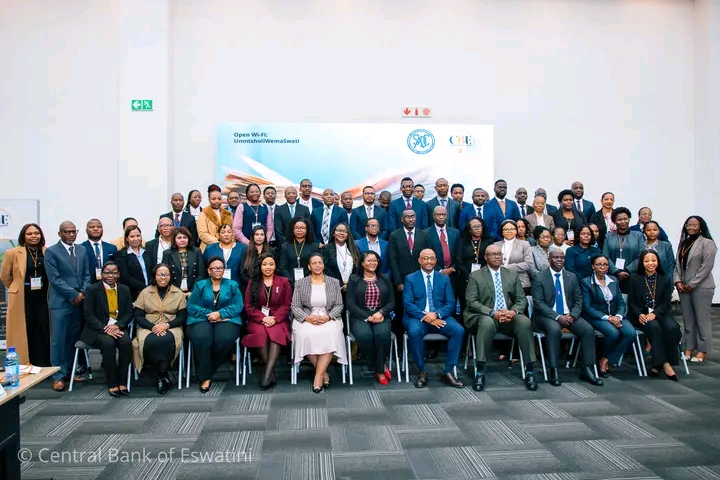
This emerged during the two-day Southern African Development Community (SADC) Committee of Central Bank Governors (CCBG) Banking Supervision and Financial Stability Meeting, currently underway at the Central Bank of Eswatini (CBE) Complex in Ezulwini. The meeting has brought together banking supervision experts from central banks across the region to review progress under the 2024–2026 CCBG Strategy while identifying practical measures to strengthen cross-border regulatory cooperation.
For financial markets, the discussions reflect a broader shift in regulatory thinking. As banks expand beyond national borders, payment systems become increasingly interconnected and digital financial services continue to grow, risks can spread rapidly from one jurisdiction to another. This reality is prompting regulators to move beyond domestic supervision towards a more coordinated regional framework capable of detecting vulnerabilities before they develop into systemic crises.

Opening the meeting, Central Bank of Eswatini Governor Dr. Phil Mnisi said regional financial interconnectedness has fundamentally changed the nature of banking supervision, making collaboration between regulators no longer optional but essential.
“Our regional banking systems are deeply interconnected through shared groups, markets and infrastructure. This interconnectivity requires stronger regional collaboration through meaningful supervisory colleges, routine information sharing and early consultation before local issues escalate,” said Dr. Mnisi. His remarks underscore one of the most significant challenges facing modern financial regulation. Several banking groups operating within SADC maintain subsidiaries across multiple countries, meaning financial distress in one market has the potential to affect institutions elsewhere. Without timely information sharing and coordinated supervisory responses, isolated banking problems can quickly evolve into broader regional financial risks.
The meeting is therefore focusing not only on strengthening supervisory frameworks but also on improving financial stability assessments, crisis preparedness and coordinated responses to potential banking sector disruptions. These mechanisms have become increasingly important as central banks seek to preserve depositor confidence while ensuring that financial institutions remain resilient during periods of economic uncertainty.

Chairperson of the SADC CCBG Sub-Committee, Lyness Phiri Mambo, said the evolving financial landscape demands consistent regulatory leadership capable of responding to emerging risks without undermining market confidence. “As our financial systems become more interconnected and exposed to new risks, it is important that we continue to act with clarity, consistency and resolve,” she said.
Beyond traditional banking risks, delegates also examined how technological innovation is transforming financial services and altering the supervisory responsibilities of central banks. The meeting devoted considerable attention to cybersecurity resilience and the implications of artificial intelligence for banking supervision, recognising that technological advancement presents both significant opportunities and equally significant regulatory challenges.
During a panel discussion on Emerging Technologies and Cybersecurity Resilience: Implications for Bank Supervision and Financial Stability, experts from the Central Bank of Eswatini, Eswatini Communications Commission (ESCCOM), the University of Eswatini, Standard Bank Eswatini and the South African Reserve Bank explored how regulators should balance innovation with financial system integrity.
While participants acknowledged AI’s growing role in improving operational efficiency, fraud detection and regulatory processes, they cautioned against excessive reliance on technology at the expense of sound governance and professional judgement. A recurring theme throughout the discussion was that technological progress should reinforce, rather than replace, the institutional responsibilities of regulators charged with maintaining financial stability.
The panel concluded that adaptability, regulatory caution and strong human oversight remain fundamental as financial institutions increasingly adopt advanced technologies. Cybersecurity resilience was identified as an equally important priority, particularly as expanding digital financial ecosystems increase exposure to cyber threats capable of disrupting payment systems, compromising customer data and undermining confidence in the financial sector.
For investors, financial institutions and policymakers, the meeting demonstrates that regional financial stability is becoming a collective responsibility rather than a purely national one. Stronger supervisory cooperation, improved crisis management frameworks and coordinated approaches to emerging technologies are expected to strengthen the resilience of Southern Africa’s banking sector while creating a more secure environment for investment, cross-border trade and sustainable economic growth.