






By: Nkosiyabusa Nsibande
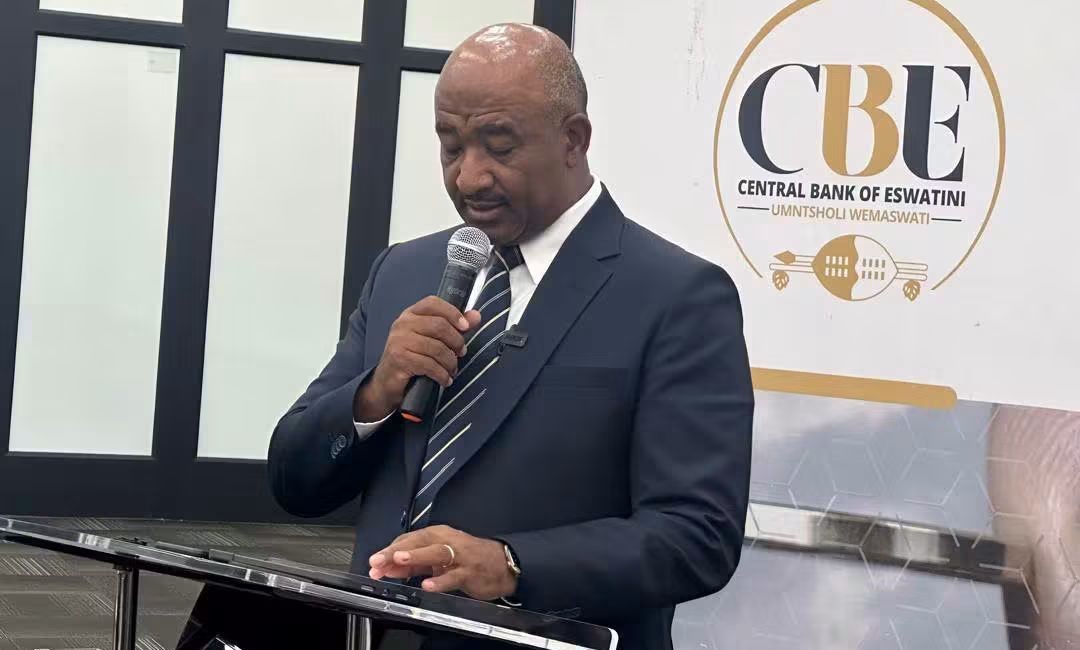
E150,000 in Government Investment Instruments is being offered to three winners in a Central Bank of Eswatini competition that is turning a national commemorative coin into an opportunity for financial education and investment.
The Central Bank of Eswatini (CBE) has opened a competition for the design of a limited-edition E10 commemorative coin that will mark the Kingdom’s 60th Independence Anniversary on September 6, 2028. While the proposed coin will carry a nominal value of E10 and is intended for limited circulation in Eswatini, the financial value attached to the competition sits largely in the prizes, which will be awarded through government investment instruments rather than cash.
The prize structure provides E100,000 in Government Investment Instruments to the first-prize winner, E30,000 to the second-place winner, and E20,000 to the third-place winner. Collectively, the three prizes amount to E150,000, creating a direct link between participation in a creative competition and ownership of financial assets. The CBE states that the structure is intended to encourage investment while promoting financial literacy and financial inclusion.
From a personal-finance perspective, the distinction between a cash prize and an investment instrument is important. A cash award can be spent immediately, while an investment instrument is designed to place money into an asset that can generate a financial return according to its terms. By choosing Government Investment Instruments as the form of the prizes, the competition gives the winners an opportunity to enter or strengthen their participation in the investment market rather than simply receiving disposable income.

The competition also demonstrates how financial inclusion can be pursued outside traditional banking products. Financial inclusion is often discussed in terms of access to bank accounts, credit, payments, and insurance, but investment access is another component of household and individual financial participation. In this case, the CBE is using a national creative initiative to expose participants and the wider public to Government Investment Instruments as a form of saving and investment.
The financial incentive is also significant when measured against the design opportunity itself. The competition is open to all emaSwati, whether living in Eswatini or abroad, although participation is strictly individual and each person may submit only one design. The competition opens on August 26, 2026, and closes on October 27, 2026, at 4:00pm, with the Bank stating that late entries will not be accepted.
For aspiring designers and creative entrepreneurs, the competition, therefore, carries an economic dimension beyond the prize money. The winning concept could become part of a physical national currency-related product, while the entrant receives financial assets worth E100,000. The opportunity places a monetary value on intellectual and creative output while simultaneously introducing the creator to an investment product.

However, entrants should also pay attention to the intellectual property conditions before submitting their work. The CBE says entrants retain the right to be identified as the author where reasonably practicable, but submission also grants the Bank and specified parties a perpetual, worldwide, royalty-free, and non-exclusive license to use, reproduce, modify, publish, distribute, and create derivative works from the entry for promotional, marketing, or commercial purposes without further compensation.
That provision is particularly relevant for creative professionals because intellectual property is an economic asset. A design may have commercial value beyond the competition itself, making it important for participants to understand precisely what rights they retain and what rights they grant when entering. The guidelines also require entrants to confirm that they are the sole author or have secured the necessary rights to any third-party material incorporated into their designs.
The competition has also placed considerable emphasis on originality. Designs containing content generated using artificial intelligence tools or platforms will be disqualified, with the CBE requiring all submissions to be the entrant’s original work. Plagiarism and infringement of third-party intellectual property rights are also listed among the grounds for disqualification.
From an investment perspective, the E100,000 first prize is the most substantial financial opportunity in the competition. The guidelines, however, do not specify the particular Government Investment Instrument that each winner will receive or provide the applicable yield, maturity period, or liquidity terms. This means the precise future value of the prizes cannot be determined from the competition guidelines alone.
The judging process itself assigns 100 percentage points across four areas, with creativity and originality carrying the largest weighting at 30%. Relevance to the theme accounts for 25%, artistic quality another 25%, while national significance carries 20%. The scoring structure indicates that winning the financial prize will depend not only on artistic ability but also on how effectively the design communicates the significance of the 60th Independence Anniversary and Eswatini’s national identity.
The initiative ultimately combines three economic themes: creative value, investment, and financial inclusion. The E10 denomination gives the proposed commemorative coin its monetary identity, but the E150,000 prize pool gives the competition a much larger financial dimension. For the successful entrants, the reward will not simply be recognition for artistic work; it will be an allocation into Government Investment Instruments, potentially providing an opportunity to build an investment position.
For FinGuard readers, the key lesson is that financial inclusion does not only involve borrowing money or maintaining a bank account. It also involves understanding available investment opportunities, knowing how financial instruments work, and making informed decisions about how wealth can be preserved or grown. By placing Government Investment Instruments at the center of its prize structure, the CBE has given a creative competition an investment component that extends beyond the commemorative value of the E10 coin itself.

Other Articles