






By: Nkosiyabusa Nsibande
Infrastructure is often measured in kilometers of track, tons of cargo, or the value of capital invested. Yet, for modern economies, transport infrastructure has become far more than a physical asset. It is increasingly an economic platform that determines whether industries can compete, whether investors have confidence to expand, whether Special Economic Zones (SEZs) succeed, and whether opportunities are broadly shared across society. For Eswatini Railways, that platform is now extending beyond freight movement to encompass a wider vision of inclusive economic growth in which women play an increasingly important role across technical, operational, and leadership functions.
As Southern Africa accelerates regional integration through industrial corridors, cross-border manufacturing, and SEZ development, efficient rail transport is becoming an essential component of competitiveness. Manufacturers require dependable logistics, exporters need predictable access to ports, and investors seek certainty that supply chains will not become costly bottlenecks. Against this backdrop, Eswatini Railways is positioning itself not merely as a transport operator but as a strategic infrastructure supporting national development and regional value creation.
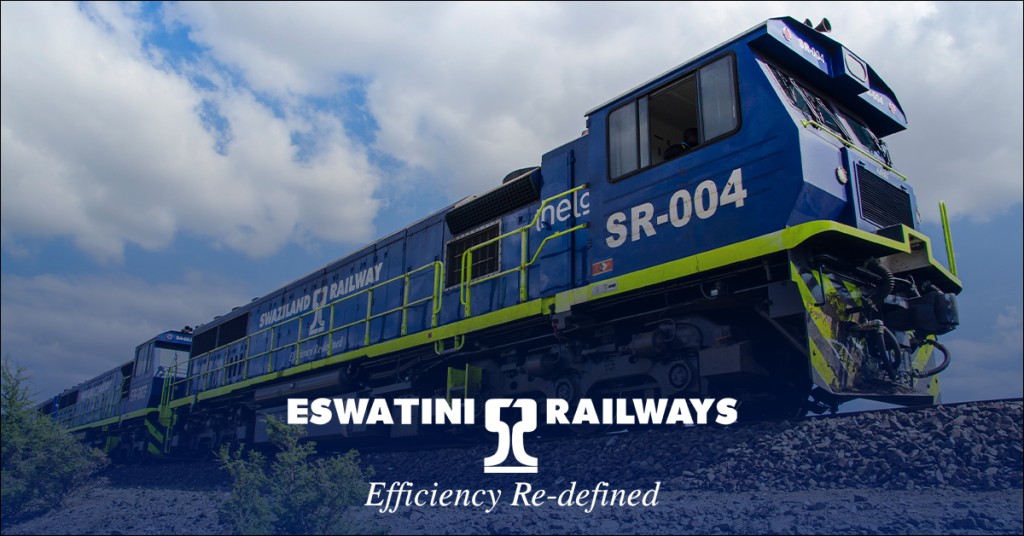
Chief Executive Officer Nixon Dlamini believes the railway’s contribution should be understood through the people whose expertise keeps the network functioning every day. While locomotives, rolling stock, and rail infrastructure remain critical assets, he argues that institutional capability ultimately rests on human capital. “Our locomotives, wagons, and infrastructure are important, but it is the commitment of our people that gives our mandate life,” he says, adding that women working throughout the organization continue to strengthen “the backbone of our economy” through their contribution in engineering, maintenance, governance, planning, logistics, safety, finance, administration, systems management, and frontline operations.
This perspective reflects a broader shift taking place within infrastructure policy globally. Transport assets are no longer assessed solely on operational efficiency but also on how effectively they support employment, enterprise development, and social inclusion. For Eswatini Railways, whose core mandate is to provide reliable transport for import, export, and transit commodities while maintaining the country’s railway infrastructure and rolling stock, the economic impact extends well beyond moving freight between destinations.
Dlamini explains that every freight movement has a multiplier effect throughout the economy. “Every train that moves represents businesses that can trade, families that can earn a living, communities that can benefit from growth, and entrepreneurs who can reach new markets,” he says. As regional economies deepen industrial cooperation through SEZs and integrated value chains, he believes rail infrastructure must continue serving as “a trusted enabler of opportunity.”

The numbers reinforce the railway’s strategic economic importance. During the 2024/25 financial year, Eswatini Railways transported approximately 6.9 million tonnes of freight, while operating infrastructure capable of handling 12 million tonnes annually. Its 301-kilometre rail network connects Eswatini directly with neighboring rail systems, strengthening the country’s role as a regional corridor linking producers, industrial centers, and export gateways. The organization also employs 373 permanent staff, illustrating that rail infrastructure represents both productive capital and an important source of skilled employment.
From an investment perspective, these figures highlight significant untapped capacity. Infrastructure that can accommodate substantially higher freight volumes provides a competitive advantage as governments seek to attract manufacturing investment into SEZs. Rather than requiring entirely new transport networks, investors can leverage existing rail capacity capable of supporting industrial expansion, reducing logistics costs, and improving export competitiveness across regional markets.
That relationship between rail infrastructure and industrial policy is becoming increasingly important as governments across Southern Africa pursue export-led growth strategies. Dlamini argues SEZs achieve their intended economic impact only when supported by reliable transport systems capable of moving raw materials into production facilities and finished products efficiently into regional and international markets. “SEZs can only reach their full potential if goods can move reliably, competitively, and at scale,” he explains, noting that rail provides the logistical backbone required to reduce pressure on roads while giving investors confidence that supply chains will remain dependable. For manufacturers and exporters, he says, “Reliable rail capacity can be the difference between producing for a local market and competing across a regional value chain.”

The significance of these logistics advantages is relevant for Eswatini, where approximately 65 percent of export value is linked to South Africa. Efficient rail connectivity therefore directly influences trade competitiveness, regional integration, and investor confidence by ensuring exporters maintain dependable access to one of the country’s largest markets while also strengthening links to Mozambican ports.
However, Eswatini Railways increasingly views infrastructure-led growth through a wider economic lens that incorporates inclusion as a business imperative rather than simply a social objective. Although women account for only 12 percent of transportation and storage workers globally, while Eswatini recorded 36.4 percent female unemployment in 2023, Dlamini sees these statistics not as structural limitations but as indicators of economic opportunity that can be unlocked through deliberate participation in expanding industrial value chains.
“When industries inside and around SEZs grow, they create demand for many services around them, including suppliers, logistics support, packaging, warehousing, catering, administration, professional services, and transport-related support,” he explains. These industries, he argues, create “real entry points for women-owned businesses and women professionals to participate in the value chain, not only as beneficiaries of inclusion but also as providers of services that help industrial activity function.”
That distinction is commercially significant. Rather than viewing women primarily as employees, the railway increasingly recognizes women as entrepreneurs, suppliers, and professional service providers capable of participating in procurement ecosystems that develop around expanding industrial activity. As SEZs attract manufacturers and export-oriented businesses, opportunities emerge across numerous supporting industries where women-owned enterprises can compete, scale operations, and integrate into larger regional supply chains.

Internally, Eswatini Railways is already witnessing the value of greater gender diversity across its own operations. Women now contribute across engineering, maintenance, logistics, governance, planning, legal services, finance, safety management, and operational functions, demonstrating that technical excellence and leadership are strengthened when organizations broaden participation. “Their work may not always be seen by the public, but it is felt in the reliability of our services, the confidence of our customers, and the strength of our institution,” Dlamini says. “They remind us that excellence has no gender and that when women are given space to contribute fully, organizations become stronger, more balanced, and more forward-looking.”
The CEO is equally clear that inclusion is inseparable from institutional performance. “For us, inclusion is not separate from the mandate. It is part of how we deliver it,” he says. “If we are building a railway system that supports national and regional growth, then that growth must open space for women to lead, contribute, work, supply, and build businesses. That is how infrastructure becomes meaningful to people.”
This philosophy aligns with the policy direction championed by the Minister of Public Works and Transport, Chief Ndlaluhlaza Ndwandwe, whom Dlamini credits for advancing women’s participation across the sector. Expressing appreciation to the government and the ministry, the CEO notes that ministerial leadership has reinforced the principle that infrastructure should expand opportunity rather than restrict it. As the Minister has stated, “The growth of the rail sector must be measured not only by the infrastructure we build but also by the people we empower. When women are included at every level of leadership and delivery, we strengthen institutions, expand opportunity, and build a more resilient economy for Eswatini and the region.”
Looking beyond national borders, Eswatini Railways sees regional integration as presenting one of Southern Africa’s greatest long-term economic opportunities. Dlamini believes rail infrastructure is uniquely positioned to connect