





By: Nkosiyabusa Nsibande
The global economy is facing a more uncertain financial environment in 2026 as geopolitical tensions, higher energy prices, trade policy uncertainty and elevated public debt weigh on economic activity. According to the Central Bank of Eswatini’s Annual Economic Review Report 2025/26, the IMF’s April 2026 World Economic Outlook Update revised global economic growth for 2026 down by 0.2 percentage points to 3.1%, while the 2027 forecast was maintained at 3.2%. The downgrade reflects the economic fallout associated with the ongoing Middle East conflict and the risks it presents to global supply chains, energy markets and financial conditions.
The significance of the downgrade extends beyond the headline growth figure. The IMF projects that advanced economies will expand by 1.8% in 2026, down from 1.9% in 2025, before slowing further to 1.7% in 2027. Emerging market and developing economies, which remain an important source of global growth, are also expected to lose momentum, with growth projected to decline from 4.4% in 2025 to 3.9% in 2026 before recovering to 4.2% in 2027, according to the Central Bank of Eswatini’s review of the IMF outlook. For economies such as Eswatini, weaker global growth matters because slower activity in major trading partners can affect export demand, investment flows, commodity markets and the availability and cost of external financing.
Inflation is adding another layer of pressure. The IMF projects global inflation to increase from 4.1% in 2025 to 4.4% in 2026 before declining to 3.7% in 2027. The pressure is particularly pronounced across emerging market and developing economies, where inflation is expected to rise from 5.2% in 2025 to 5.5% in 2026. According to the Central Bank of Eswatini, commodity-importing economies are particularly vulnerable because increases in international energy and food prices can quickly translate into higher domestic costs, while currency depreciation can make imported goods even more expensive.
For households and businesses, the concern is not simply that inflation is rising, but that energy and food prices can feed into a much wider cost structure. Higher fuel prices increase transportation costs, which can raise the cost of moving agricultural produce, manufactured goods and consumer products. Businesses may then face pressure to increase prices, reduce margins or postpone investment. Households, meanwhile, can experience declining purchasing power as a larger share of income is directed towards essential expenditure. This makes inflation management a financial stability issue as much as a monetary policy issue.
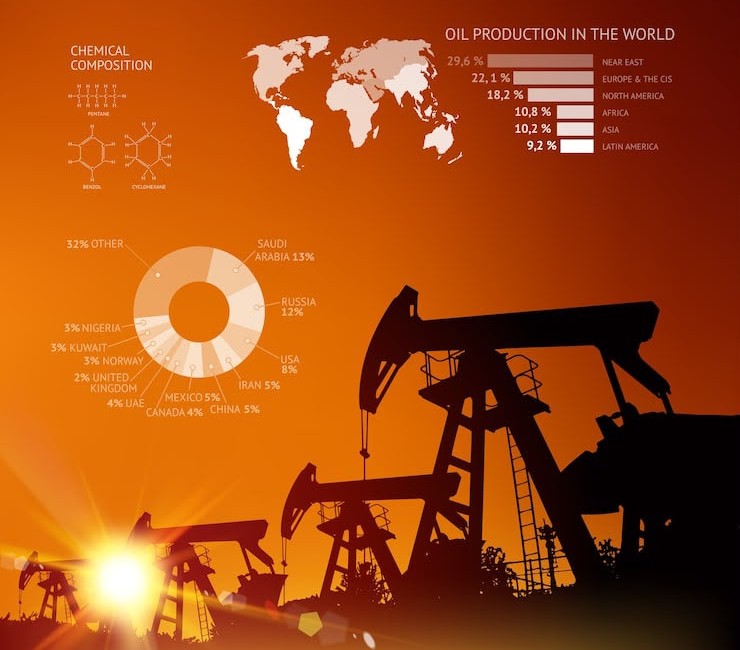
The energy shock has become particularly important. OPEC’s April 2026 Monthly Oil Market Report, as cited by the Central Bank of Eswatini, shows that Brent crude oil averaged US$68.22 per barrel in 2025, but prices increased sharply in early 2026, reaching an average of US$99.60 per barrel in March and US$105.07 per barrel in April. The increase was driven by stronger demand and supply disruptions associated with the Middle East conflict. The Central Bank also highlighted concerns surrounding the effective closure of the Strait of Hormuz, a major global oil transit route through which approximately 20% of global fuel supply passes.

This creates a direct vulnerability for countries that rely heavily on imported fuel. For Eswatini, higher international oil prices can feed into domestic transport costs, electricity-related costs, business operating expenses and the prices of imported goods. The financial impact can therefore extend from the household budget to corporate balance sheets and ultimately to government expenditure. A prolonged period of expensive energy could also complicate efforts to contain inflation without suppressing economic activity.
Gold, on the other hand, has benefited from the same uncertainty that has unsettled other financial markets. According to the Central Bank of Eswatini, the average gold price increased to approximately US$3,431 per ounce in 2025 from US$2,397.08 in 2024. The Bank reported that gold reached an all-time high of US$5,222 per ounce in February 2026 before easing to an average of US$4,608 per ounce in March. Strong central-bank purchases, geopolitical uncertainty and safe-haven demand have supported the rally.
The divergence between oil and gold illustrates how financial markets are responding differently to the same global risks. Oil reflects concerns about physical supply and energy security, while gold is benefiting from demand for assets perceived to preserve value during periods of uncertainty. For investors, this environment reinforces the importance of diversification and careful assessment of risk rather than relying on a single asset class or market narrative.
Monetary policy is also becoming increasingly complicated. Major central banks are pursuing different policy paths because inflation and growth pressures differ across economies. According to the Central Bank of Eswatini’s review, the US Federal Reserve ended 2025 with the federal funds rate at 3.50–3.75% and maintained that range in March 2026, while keeping open the possibility of future rate adjustments. The European Central Bank maintained its refinancing rate at 2.15% in March 2026, while the Bank of England kept its Bank Rate at 3.75%. Japan, meanwhile, maintained its policy rate at 0.75%.

These differences matter because interest-rate movements in major economies influence global capital flows and financing conditions. When investors reassess the returns available in major markets, capital can move between countries and asset classes, affecting exchange rates, borrowing costs and investment decisions in emerging markets. For businesses with foreign-currency exposure or debt obligations, changes in global financial conditions can therefore have material effects on cash flow and financial planning.
The United States remains one of the major engines of global economic activity, although its growth is expected to moderate. The US Bureau of Economic Analysis reported that real GDP expanded by 2.1% in 2025, down from 2.8% in 2024. Looking ahead, the IMF projects US growth of 2.3% in 2026 and 2.1% in 2027. The eurozone recorded growth of 1.4% in 2025 but is expected to slow to between 1.1% and 1.2% in 2026, depending on the forecasting institution. The IMF projects UK growth at only 0.8% in 2026, while Japan is expected to expand by 0.7%.
The emerging-market picture is mixed. India remains one of the strongest performers, with economic activity growing by 7.4% in 2025/26. The IMF expects India’s growth to moderate to 6.5% in both 2026 and 2027. China recorded 5.0% growth in 2025 but is expected to slow to 4.4% in 2026 and 4.0% in 2027. Brazil is projected to grow by 2.6% in 2026, while Russia is expected to expand by only 0.6%, according to the IMF’s April 2026 outlook. These differences demonstrate that the global economy is not moving as a single unit; domestic demand, fiscal space, trade exposure, commodity dependence and monetary policy capacity continue to determine how individual economies absorb external shocks.
South Africa remains particularly important to Eswatini because of the two countries’ deep trade, financial and monetary links. Statistics South Africa reported that the South African economy expanded by 1.1% in 2025, supported strongly by a 17.4% expansion in agriculture. The trade, catering and accommodation sector grew by 2.3%, while finance and transport also recorded growth. The IMF expects South African growth to slow slightly to 1.0% in 2026 before improving to 1.3% in 2027.
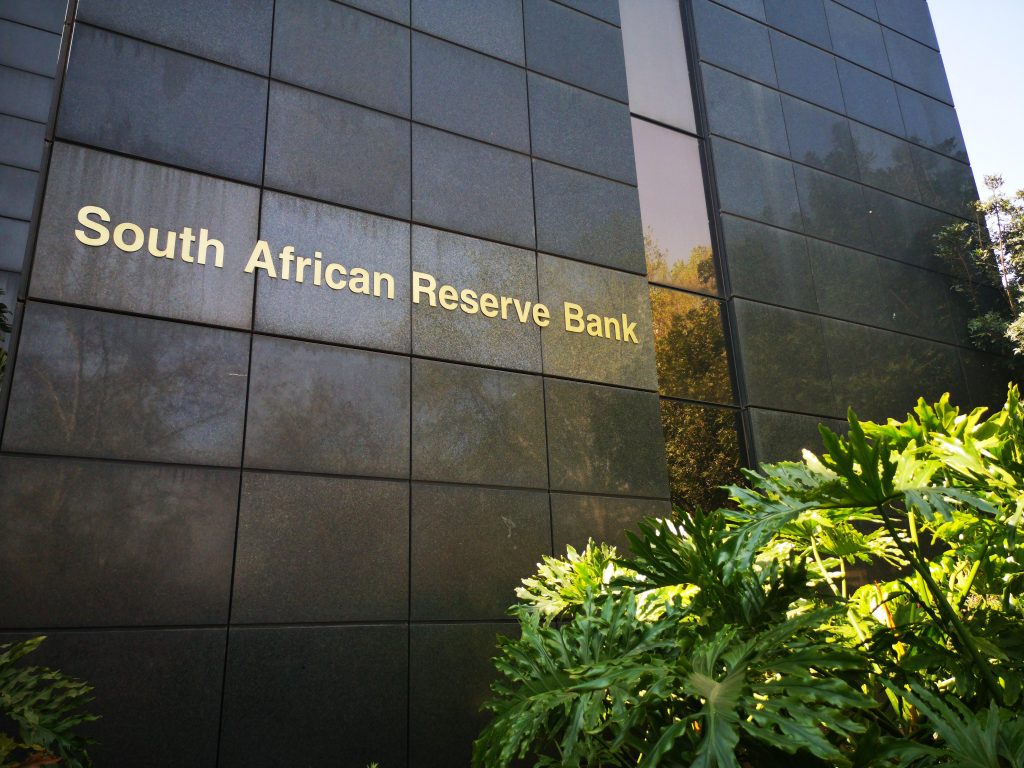
South Africa’s monetary policy also has implications for Eswatini’s financial environment. According to the South African Reserve Bank, the repo rate was reduced to 6.75% in November 2025 and remained at that level through March 2026. At the same time, the country’s inflation framework was revised to a 3.0% target with a tolerance band of 2–4%. However, the Central Bank of Eswatini reported that higher energy and fertiliser prices linked to global developments are expected to put renewed pressure on South African inflation, limiting the room for aggressive interest-rate reductions.
For Eswatini, this regional connection means that developments in South Africa cannot be viewed as external events alone. South Africa is a major source of imports, investment, financial services and consumer goods, while the lilangeni remains pegged to the South African rand under the Common Monetary Area. Consequently, movements in South African inflation, interest rates, fuel prices and economic growth can influence domestic financial conditions.
Trade policy presents another significant risk. According to the Central Bank of Eswatini, global uncertainty remains elevated despite declining from the extreme levels recorded in 2025. US tariff measures, the scheduled review of the United States–Mexico–Canada Agreement and the expiry of temporary trade arrangements could generate renewed volatility. For small open economies, uncertainty around trade rules can affect export planning, investment decisions, supply chains and access to international markets.
At the regional level, however, there are opportunities that could help African economies reduce some of their dependence on traditional markets. According to the Central Bank of Eswatini, 48 of the 54 signatory states to the African Continental Free Trade Area had deposited their instruments of ratification by January 2025, representing an 89% ratification rate. Tariff offers from 45 countries had also been adopted, while negotiations had reached agreement on 92.3% of tariff lines. Outstanding negotiations included important sectors such as textiles, apparel and automotive manufacturing.

For Eswatini, these developments are important from an industrial and investment perspective. A functioning continental market can give local producers access to a much larger consumer base, but the opportunity depends on whether businesses can produce at competitive cost, meet standards and participate in regional value chains. Trade agreements alone do not create exports; they create the framework within which productive firms can compete.
SACU and SADC developments similarly point towards a greater emphasis on trade facilitation, industrialisation and regional value chains. The Central Bank of Eswatini reported that SACU has identified textiles, beef, leather and essential oils among priority sectors, while its industrialisation agenda is examining automotive value chains, green mineral beneficiation, agro-inputs and export potential. Within SADC, digital customs systems and electronic certificates of origin are being developed to reduce border delays, while regional payment initiatives are intended to make cross-border transactions faster and less costly.
The financial infrastructure supporting regional trade is equally significant. According to the Central Bank of Eswatini, SADC has continued expanding its Real Time Gross Settlement system and the Transactions Cleared on an Immediate Basis platform for lower-value cross-border transactions. COMESA has also advanced the Regional Payment and Settlement System and a Digital Retail Payment Platform aimed at supporting faster and lower-cost cross-border payments. These systems could reduce transaction costs for businesses and households while strengthening financial inclusion across the region.

Another structural issue highlighted by the global outlook is the role of artificial intelligence in productivity and investment. The IMF argues that digitalisation and AI have the potential to raise productivity and expand potential economic output, but the gains will depend on investment in skills, energy, digital infrastructure, competition, data governance and cybersecurity. The IMF also cautions that excessively optimistic expectations around AI profitability could result in a sharp correction in technology markets if expected returns fail to materialise.
For financial markets, this creates a two-sided risk. Successful AI adoption could improve productivity, reduce operating costs and create new industries, but excessive valuations and speculative investment could expose investors to significant losses if earnings fail to justify market expectations. The IMF’s position suggests that technological opportunity still needs to be assessed against productivity gains, sustainable returns and underlying economic value rather than market excitement alone.
The wider policy challenge is therefore one of maintaining financial resilience while preserving room for economic growth. The IMF recommends rebuilding fiscal buffers, maintaining price and financial stability, reducing policy uncertainty and accelerating structural reforms. It also highlights investment in labour-force skills, improved labour mobility and streamlined business regulation as important measures for strengthening economies in an environment where technological and geopolitical shocks are becoming more frequent.
For Eswatini, the global outlook reinforces the importance of prudent fiscal management, stronger domestic productive capacity and greater integration into regional value chains. A 3.1% global growth rate may still represent expansion, but the combination of higher oil prices, elevated inflation, expensive financing and geopolitical uncertainty leaves little room for policy complacency. The country’s financial resilience will increasingly depend on how effectively government, businesses and households manage exposure to external shocks while converting regional trade, digitalisation and productive investment into sustainable sources of income and economic growth.

Other Articles